What is Seismology: The study of bhumikompo
What is Seismology: The study of bhumikompo
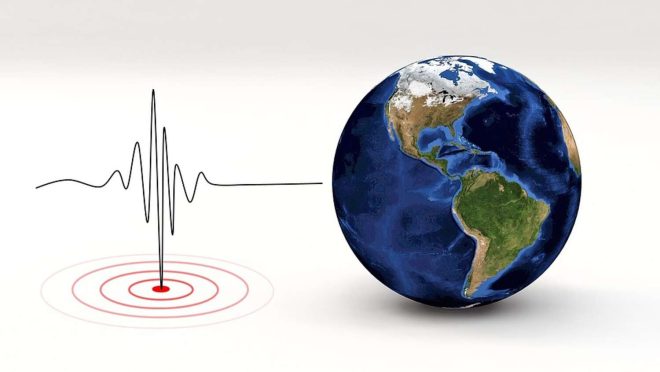
Bhumikompo!
Today my mother asked me how it occurs and it got me to thinking. Although I know the basic idea, tectonic plates moving, bumping into each other and causing “shake shake”, I have never explored the science behind it. Is that all there is to know? The answer is no. There is, in fact, an entire scientific field of study dedicated to understanding earthquakes.
Seismology.
Seismology is the study of earthquakes and behaviour of seismic waves as they travel through the earth. Scientists in this field investigate not only natural earthquakes but also vibrations triggered by volcanos, glaciers, oceans and even human activity. Their main tool is the seismometer. It is a device that records group motion. This data, known as seismogram, offers a detailed graph showing how the ground moved over time. By analysing these recordings, seismologists can work out where an earthquake started, how deep it was and how strong it was. Beyond this, they also help scientists to map the internal structure of the earth and about the earth’s crust, mantle and core.
Now, earthquake happens when stress builds up inside the earths crust. Tectonic plates are constantly pushing and sliding into each other. This motion causes strain to the rocks and when it becomes greater the rocks break or slip suddenly. That sudden release of energy travels outward in the form of seismic waves. Hence, earth starts shaking.
To measure the strength of an earthquake, seismologists use magnitude scales. The most famous is the Richter scale. It assigns a number to an earthquake based on the amplitude of the seismic wave. Too much scientific words I know. The important thing to understand is that the Richter scale works like the steps in stairs. If the earthquake goes one step up, it is a little stronger. For example, a magnitude 3 quake is something mild, what we usually feel. But a magnitude 6 or high is hundreds of times more powerful, like what happened in Turkey in 2023.
Anyway,
For students interested in studying Seismology, many universities around the world offer dedicated courses in geophysics, earth science and seismic research. According to IDP hotcourses, institutions like the University of Canterbury, Cardiff University, Adelite University and university of Liverpool offer specialised programmes related to seismology among others. Even in Bangladesh you can graduate in related subjects from the public universities. Dhaka university, for instance, has Faculty of Earth and Environmental Science and National University has Faculty of Life and Earth Science. From what is happening currently in Bangladesh, I think you could potentially make a good career out of it in the future. But let’s hope that is not necessary for all our sakes.
But for safety, I think we should know how earthquakes work and what to do during one. If shaking begins, it is safest to stay low on the ground, take cover under sturdy furniture and hold until movement stops. Panicking and starting to run down the stairs will not help and might create more harm. Seeing that Bangladesh is full of buildings and little road space, trying to run there is not smart. After the movement stops do remain alert for aftershocks.
Stay safe everyone.