The billion-view shark and the company behind it
The billion-view shark and the company behind it
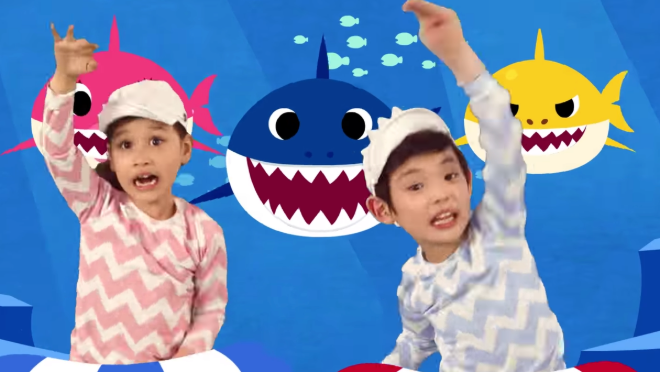
Kim Min-seok had no idea what he was about to unleash when he approved the release of a 90-second children’s song in June 2016.
The clip went on to amass more than 16 billion views, becoming the most-watched video in YouTube history – and that irresistibly catchy tune was Baby Shark.
The song did more than captivate toddlers; it laid the foundation for Pinkfong’s multimillion-dollar global media empire.
“We never expected it to become something different from our other content,” Pinkfong CEO Kim Min-seok told the BBC from the company’s Seoul headquarters. “But looking back, it was a turning point that set the stage for our global journey.”
On Tuesday, that journey culminated in Pinkfong’s debut on the South Korean stock exchange, where its shares jumped more than nine percent, valuing the company at over $400 million.
Humble beginnings
Founded in 2010 as SmartStudy, the company initially produced digital content for children up to 12 years old, with only three employees, including Kim and chief technology officer Dongwoo Son.
“The office was tiny — even smaller than the room we’re speaking in now,” Kim recalled. “We didn’t even expect salaries at the time.”
Pinkfong later shifted its focus to toddlers, expanded to about 100 staff, and prioritised simple, educational content. That was when Baby Shark emerged. The company rebranded as Pinkfong in 2022, named after a cheerful fox character from its early animations. It now has roughly 340 employees and offices in Tokyo, Shanghai and Los Angeles.
Why Baby Shark went viral
Originating from a U.S. campfire chant from the 1970s, Baby Shark found new life with Pinkfong’s fast-paced, rhythmic and repetitive tune.
“It’s like a K-pop song — very upbeat and addictive,” Kim said.
The clip exploded in popularity after becoming a dance hit at children’s events in Southeast Asia, spawning countless dance covers by both children and adults. By November 2020, it became YouTube’s most-viewed video of all time.
At one point, nearly half of Pinkfong’s total revenue came from Baby Shark–related content.
The company faced a copyright challenge in 2019, when a U.S. composer accused it of plagiarism. Pinkfong argued the melody came from a public-domain folk song, and South Korea’s Supreme Court dismissed the case.
Beyond Baby Shark
Experts say Pinkfong must now demonstrate that its success is not dependent on one viral hit. Its newer franchises, such as Bebefinn and SeaLuk, are growing rapidly, with Bebefinn already generating around 40 percent of the company’s revenue.
Kim maintains that Pinkfong can grow beyond Baby Shark, which now accounts for about a quarter of earnings.
Parents’ views on the content remain mixed. One father told the BBC that while he appreciates the educational value, his wife finds Baby Shark “too stimulating” for children. Yet even they are planning a Baby Shark–themed birthday party for their almost-three-year-old daughter.
The next chapter
Pinkfong raised roughly $52 million through its stock-market debut and plans to expand its films and character franchises. The company aims to use viewer-behaviour data to build “technology-driven” content.
“Pinkfong has already achieved what many creators dream of,” Kim said. “Now we must show investors that we are more than a one-hit wonder.”