Khaleda Zia and her role in advancing women’s rights
Khaleda Zia and her role in advancing women’s rights
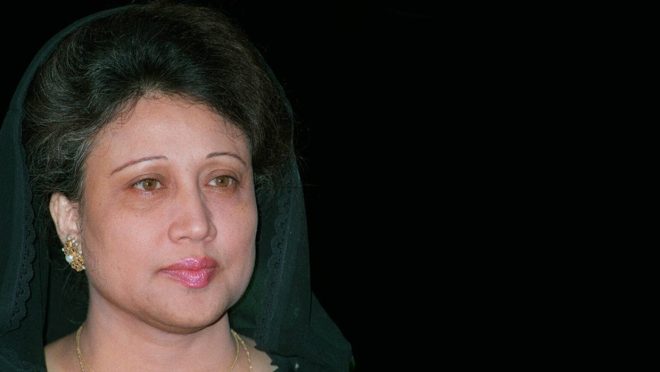
Former prime minister Khaleda Zia has died at the age of 80, drawing renewed attention to her role in shaping policies on women’s empowerment, education and legal protection in Bangladesh.
After coming to power in 1991, Zia placed women’s rights and social development high on the national agenda at a time when female literacy and participation remained low. Her first term was widely praised for strengthening parliamentary democracy and introducing reforms aimed at improving the social status of women.
During her tenure, laws were enacted to combat rape, acid violence and dowry-related abuse, alongside tougher penal provisions that included long-term imprisonment and, in severe cases, the death penalty. Special Tribunals were established to handle cases of women and child abuse, with fixed timelines for investigation to speed up justice.
Zia also took institutional steps to promote women’s participation in public life. She established the National Forum for Women, reintroduced the inclusion of women in the police force, and supported microloan programmes through a special fund to enhance the financial independence of women and girls in impoverished urban and rural communities.
In her second term, a constitutional amendment reserving 45 seats in parliament for women further reinforced female representation in national politics. Khaleda Zia’s death has prompted reflection on a legacy marked by efforts to expand women’s rights, education and participation in Bangladesh’s public and social life.