Hypnosis gaining ground as medical treatment, but stigma still lingers
According to a detailed report by the BBC, growing scientific evidence suggests that hypnosis can deliver real clinical benefits, sometimes outperforming conventional treatments in effectiveness, cost and side-effects, particularly in pain management and mental health care.
Hypnosis gaining ground as medical treatment, but stigma still lingers
According to a detailed report by the BBC, growing scientific evidence suggests that hypnosis can deliver real clinical benefits, sometimes outperforming conventional treatments in effectiveness, cost and side-effects, particularly in pain management and mental health care.
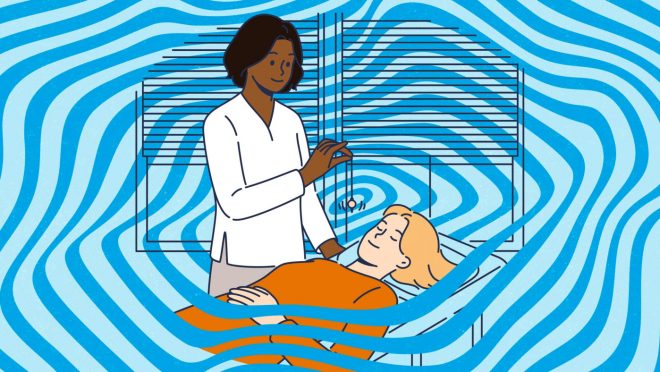
Hypnosis is increasingly being recognised as a legitimate medical tool for treating pain, anxiety, post-traumatic stress disorder (PTSD) and several other conditions, yet it continues to battle long-standing misconceptions that frame it as little more than a stage trick.
According to a detailed report by the BBC, growing scientific evidence suggests that hypnosis can deliver real clinical benefits, sometimes outperforming conventional treatments in effectiveness, cost and side-effects, particularly in pain management and mental health care.
One of the most striking early examples comes from Dr David Spiegel, now founder of Stanford University’s Center for Integrative Medicine, who recalls using hypnosis in 1970 while he was a medical student at Boston Children’s Hospital. Faced with a 16-year-old asthma patient whose condition was not responding to adrenaline injections, Spiegel improvised a hypnotic breathing suggestion.
“So I came up with something,” Spiegel recalled. “I said, ‘Each breath you take will be a little deeper and a little easier.'”
Within minutes, the girl’s wheezing stopped. “The improvisation worked,” the report notes, marking the start of Spiegel’s five-decade career in clinical hypnosis, during which he estimates he has hypnotised more than 7,000 patients.
Despite outcomes like these, hypnosis has struggled for acceptance within mainstream medicine.
“Hypnosis is still tarred with the brush of being weird,” Spiegel said. “People either say it’s useless or it’s dangerous, and nothing in the middle. Both are wrong.”
Researchers say hypnosis works by inducing a state of intense focus, during which carefully framed suggestions can trigger involuntary physical or psychological responses. Studies have shown that hypnotised individuals can experience reduced pain, altered perception and diminished anxiety, without medication.
Clinical trials and meta-analyses cited in the BBC report indicate that hypnosis is particularly effective for chronic pain. One analysis found that hypnotised patients experienced greater pain relief than around 73% of control participants. In another study involving invasive medical procedures, patients who received hypnosis required less opioid medication and reported significantly lower anxiety levels.
“The anxiety levels were zero in the hypnosis group,” Spiegel said. “There was just less trouble doing the procedure.”
Neuroscientific research is also shedding light on how hypnosis works in the brain. Studies suggest that hypnosis alters activity in brain networks linked to attention, self-awareness and cognitive control, helping explain why hypnotised individuals often feel their responses are involuntary.
However, public scepticism remains rooted in hypnosis’s controversial past. Originating in the late 18th century with Franz Mesmer’s theory of “animal magnetism”, hypnosis later became associated with theatrical performances and scandals involving abuse by rogue practitioners. These associations, experts argue, have unfairly overshadowed its medical value.
“There’s a widespread myth that hypnosis allows someone to control you,” said cognitive neuroscientist Devin Terhune of Goldsmiths, University of London. “The evidence for this is very poor.”
Experiments comparing hypnotised participants with non-hypnotised controls suggest that people are unlikely to be coerced into actions they would otherwise refuse. “The conclusion is, undergrad students are willing to do some crazy things,” Terhune said. “It’s nothing to do with hypnosis.”
Still, experts caution that hypnosis can be misused, particularly in situations involving power imbalances. Cases of fraud and sexual abuse by unqualified hypnotists have been reported in several countries.
“These are obviously disgusting and horrible,” Terhune said, adding that such abuses are often linked to trust and authority rather than hypnosis itself.
Medical bodies stress that hypnosis should only be practised by qualified health professionals. “Hypnotherapy should only be performed by qualified health professionals who are accountable to a professional body,” the UK’s Royal College of Psychiatrists advises.
Despite these concerns, clinicians argue that hypnosis is not fundamentally different from everyday experiences such as becoming absorbed in a book or film. “If that’s happened to you, then you’ve experienced something not so different from hypnosis,” said Professor Amanda Barnier of Macquarie University.
As research continues to mount, proponents believe hypnosis could play a growing role in modern medicine, provided it can finally escape its reputation as a parlour trick and be recognised for what it is: a powerful clinical tool when used responsibly.