Virginia Woolf: A guide for aspiring writers in Bangladesh
Today marks the 144th birth anniversary of Virginia Woolf. A prominent British writer, who is known for writing novels and essays that changed how people think about women and literature itself.
Virginia Woolf: A guide for aspiring writers in Bangladesh
Today marks the 144th birth anniversary of Virginia Woolf. A prominent British writer, who is known for writing novels and essays that changed how people think about women and literature itself.
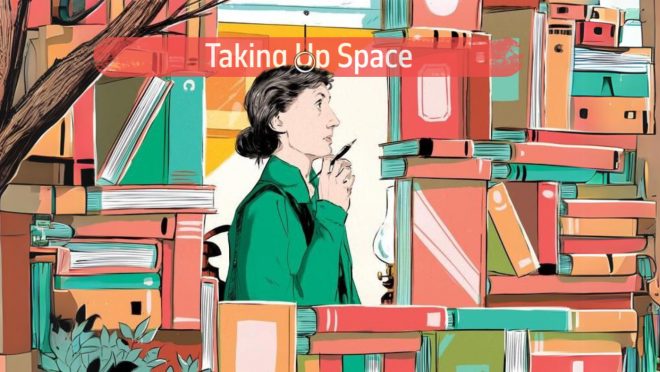
What makes her truly significant for the young readers and writers of Bangladesh today? The answer is self evident looking into the writer’s life and realising why her words still matter even 80 years after her death.
A room of one’s own
One of Woolf’s most influential essays, “A Room of One’s Own,” discusses what a woman needs to become a successful writer: money, privacy, and independence.
Through the fictional figure of Shakespeare’s sister, Woolf shows that even if a woman possessed talent equal to, or greater than Shakespeare’s, she would be crushed by social restriction, institutional bias, and lack of opportunity.
In the late 1800s, these were not disconnected speculations; Woolf herself faced similar challenges under the authority of her controlling father, whose dominance limited her creative freedom.
After his death, however, Woolf finally gained the material and psychological space that she had long been denied. The outcome was the emergence of one of the most innovative writers of the 20th century, who reshaped modernist literature and feminist thought.
Many young minds will still relate to this problem even today. Finding space to study, create, or think without interruption remains difficult. Woolf’s writing identifies and fights against these structural problems to nurture novice writers.
Understanding women’s inner lives
What makes Woolf special is how she captures the inner minds of women. In her famous novel “Mrs Dalloway,” she portrays fragmented, restless and looping minds shaped by the psychological aftermath of World War I.
Woolf opens doors to the rich inner worlds of a woman, worlds full of intelligence, desire, doubt and ambition.
Yet society often tries to shrink their inner worlds, to make women smaller and quieter. For young readers in Bangladesh, who battle societal expectations about how to think, act, and even dream every day, Woolf’s novels offer validation to their eclectic inner worlds.
The art of writing the flowing consciousness
Woolf did not write in traditional methods. Her storytelling did not follow a linear plot structure or chronological order. Instead, she jumped around the thoughts, memories and feelings that flow through a character’s day – much like how our consciousness actually works.
By employing stream of consciousness, a technique for which modern fiction owes her, she paints a real picture of the internal thought processes of different characters.
For example, in her novel “To the Lighthouse,” Woolf shifts seamlessly between the characters’ minds, often in the same paragraph.
Time becomes elastic in the narrative, where past, present, and anticipations blend naturally. For readers and writers who do not want to fit in neat categories, the stream of consciousness technique can be a weapon of rebellion that showcases the eccentricity of life.
Androgynous mind as the creative ideal
In “A Room of One’s Own,” Virginia Woolf advocated for the androgynous mind as a model for cognitive balance while writing. She argues that every human mind has both masculine and feminine energies. However, this is not about identity, but rather how a human mind thinks and processes information.
Woolf rejects the strict dichotomy when it comes to creating art, and denotes that only a balance between the two ends of the spectrum can flourish one’s writing.
This idea of an androgynous mind can be read and applied to correct gaze-based writing, where characters are often filtered through a single, gendered perspective as male gaze or female gaze.
Young Bangladeshi aspirant writers can consider it and land a more ethical representation of characters, particularly of women who have been largely misrepresented throughout centuries.
How to start reading Woolf
As a writer from the early 20th century, reading Woolf may not often be as easy as contemporaries. One may start with her essays first. Especially, “A Room of One’s Own” can be a powerful starting point.
To seek deeper into Woolf’s thoughts on writing and life itself, one may also consult “A Writer’s Diary.” On the other hand, “Mrs Dalloway”, shorter than most of her other works, is a great beginner’s choice for reading her novels.
Woolf’s sentences are long, and her ideas are complex, so the key is to be patient. Once one learns to deal with it and stick with it, s/he will find a guide who directly answers the several questions young writers have today.
And this is exactly why Woolf deserves a place on the reading list of every budding Bangladeshi writer.