Saint Martin through the eyes of its people
Saint Martin, the only coral island of Bangladesh, is set to remain closed for tourists for the next 9 months.
Saint Martin through the eyes of its people
Saint Martin, the only coral island of Bangladesh, is set to remain closed for tourists for the next 9 months.
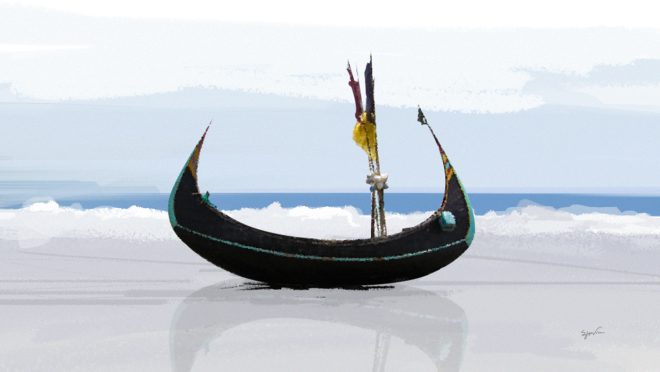
During tourist season, what appears to be a lively and happening area is vastly different than how it is during the off season. Often many inhabitants are forced to leave the island which they call their homes, to pursue better opportunities not available in Saint Martin.
In a time where everyone wishes to move to a city or a first world country for better opportunities, what made the people of Saint Martin so attached to their roots? Let’s hear from them.
Md. Ismail (35), along with his brother runs a small tea stall and grocery store just on the opposite side of North Beach in Saint Martin. Seeing a group of students, he welcomed us with such warmth and started reminiscing about his times.
He started reminiscing about his time when he was responsible for conducting such a tour as an operator. He kept saying how he and most of his family members enjoy it when any tourists visit Saint Martin.
The variety of food, fish, cuisine that are only available to Saint Martin and how only the locals can differentiate among them. “You see that fish?” Ismail pointed toward a bucket near his stall. “That’s Loitta”. People from Dhaka can’t tell it apart from regular sardines, but we know. We grew up with these waters.”
But Ismail’s priorities have shifted over the years. “I used to think tourism was everything,” he reflected, pouring another round of tea. “But now I realize education is what will truly save Saint Martin. My children go to the local primary school, but for college, we have to send them to Teknaf. That separation breaks families apart.” He paused, his expression turning serious.
The island’s political consciousness, he explained, differs vastly from mainland Bangladesh. “Politics here isn’t about parties or rallies. It’s about survival. If the government remembers we exist, that’s enough for us, ” Ismail said. “Civilization for us means having a proper health clinic, a reliable boat service during monsoons, electricity that doesn’t cut off every night. These are the things we talk about, not what happens in Dhaka.”
The conversation shifted when Ismail called over a young boy who had been curiously watching our interview from a distance. Fourteen-year-old Sharif, thin and sun-bronzed, approached with a shy smile.
“Tell them about the film shooting,” Ismail encouraged.
Sharif’s eyes lit up immediately. “Many years ago, they came to shoot a movie here. Riaz-Shabnur was the lead, they said. We all watched. They set up big cameras right there on Chera Dwip,” he pointed westward, his excitement palpable. ” My sister was born that year. For us, that was like Eid. We don’t have cinemas, no proper television most days. When they shoot films here, we become the audience, the helpers, everything. Some of my friends even appeared as extras in the background.”
When asked if he ever thought about leaving Saint Martin, Sharif’s response was immediate and firm. “Why would I leave? This is home. I just want better facilities here. A good school, maybe a computer lab, proper coaching centers like they have in Cox’s Bazar. I want to stay and become something while staying here.”
Ismail nodded in agreement. “During COVID-19, when tourists were completely banned for nearly one and a half years, everyone thought we would starve,” he recalled, his voice dropping. “But we didn’t. We went back to our roots, fishing. My brother and I would go out every morning before dawn. The sea never abandons its people. We caught fish, we dried them, we sold them to the few boats that still came from Teknaf. It was hard, yes, but we survived.”
He continued, describing the island’s unique social fabric. “Marriage here happens differently than on the mainland. Almost everyone is related to everyone else in some way. My wife is my cousin’s daughter. Her mother’s family came from the eastern side of the island three generations ago. When marriages happen, they’re not just unions of two people but connections between families who already share blood, history, and storms weathered together.”
“That’s why we can’t leave,” Ismail said, gesturing broadly at the landscape around us. “Everyone here is family. When a cyclone comes, we don’t call outsiders. We call each other. When someone is sick, twenty houses send food. When there’s a wedding, the entire island celebrates. Can you find this in Dhaka? In Chittagong?”
Sharif interjected softly, “My teacher says that what we have here is called community. She says people in cities have forgotten what that means.”
As our conversation drew to a close, Ismail poured one final round of tea. “Come back anytime,” he said warmly. “Saint Martin’s doors are always open. Any problem or anything, just tell me my name or call us. We will be there.”
Talking to Saint Martin people and seeing their extraordinary hospitality, we realized that they are truly the people that can host the most scenic place of Bangladesh.