Scientists discover new anaconda species while filming a Will Smith documentary
In what might be the coolest “Wait, snakes are still shocking us?” moment of 2024, scientists have unveiled a new cousin in the anaconda family tree—and no, it’s not a Hollywood CGI creation.
Scientists discover new anaconda species while filming a Will Smith documentary
In what might be the coolest “Wait, snakes are still shocking us?” moment of 2024, scientists have unveiled a new cousin in the anaconda family tree—and no, it’s not a Hollywood CGI creation.
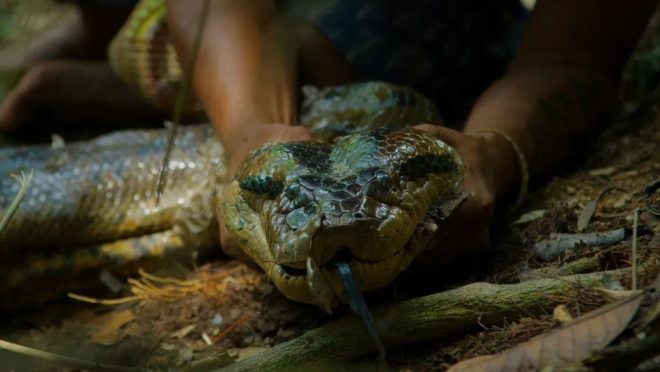
While filming the National Geographic series Pole to Pole with Will Smith deep in Ecuador’s Amazon, researchers stumbled upon a green anaconda that isn’t just another giant snake, it’s a whole new species.
Meet the northern green anaconda (Eunectes akayima), the long-lost sibling of the southern green anaconda (Eunectes murinus), says Live Science.
Though the two species look like twins separated at birth, their DNA tells a very different story. They split roughly 10 million years ago, and their genetic mismatch is a whopping 5.5%—enough to make humans and apes look like casual pen pals in comparison. In other words, these snakes have been secretly evolving separate life plans since the age of the mammoths.
These serpentine juggernauts are the heaviest snakes on Earth, some tipping the scales at more than 550 pounds. They’re the stealthy ninjas of rivers and wetlands, cloaked in olive-green to ambush prey ranging from capybaras to deer. And in a plot twist straight out of a nature documentary drama, male and female northern anacondas don’t just differ in size—they live wildly different culinary lives. Females go big, munching on deer-sized meals, while males snack on predatory fish and caimans.
But here’s where things get grimly fascinating: because males hunt higher on the food chain, they also hoard a chemical cocktail of environmental toxins—lead, cadmium, and other heavy metals—from oil spills. Researchers found male anacondas carry 1000% higher concentrations of these pollutants than females. That’s a big red flag for humans, too, especially for Indigenous communities like the Waorani, whose diets mirror their slithery neighbors. Scientists are now creating food guides to help protect people from the same toxic buildup.
The discovery, captured on camera by researcher Bryan Fry and none other than Will Smith himself, features a female anaconda stretching 16 to 17 feet long—a scene that might make you rethink your next river swim. The docuseries premieres this January on National Geographic, Disney+, and Hulu, promising to show the Amazon’s true heavyweights in all their slippery glory.
So, the next time someone says, “It’s just another snake,” remind them: sometimes, it’s not just a snake. It’s a newly discovered 550-pound, toxin-detecting Amazonian cousin with a story 10 million years in the making—and yes, Will Smith was there to witness it.