No snow, no problem: Why Bangladesh belongs at the Winter Olympics
Reading the title, the first thing that comes to mind is that we need to make it snow. Not metaphorical, cutesy snow, but hard-hitting blizzards. We need actual, bone-chilling winters.
No snow, no problem: Why Bangladesh belongs at the Winter Olympics
Reading the title, the first thing that comes to mind is that we need to make it snow. Not metaphorical, cutesy snow, but hard-hitting blizzards. We need actual, bone-chilling winters.
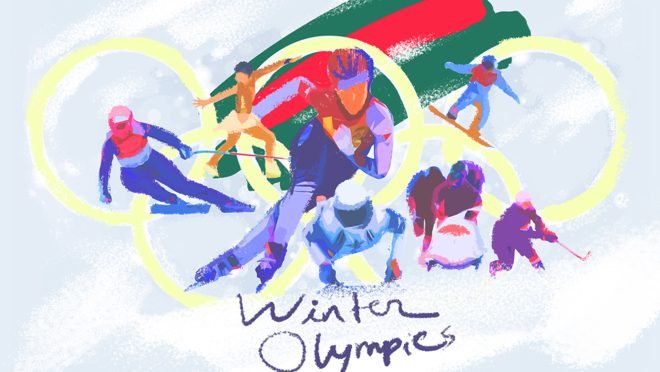
There are countries just like Bangladesh who, without any resemblance to snow, still participate in the Winter Olympics. That gives us hope, which is why we decided to do a deep dive into what it would take for Bangladesh to join the Winter Games.
Because if Bangladesh wants to walk into the Winter Olympics, the first problem is obvious. We are a country where winter means light jackets at best, and fan speed is reduced from 5 to 3.
Yet here we are, seriously asking the most important sporting question of our time: what would it take for Bangladesh to show up at the Winter Olympics?
Let’s be honest, the Winter Olympics is not something that people in this subcontinent get excited about. If you ask innocent, non-cricket fans of this country, most might talk of skiing or snowboarding at best.
The ground reality is that Bangladesh has never competed in the Winter Olympics, but it has participated in every Summer Olympics since 1984.
The reason may not be a lack of athletes or ambition, but a lack of infrastructure, access, and institutional focus on sports that historically evolved in cold climates. Ice, moreover, is only something we usually encounter floating in drinks, not racing down at 120 km/h.
And yet, Bangladesh would not be the weirdest country there.
Countries with no natural snow have already broken the ice, literally. Jamaica became iconic with bobsledding. Nigeria sent athletes to bobsleigh and skeleton in 2018.
Even athletes from desert and tropical nations have figured out ways to qualify through international training and quota systems. So the door is not frozen shut. It is just very slippery.
Out of 90 plus delegations, almost twenty-five come from places with literally zero natural snow, yet many still show up in Winter Olympic pathways.
Manufacturing winter
This is non-negotiable. Options include importing industrial snow machines, freezing a large field, and declaring it a National Winter Training Facility.
Switzerland has the Alps. Bangladesh should have icy determination, humidity, and the ability to pay electricity bills.
Nearly a century after the Winter Olympics were born in naturally frozen landscapes, the Games are increasingly surviving on engineering rather than weather, because of climate change.
In 2022, the world watched athletes compete in Beijing on slopes covered with 100 per cent artificial snow.
According to the Beijing 2022 pre-Games Sustainability Report, the total water demand of the Yanqing Zone during Games time from November 2021 to March 2022 was estimated at about 890,000 cubic metres, accounting for 0.4 per cent of Yanqing District’s water resources.
Ski runs were entirely human-made. Luge tracks and ski jumps relied on built-in refrigeration systems. Four of the original winter disciplines, figure skating, speed skating, curling, and ice hockey, were no longer dependent on outdoor winter at all, taking place inside fully climate-controlled arenas.
The Beijing Games were not a triumph of snowfall, but of innovation.
That same reliance on technology is shaping future Olympics. Ahead of the 2026 Winter Games in northern Italy, where snowfall was already below seasonal averages, organisers constructed large artificial lakes near major venues to secure enough water for snowmaking.
Even regions historically associated with alpine winters are now planning as if snow is no longer guaranteed.
Learning unfamiliar sports
Winter Olympic sports are deeply confusing from a Bangladeshi perspective. Curling looks like elite-level broom sweeping. Skeleton is lying face-first on a sled and trusting physics with your life, whereas bobsleigh is four people voluntarily entering a metal bullet.
None of these sports exist in our cultural memory. But neither did skateboarding once, and now it is in the Olympics. Humans adapt fast when glory is involved.
With proper coaching abroad, which many tropical athletes already do, these skills can be redirected into winter sports pathways, as proven by other non-winter nations.
Athletes should not be the limiting factor
The biggest myth is that Bangladesh lacks athletic potential. That is false. What we lack is access.
Winter athletes from tropical countries typically train overseas in Europe, North America, and East Asia using international federations and Olympic Solidarity programmes that exist specifically to broaden participation.
Translation: you do not need snow at home. You need passports, funding, and stubborn people.
Winter Olympic qualification is not just “be the fastest”. It includes:
- Ranking thresholds
- Continental representation
- Universality slots
These systems exist so the Games do not become an exclusive snow club. This is exactly how athletes from Nigeria, Jamaica, and other warm nations qualified in the past (Winter Olympics Qualification Systems, IOC).
Bangladesh would not need to win. It would just need to exist competitively.
So, can Bangladesh do it?
Let’s be honest. Bangladesh would not go to the Winter Olympics to dominate the podium. It would dominate the conversation.
A Bangladeshi athlete walking into a Winter Olympics opening ceremony would instantly become a global story about climate, access, inequality, resilience, and absurd hope.
The same way Jamaica’s bobsled team became immortal without winning gold. And that matters. The Olympics are not only about medals. They are about presence.
Technically, yes. Practically, with sustained planning and modest but focused investment. Institutionally, only with deliberate policy choices.
All it takes is snow that does not melt, sports we have never played, money we do not like spending on athletes, and a national willingness to look ridiculous before looking historic.
In other words, very on-brand mumbo-jumbo.