400 children in Daulatdia brothel get birth certificates
For the first time, all 400 children currently living in the Daulatdia brothel village have received birth certificates. This milestone follows years of work by activists supporting undocumented children born in brothels or on the streets. More than 700 previously unrecognised children across Daulatdia and other brothels have now been registered.
400 children in Daulatdia brothel get birth certificates
For the first time, all 400 children currently living in the Daulatdia brothel village have received birth certificates. This milestone follows years of work by activists supporting undocumented children born in brothels or on the streets. More than 700 previously unrecognised children across Daulatdia and other brothels have now been registered.
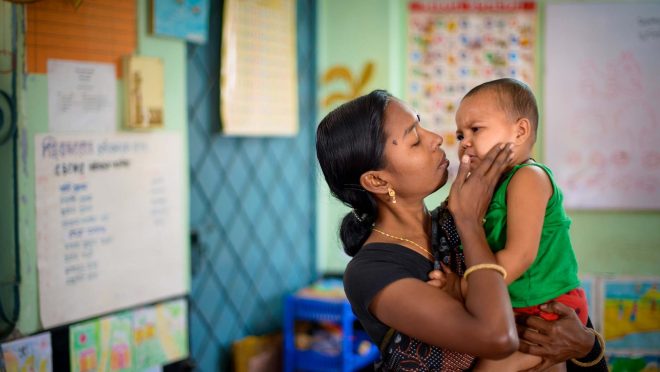
Reported by The Guardian, The breakthrough came after campaigners discovered an overlooked clause in Bangladesh’s 2018 birth registration law. The provision allows births to be registered even without parental information, but it had gone largely unused because it was only briefly mentioned and not clearly explained in the legislation.
Once the London-based anti-slavery organisation Freedom Fund and its local partners identified the clause, they began widely sharing the information and advocating for its implementation. Working with civil society groups, campaigners identified children born in brothels, collected their details, and submitted applications to the government.
They also lobbied local authorities to recognise and apply the overlooked legal provision. The initiative has since gained strong momentum, with mothers encouraging one another to register their children to prevent them from facing lifelong disadvantages. Previously, parents had to resort to alternative measures to secure education for their children. Some sent them to unregulated religious schools, while others asked acquaintances to falsely identify themselves as fathers to complete paperwork. The absence of birth certificates not only limited educational opportunities but also heightened vulnerability to trafficking and exploitation.
Khaleda Akhter, Bangladesh programme manager for Freedom Fund, said lacking documentation leaves children “invisible in the system.” Without proof of age, it becomes difficult to protect underage girls from forced sex work. According to a 2024 Freedom Fund survey of brothels in Dhaka, nearly half of sex workers reported being forced into conditions they had not agreed to, and more than one-fifth were under 18.
Akhter, who has spent two decades helping rescue girls from enforced sex work, said birth certificates are about far more than paperwork. “These documents are not just a tool, it’s about survival,” she said.
She recalled meeting a 14-year-old girl from the fifth generation of a family living in a brothel. When the girl received her birth certificate, she was overjoyed. It meant she could finally qualify for a school stipend. “My identity has been recognised by the government,” the girl told her. For the first time, she felt protected and acknowledged, a powerful change after a childhood marked by hardship.