Beautiful Bangla words the world cannot translate
There are moments when a culture encounters something so essential to its soul that it demands a name no other language has yet imagined. This is how untranslatable words are born, proving that language does far more than simply communicate.
Beautiful Bangla words the world cannot translate
There are moments when a culture encounters something so essential to its soul that it demands a name no other language has yet imagined. This is how untranslatable words are born, proving that language does far more than simply communicate.
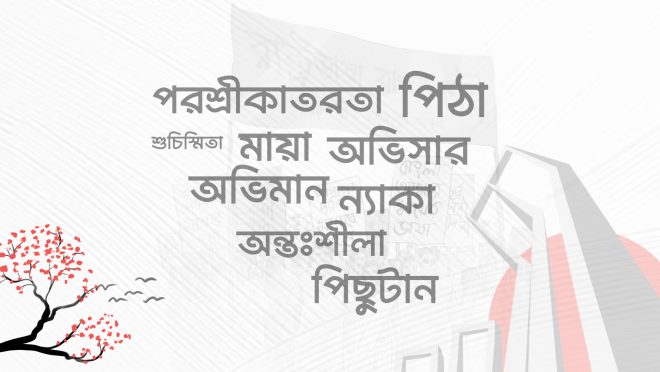
Languages carry the stories of their people, their soils and seasons, their feelings and emotions. Bangla is full of such words, a testament to how uniquely we perceive the world around us.
On this International Mother Language Day, as we celebrate the language we fought to preserve, let us explore fifteen Bangla words that have no simple equivalents.
The language of love and longing
1. মায়া (Maya)
This heavily used Bangla word is often reduced to “illusion”, “attachment” or “love”. Yet none of these fully captures the depth of this tender feeling. It is the invisible thread of affection that binds us to people and places. Maya is the quiet magic of emotional entanglement that makes leaving so difficult.
2. অভিমান (Abhiman)
One of the most intimate emotions in the Bangla vocabulary, abhiman exists in the space between anger and hurt. It is a wounded feeling reserved only for those we love, arising from the silent expectation that someone close should have known better. It represents a sulk that is, in truth, a plea for deeper care.
3. পিছুটান (Pichhutan)
The word literally translates to “a pull from behind”. It is the invisible tug of nostalgia or responsibility that stops a person from moving forward. It is the backward pull of roots, of loved ones, of places that shaped you. It is not quite homesickness, which is passive, nor is it simple nostalgia. Pichhutan is active and immediate, like a hand on your shoulder as you try to walk away.
4. অভিসার (Abhisar)
Rooted in classical Sanskrit poetry and alive in Bangla romantic tradition, abhisar means more than a tryst. It is the secret, yearning journey of a lover towards their beloved, often through obstacles. Through darkness, storms and the stern gaze of society, abhisar carries the full weight of longing, risk and a heart that can no longer remain still.
5. আহ্লাদ (Ahhlad)
Ahhlad is more than joy. It is the pampered, indulgent delight of being doted upon. It resembles, for instance, the specific happiness of a child being spoiled by a grandparent’s affection.
6. হাতছানি (Hatchhani)
The literal meaning of hatchhani is “the beckoning of a hand”, but it has grown to describe the irresistible, almost mystical pull of a place, possibility or person calling you closer. It is often used to describe the way the future, the mountains or a dream seems to summon you from afar.
The architecture of everyday life
7. সংসার (Shongshar)
No translation does shongshar justice. It is sometimes described as “family”, sometimes as “household”, sometimes even as “the world”. In truth, it is all of these at once. Shongshar is the living universe of domestic life, with its responsibilities and rituals, its love and friction, its children growing up and parents growing old. It is the messy yet beautiful daily act of building a life together.
8. সাঁঝবাতি (Sanjhbati)
Sanjhbati is the lamp lit at dusk. Yet it is also everything the word carries with it: the scent of incense, the sound of evening prayers, the moment when the family gathers as the day turns inward. It welcomes dusk into a home, a flickering flame symbolising peace and the end of the day’s toil.
9. আঁচল (Aanchol)
The loose end of a sari draped over the shoulder. Yet the word extends beyond fabric. In Bangla poetry and song, aanchol symbolises shelter, maternal love and a particular sense of safety. To say someone spread their aanchol over you is to say you were protected by the deepest form of care.
10. নকশিকাঁথা (Nakshikantha)
A nakshikantha is a hand-stitched quilt, but describing it merely as such is like calling the Taj Mahal a building. These quilts are often made from worn saris, stitched by women over months. Their patterns resemble journals, telling stories of households, landscapes and seasons. Passed down through generations, nakshikantha becomes an object of love and labour, stitching dreams and sorrows together with thread and needle.
11. পিঠা (Pitha)
Often translated as “cakes” or “sweets”, these English terms fail to capture the diversity and seasonal intimacy of pitha. They may be crispy, chewy, steamed or fried. The word refers to a range of delicacies from Bengal that represent harvest, winter warmth and communal joy. It carries an entire cultural universe that “cakes” cannot begin to suggest.
The quirks of character
12. ন্যাকা (Nyaka)
Nyaka describes someone who feigns innocence, weakness or ignorance in a coy and slightly irritating manner. It refers to the affectation of someone who knows exactly what they are doing while pretending not to. “Twee” or “coy” may come close, but nyaka carries a sharper comic edge.
13. অন্তঃশীলা (Antoshila)
Literally meaning a river that flows hidden beneath sand, antoshila poetically describes a person whose deepest grief or love runs silently within. It remains invisible to the world yet steady in its current. It is neither shyness nor coldness, but an inward grace that does not seek attention.
14. শুচিস্মিতা (Shuchismita)
The word combines the ideas of purity and smile. Suchi means pure, and smita refers to a smile. Shuchismita therefore describes a gentle, sincere radiance, the kind of smile that reflects goodness without effort.
15. পরশ্রীকাতরতা (Poroshrikatarta)
An extraordinary compound word for an emotion most languages hesitate to name. It refers to an acute distress, almost a physical ache, that arises from witnessing another person’s good fortune. German has schadenfreude, the pleasure in another’s misfortune. Bangla names its opposite. It is not simply envy, which suggests resentful longing. Rather, it is suffering caused specifically by seeing someone else’s happiness or success.
As we celebrate our mother tongue, these words stand as a testament to why Bangla remains uniquely and irreplaceably beautiful. They remind us of what we truly fought for, not merely the right to speak, but the right to think and feel in our own way. We may address the world in English, but at the end of the day, we love, grieve and dream in Bangla.