Heritage and hype: The changing face of Boi Mela
There is something timeless about Boi Mela. The way it arrives is like a season of its own, carrying with it the scent of fresh pages and nostalgia.
Heritage and hype: The changing face of Boi Mela
There is something timeless about Boi Mela. The way it arrives is like a season of its own, carrying with it the scent of fresh pages and nostalgia.
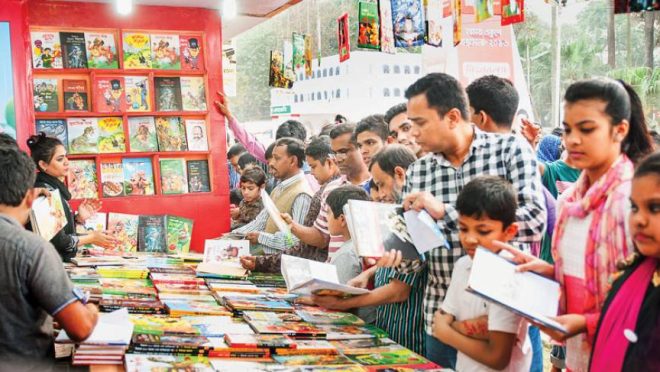
When the summer sun hits and dust turns golden in the afternoon light, the Book Fair transforms the open grounds of Suhrawardy Uddyan into a republic of readers.
Bengal has always worn literature like a second skin, a symbol of identity. From the lyrical verses of Rabindranath Tagore to the quiet intensity of Jibanananda Das, from the rebellious lines of Kazi Nazrul Islam to the modern renaissance of magazines, books here are not just objects, but an example of inheritance.
At Boi Mela, generations walk side by side. Elderly men debate near stalls stacked with classics. Children clutch colourful storybooks as if holding a new world. Publishers build temporary homes for stories.
There are rows of Bengali novels, history essays, poetry collections, international books, classical books, and religious tomes stitched with care. There is a festive look all around. From the grounds to Bangla Academy, the whole area seems like a colourful fair of knowledge flowing through the realm.
There is something sacred about touching a book before buying it, reading the first line, feeling the scent of pages, and deciding if it feels like a place of understanding is the core of a fair.
But over the years, the culture of books in Bengal has shifted, yet endured.
Once, readers waited months for this book fair to arrive in the month of February. Book addicts used to make a list of the books they intended to buy from the fair.
Office-going people used to schedule dates and pre-plan the days, particularly for going to the book fair. People from all over Bangladesh rush to Boi Mela to meet their favourite authors, to see the additional recreations at the fair, have a taste of street food, and, moreover, live the month.
Today, social media announces launches instantly. E-books glow on screens, and the ritual of browsing continues. People now hardly have time to visit the book fair. Screen addiction has sucked much of the enthusiasm out of the fair, resulting in a constant decline in hype.
The sweet memory of reading books while standing, the laughter, the debates on books, saving a budget to buy books, roaming around, celebrating it like a festival, the hunger for widespread knowledge, everything is coming to a minor stake.
The tender pause in the day, the sacred twilight hour when the world softens into gold, movement comes slower, and the unseen comfort brushing against the skin of people roaming around the premises of Bangla Academy and the Dhaka University area amidst the book fair is gradually losing its colour. Yet the publishers, writers, book readers, and children visit the fair with family, with a ray of hope and zeal for a changing tomorrow.
As dusk falls and fairy lights blink awake, the fair becomes a constellation of stories. Despite the era of technology, every bag filled with books is a quiet promise that Bengal’s long romance with words will continue, page after page, year after year, generation after generation.