Climate change and the unequal burden on Bangladesh’s women
Climate change is intensifying existing inequalities in Bangladesh, placing disproportionate pressure on women in vulnerable communities. From water scarcity to disaster risks and livelihood loss, a gender-responsive approach is critical to building true climate resilience
Climate change and the unequal burden on Bangladesh’s women
Climate change is intensifying existing inequalities in Bangladesh, placing disproportionate pressure on women in vulnerable communities. From water scarcity to disaster risks and livelihood loss, a gender-responsive approach is critical to building true climate resilience
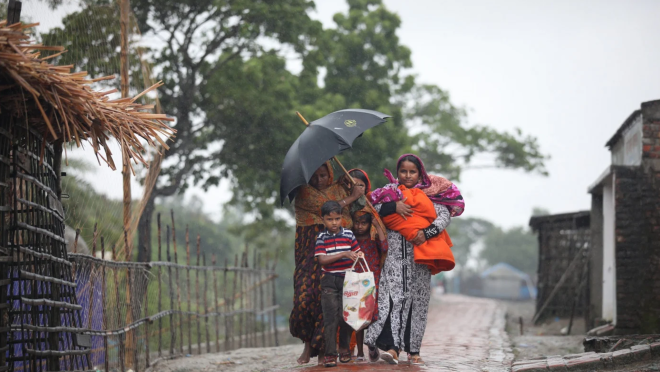
Climate change is no longer a distant environmental concern for Bangladesh. It is a present crisis reshaping everyday social and economic life. Floods, cyclones, salinity intrusion and erratic rainfall are becoming more frequent and intense.
Yet these pressures do not affect everyone equally. Climate vulnerability often mirrors existing inequalities, and in Bangladesh, women – particularly those in poor and climate-exposed communities – face some of the greatest risks.
Across rural Bangladesh, women play a central role in sustaining household well-being. They collect water, prepare food, care for children and manage hygiene. As environmental conditions deteriorate, these responsibilities become more demanding. Climate change, therefore, intensifies existing burdens rather than creating entirely new ones.
Salinity intrusion in coastal areas illustrates this clearly. Rising sea levels and storm surges have contaminated traditional freshwater sources, forcing women to travel longer distances to collect drinking water. This increases physical strain while reducing time for education, paid work or rest.
In Khulna, Lalita Roy, a coastal resident, described how she once had to walk nearly two kilometres daily to collect drinking water because no freshwater source existed near her village. The journey often took around two hours. Such routines limit women’s ability to engage in income-generating activities and affect their physical well-being.
Long-term exposure to saline water has also been linked to skin conditions and reproductive health problems in coastal communities, according to United Nations Bangladesh (2023).
Climate shocks further heighten risks during disasters. Bangladesh’s coastal districts frequently experience cyclones and storm surges. Although the country has made significant progress in disaster preparedness and early warning systems, social barriers continue to influence evacuation decisions.
Women often face difficulties leaving their homes quickly due to caregiving responsibilities, social norms and limited access to safe transport. Cyclone shelters may also lack adequate sanitation facilities and privacy, discouraging families from sending women and girls to shelters even during severe warnings.
Following Cyclone Sidr, many women reported reluctance to use shelters due to the absence of separate toilets and secure spaces. Studies indicate that concerns over privacy, safety and cultural norms can delay evacuation decisions, increasing risks during extreme weather events (United Nations Bangladesh, 2024).
The challenges persist long after disasters pass. Many women depend on informal livelihoods such as small-scale agriculture, livestock rearing or home-based work. When cyclones destroy crops, livestock or household assets, rebuilding livelihoods becomes extremely difficult.
Limited access to credit, land ownership and formal employment further constrains recovery, leaving women more vulnerable to long-term economic shocks.
Urban areas present another layer of climate vulnerability. Rapid urbanisation has led to the expansion of informal settlements with weak infrastructure. Women living in these areas often face overcrowded housing, poor sanitation and limited access to safe drinking water.
Heavy rainfall frequently causes waterlogging in low-income neighbourhoods, increasing exposure to waterborne diseases. Women and children are particularly affected, as they spend more time within the domestic environment.
Research by ActionAid Bangladesh (2023) shows that essential services such as drainage, sanitation and waste management remain inadequate in many informal settlements.
These patterns highlight that climate vulnerability is not only environmental but deeply social. Gender inequality shapes exposure to risks, sensitivity to environmental changes and the capacity to adapt. Women often have fewer financial resources and limited decision-making power within households and communities.
At the same time, women possess critical knowledge about managing water, food and household resilience under environmental stress. Yet their perspectives are often excluded from formal climate planning processes.
Policy frameworks increasingly recognise this gap. International initiatives such as gender-responsive climate finance and the Gender Action Plan encourage integrating gender considerations into climate strategies. Bangladesh has taken steps in this direction, but translating policy commitments into effective local solutions remains a challenge.
Climate resilience strategies often prioritise large-scale infrastructure and national programmes. While important, these do not always address the everyday realities faced by women in vulnerable households. A gender-responsive approach requires closer attention to local contexts and lived experiences.
Encouragingly, small-scale community initiatives offer practical solutions. In several saline-affected coastal areas, community-based rainwater harvesting projects have improved access to safe drinking water. Women’s groups in districts such as Khulna and Satkhira have been trained to install and manage these systems.
By storing rainwater during the monsoon, households can maintain freshwater supplies during dry periods. These initiatives reduce the distances women must travel and strengthen their role in local decision-making on water management and climate adaptation (United Nations Bangladesh, 2023).
Strengthening climate-resilient livelihoods is another priority. Climate change has disrupted traditional agriculture in many flood-prone areas, forcing households to adopt alternative strategies. Gender-responsive programmes that provide women with training, financial support and adaptive technologies can significantly improve resilience.
Community-based disaster risk reduction programmes are equally important. As first responders in many emergencies, local communities play a crucial role in preparedness and response. Training women in early warning systems, emergency response and climate risk assessment can enhance local adaptation capacity.
Initiatives such as the Gender Responsive Coastal Adaptation project demonstrate how women’s participation can strengthen both community resilience and leadership in climate action.
Infrastructure development must also reflect gender-specific needs. Flood shelters, sanitation systems and water facilities should ensure safety, privacy and accessibility for women and girls. Gender-sensitive infrastructure reduces risks during disasters and improves overall well-being.
Access to climate information, education and financial services is equally critical. Many rural women face barriers to training, climate knowledge and financial resources, limiting their ability to adapt. Expanding access in these areas can significantly strengthen adaptive capacity.
Climate change will continue to shape Bangladesh’s development trajectory in the coming decades. Addressing its impacts therefore requires strategies that are both climate-resilient and socially inclusive.
A gender-responsive approach recognises that climate risks interact with existing inequalities. By integrating gender perspectives into governance, livelihoods, disaster preparedness and infrastructure planning, Bangladesh can build stronger and more inclusive resilience.
Women are already managing many of the daily challenges created by climate change. The next step is to ensure that policies recognise their experiences, support their leadership and provide the resources needed to adapt.
Only then can climate resilience become truly sustainable for communities across Bangladesh.
Rassiq Aziz Kabir is an academic and policy analyst. Sheikh Shabab Tawkee Rupok is a junior year student, Department of Development Studies, University of Dhaka.
Disclaimer: The views and opinions expressed in this article are those of the author and do not necessarily reflect the opinions and views of The Business Standard Or TBS Graduates