From Motorsport to ‘Boostsport’: Are F1 regulations ruining the sport?
During the first race of the season, the Australian Grand Prix, Ferrari driver Charles Leclerc was heard on the radio saying, “This is like the Mushroom in Mario Kart”. Referring to the iconic speed boost that mushrooms would give in the Mario Kart game.
From Motorsport to ‘Boostsport’: Are F1 regulations ruining the sport?
During the first race of the season, the Australian Grand Prix, Ferrari driver Charles Leclerc was heard on the radio saying, “This is like the Mushroom in Mario Kart”. Referring to the iconic speed boost that mushrooms would give in the Mario Kart game.
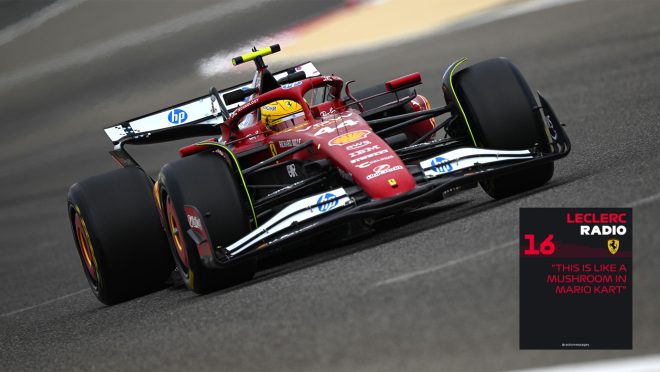
The new regulations have brought in a number of features to the Formula 1 scene, the replacement of the Drag Reduction System with the Manual Override boost, smaller and lighter cars, and active aerodynamics that were supposed to make the pinnacle of motorsport even more enthralling.
However, the initial reactions to these additions have been quite underwhelming, prompting some fans to ask for the revamp of these regulations completely. The drivers were quick, unlike some of their cars, to critique the new settings.
Four-time World Champion Max Verstappen called it a “joke”, after coming P6 and P8 twice in the first three races. Coming on the back of an epic comeback last year where he lost the championship by 2 points in the final race, the former world champion had crashed in the first qualifying session of the season due to a software failure.
But beyond these criticisms of the regulations causing a worse quality of racing, the bigger concern is definitely the lack of safety that they bring in. In the third race of the season in Japan, Haas driver Ollie Bearman suffered a whopping 50G crash, trying to evade Franco Colapinto’s Alpine in front of him, which was slowing down drastically due to the loss of battery power.
The crash put into reality the pre-season concerns that many had, and prompted an emergency FIA meeting on adjusting the new regulations.
So, what really are these new regulations, and how have they changed Formula One so far?
Firstly, the engine. F1 engines have multiple components: the ICE (Internal Combustion Engine), the MGU-K and the MGU-H (Motor Generator Unit for kinetic and heat energy). Previously, the ICE would run on gasoline, while the MGUs would extract the wasted energy from braking and heat into electrical energy that would power the battery part of the engine.
The energy would be recovered through the energy recovery system, and could be used by the driver for a slight boost. The ratio of power would be 80-20 in favour of the ICE. This year, the ratio has been lowered to 50-50, and the MGU-H has been removed.
This means that the car has to produce a larger amount of speed simply from the battery, which has led to increased significance of making proper energy recovery systems. The cars have to go fast using the energy of the battery, then brake more strategically during corners to recover the depleted battery. Unlike the ICE, which offers constant power, the battery is more finite and depletes quickly.
The primary issue with this is that having a more battery-based car takes the control of the race away from the driver and instead puts it on the occasional boosts that a car gets. On a number of occasions, drivers have chased lap after lap, then successfully overtaken the car in front, only to lose the position again on the straights because the other car had a higher battery. This has given rise to a higher number of overtakes, but ones that feel “fake” and “artificial” to many viewers.
Another problem has been that at the end of long straights or faster corners, the car’s software changes into the “harvest” mode, and the battery starts generating power rather than supplying it. The phenomenon is called Super-clipping, and has turned iconic turns like the Suzuka-130R into much slower corners.
The current World Champion Lando Norris recently said that these cars were the “worst ever made”, blaming the super-clipping problem that takes all the fun and challenge out of a lap.
Rear collisions are to be expected given these features, as seen in Japan, where the drivers were fortunate not to get into a crash at 300 km/h.
When cars are going full throttle through a particular section, it is hardly ever possible for the trailing car to know when the car in front will slow down.
The idea is that cars now get faster and slower throughout the track, instead of only in braking zones, leading to the safety hazard of crashing.
All in all, the regulations have not been well received by the drivers and the fans. It remains to be seen what changes the FIA can bring in such a short time, and if any change would actually fix the issues before 2027.