Ulab celebrates Baishakh Sankran with cultural dialogue and global participation
Ulab celebrates Baishakh Sankran with cultural dialogue and global participation
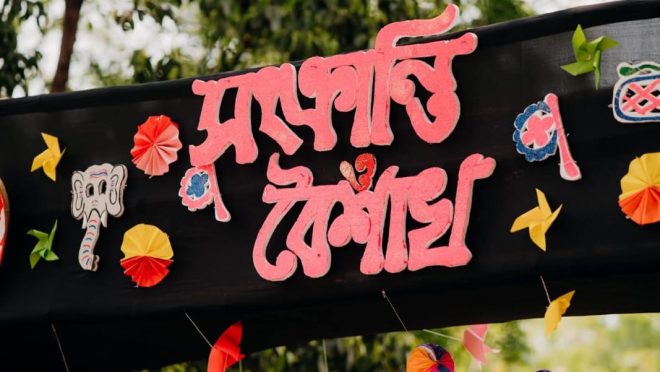
The University of Liberal Arts Bangladesh marked Baishakh Sankran on 18 April with a day-long programme titled “Cosmologies of Confluence: New Year Traditions Across Borders”, blending cultural celebration with academic dialogue and international engagement.
The campus transformed into a vibrant festival space, featuring music, performances, academic discussions, and traditional activities that reflected both the spirit of the Bangla New Year and broader themes of cross-cultural harmony.
The event was attended by State Minister for Primary and Mass Education Bobby Hajjaj as chief guest. In his welcome remarks, Vice-Chancellor Shamsad Mortuza highlighted the importance of inclusive cultural dialogue within academic spaces.
The programme also featured a performance by singer-songwriter Mowshumi Bhowmik, while Ghanashyam Bhandari, Ambassador of Nepal to Bangladesh, attended the celebration, underscoring shared New Year traditions across the region.
A central highlight of the event was an academic session exploring the symbolic and cultural significance of water across societies. The discussion featured Susan Vize, Country Director of UNESCO; Raja Devasish Roy; Prasanta Tripura, Country Director of The Hunger Project; and researcher-writer Pavel Partha. Their dialogue connected cultural cosmologies, environmental symbolism, and shared human values.
The event also welcomed delegates from the United States Embassy Dhaka and the Embassy of Japan in Bangladesh, reinforcing its international dimension.
Beyond formal sessions, the campus was alive with stalls, artistic installations, and traditional festivities. Members of the ULAB Art & Photography Club curated the visual environment, transforming the grounds into a colourful cultural landscape.
Students and alumni played a central role in the celebration, arriving in traditional attire and participating in games and performances, including balloon shooting, a wooden merry-go-round, and live cultural showcases. The blend of academic exchange and festive engagement created a dynamic atmosphere of participation and community.
Baishakh Sankran 2026 at Ulab ultimately stood as a celebration of cultural unity, youthful energy, and global connection, demonstrating how academic spaces can foster both critical dialogue and shared joy