NASA rover detects new organic compounds in ancient Martian rock
NASA’s Curiosity rover has uncovered the most varied collection of organic molecules ever found on Mars, including several that have never before been detected on the Red Planet, scientists announced.
NASA rover detects new organic compounds in ancient Martian rock
NASA’s Curiosity rover has uncovered the most varied collection of organic molecules ever found on Mars, including several that have never before been detected on the Red Planet, scientists announced.
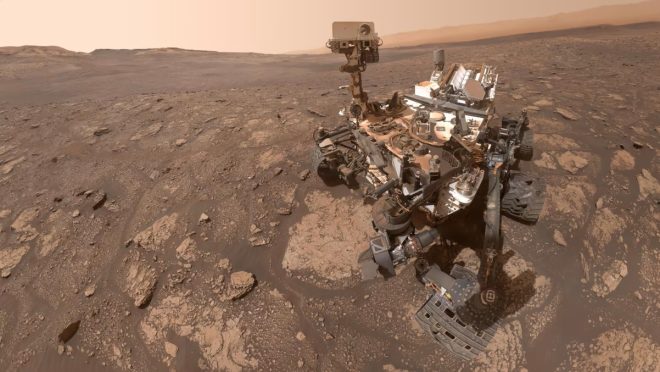
The discovery was made by analysing an ancient rock sample collected in 2020 from a clay-rich region of Gale Crater, an area believed to have once held water. Researchers dissolved powdered rock in a chemical solution, a first-of-its-kind experiment conducted on another world, to reveal its detailed composition.
In total, Curiosity identified 21 carbon-containing molecules, seven of which had never been seen on Mars before. Among them was a nitrogen-bearing compound with a structure similar to precursors of Earth’s RNA and DNA, along with other complex organic compounds. Although these molecules are considered important building blocks for life, scientists stressed that their presence does not prove Mars ever hosted living organisms, as they could also have been produced by geological processes or delivered by meteorites.
Lead researcher Dr Amy Williams said the findings show that complex organic matter can survive on Mars over vast spans of time despite harsh surface conditions, bolstering the idea that the planet once had environments capable of supporting life.
The results, published in the journal Nature Communications, provide a clearer picture of Mars’ ancient chemistry and will help guide future missions aimed at finally determining whether life ever existed on the Red Planet.