When the headline is another daughter…
Every society has some problems to deal with, but only some societies learn to live with them.
When the headline is another daughter…
Every society has some problems to deal with, but only some societies learn to live with them.
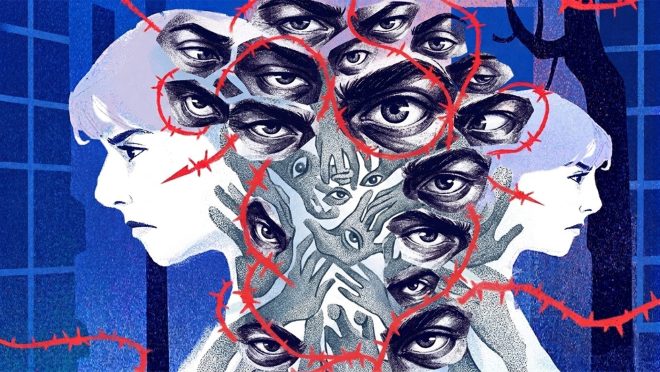
It seems like Bangladesh is entering a dangerous stage, learning how to endure decades-old patterns of crime and then not getting “too” affected by them.
Yes, we do not get shocked anymore when we hear another child is raped somewhere in Bangladesh because deep down we know that tomorrow there will be a new one. We do not know how long this will continue to spread its roots in society. We do not know how many children must be violated before we stop calling this a “feature of society” and start calling it a crisis of our system. It has gradually become a monster, and instead of being scared by the increasing number each year, it is terrifying us with its growing predictability in each case.
When a crime repeats itself with such cruelty and consistency, it ceases to be a question of individual incidents or isolated morality; it becomes evidence of a vulnerable structure and administrative depravity. The location may change, the perpetrators may differ, but the outcome remains always the same – disturbing and devastating.
A cry for systematic and structural change, an outrage for the protection of women and children, a promise for a safe future, and then silence until the next daughter takes the place in the headlines.
Who, then, should we hold responsible in the first place? The offenders, the law enforcement, the government, the lawmakers, or the society that allows this vicious cycle to continue?
Let us talk about numbers and some of the horrifying incidents that took place recently, since emotions are not enough anymore. According to Bangladesh Mahila Parishad (BMP), 786 women and girls were the victims of rape and gang rape in 2025. 543 of them were young girls.
Apparently, the number has risen to 52.3% in comparison to previous years. In just the first few months of 2026, multiple newspapers have already reported the horrors. On Sunday, 1 March, a seven-year-old child was raped and then murdered in Sitakunda.
The girl was rescued in a critically injured condition with her throat slit from a hilly area. She was then admitted to the Chittagong Medical Hospital (CMH), where she died on Monday morning. This is just the case of one child.
There are many unnamed like her who have now become mere numbers only. These girls are the children of your neighbourhoods. They are the children who sat next to your children yesterday. And now tell me: what are we measuring? What are these incidents indicating towards our beloved nation? A cry for ultimate action or a silence as acceptance of how Bangladesh treats its daughters?
If you think the Sitakunda case was an exception, then let me introduce you to the madrasas. A 10-year-old madrasa student was admitted to Rajshahi Medical College in a critical condition on the morning of 16 March. Doctors have found signs of sexual abuse. The child is now mentally traumatised. This is an incident of a madrasa from Bheramara, Kushtia. Police have identified the director of the madrasa and two others as the prime suspects. When the mother of the victim went to take her home for the Eid holiday, she found her daughter with a swollen abdomen and injured legs.
These are not just some random “incidents”. They are a clear picture of what an institution could look like when it is morally broken. Raping children in madrasas has become so frequent that you will find one or two reports on it almost every week. But no one comes on the street, no one protests. No one raises a voice against those madrasas, nor do they demand justice for the children. This simply implies that we have begun splitting our sympathy as well, where some victims get our tears and others get dead silence.
Let us stop pretending that it is all about the existence of “bad people” in society. They exist everywhere, in every part of the world. What makes a difference is how and when they are allowed to act. They act when a society learns to absorb horror without any transformation. They act when protests and outrage become memories, and violence and crime become part of regular life.
And their act gets a clean chit when the authority prioritises reputation over safety, negotiation over accountability, and denial over justice. “Bad people” are not created overnight; they have become what they are through the cultivation of repeated forgiveness of the unforgivable. And Bangladesh is undeniably walking through this path right now.
As we are moving forward with the stories of the unfortunate victims, how can we not mention the eight-year-old girl from Magura who was raped so brutally that she had to fight for her life before dying? This case received national and international attention as a symbol of grief before fading from public memory within a week.
And with this, we learn that these patterns simply refuse to confine themselves to a single district, a single story, or even a single moment of outrage. The geography may shift for each case, but the details unfold with unsettling familiarity.
The government watches everything as if these cases and protests, the voice for the protection of women and children, exhaust themselves. Though powerful promises are made during elections, they turn simply quiet when justice demands urgency. Then the question arises: have we finally started to accept these headlines as part of the ordinary passage of time?
And in the past few months of 2026, we have been going through several reports claiming a surge in rape cases – in February, the number increased to almost 50. Many involve school-going girls and children. Now the question of safety can no longer be hidden behind the polished statement of the government. Each new case arrives before the previous one is secured, and the victim is served justice. This is only creating a relentless chain of violence and cruelty, threatening the future of our country.
The growing numbers each month are an indication that the government is failing to detect and eliminate the root causes. The state’s neutral reaction is a signal that from now on safety in this country should be measured by luck rather than by law.
Justice delayed has begun to resemble justice denied on a national scale. And what are we expected to do then when authority itself surrenders before the crime – waiting, once more, for the next daughter to become a victim?