World Red Crescent Day and the birthday of the man who refused to pick sides
Think of the person whose opinion makes you the angriest. The one whose politics you find completely wrong, whose side of the argument you believe is genuinely harmful and dangerous. Now imagine they are lying wounded in front of you.
World Red Crescent Day and the birthday of the man who refused to pick sides
Think of the person whose opinion makes you the angriest. The one whose politics you find completely wrong, whose side of the argument you believe is genuinely harmful and dangerous. Now imagine they are lying wounded in front of you.
Would you help them?
Most of us would answer yes, partly out of genuine instinct, partly to sound like a civilised person. But most of us have also never been tested. And the world right now is making it harder to hold on to that instinct. Every week, the internet gives us new reasons to decide that some people deserve less, that compassion has conditions, that help should go to the right kind of suffering, only to people who support our ideology.
We are constantly watching opinion posts, counter-arguments, and online fights. Most of us just scroll past, read the comments, maybe pick a side, or call both sides stupid and move on. But if you look closely at the aggression, you will start to wonder: would these people even reach out a hand if the other side was dying? And these fights are not just online.
There are real rivalries, real conflicts, and real wars happening in the world right now that force people to answer that one question: Would you help someone from an opposing belief when they are hurt?
The Red Cross and Red Crescent were built on the opposite belief: to help people regardless of which side they are on, which flag they carry, or which ideology they hold.
8 May, today, is World Red Cross and Red Crescent Day. This year’s theme is “United in Humanity.” Right now, in 2026, the principle it describes is being tested in ways its founders could not have imagined.
The man who started the journey
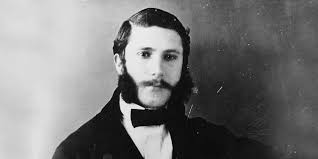
In June 1859, a Swiss businessman named Henry Dunant arrived in the Italian town of Solferino and found the aftermath of one of the bloodiest battles of the century. Forty thousand soldiers lay wounded or dying across the fields. There were almost no doctors. No one was treating the enemy wounded at all.
Dunant organised local villagers to help the injured, regardless of which side they belonged to. He went home, wrote a book about what he had seen, and that book eventually led to the founding of the International Committee of the Red Cross in 1863, and to the Geneva Conventions that followed.
The fundamental principle of the Red Cross and the Red Crescent is that they do not take sides in a conflict. They help the wounded on both sides, visit prisoners on both sides, and maintain access to civilians on both sides. Even if their volunteers are not indifferent to who is right or wrong, they are not supposed to pick a side. The moment they pick a side, they lose the trust of the other side and lose access to the people they are trying to help.
This is not easy in a polarised world. But there is a version of caring about justice that has no interest in the person bleeding on the ground right now. The Red Cross has always refused that version. It keeps trying to separate the act of helping from the question of deserving. It keeps trying to treat wounds without judging how the wound was earned.
The cost of saying yes
In just the first four months of 2026, thirteen Red Cross and Red Crescent volunteers lost their lives while carrying out their duties. In 2025, at least 326 humanitarian workers were killed across 21 countries. Over the last three years, that total has crossed 1,010.
Many of them were travelling in clearly marked vehicles and wearing clearly marked uniforms. The red symbol on white, which under the Geneva Conventions is supposed to mean “do not shoot”, is no longer being respected the way it was intended. The people brave enough to put others’ lives before their own ideology are dying for it.
Why this is also our story
The Bangladesh Red Crescent Society was born on the same day as the country, with retrospective effect from 16 December 1971. The Liberation War had torn families apart across borders and prison camps. Between 1972 and 1975, the ICRC distributed around 2.8 million Red Cross Messages so that separated families could simply communicate and know the other person was alive. For a Bangladeshi soldier held in a Pakistani camp, the moment the Red Cross emblem appeared at the gate, it meant one thing: the world had not forgotten him.
Back to the question
The current world gives us a thousand reasons not to help. Wrong side, wrong ideology, wrong beliefs, wrong religion, wrong flag, and so many more reasons to judge a person. The Red Cross was founded by a man who decided those reasons were not good enough. That was in 1863. The argument has not really changed since. It has just gotten louder.
Today is a good day to ask ourselves where we actually stand, whether our compassion has conditions or not, whether we help the person in front of us, or whether we need to check their side first.
Most of us will never be tested the way those thirteen volunteers were in the first four months of this year. But we are all, in many different ways, answering the same question every single day.