Pearl and the horror of being seen too clearly
-
“I know.. because I feel things very deeply”
-
“I am worried… there might be something real wrong with me, Mitsy”
-
“Please tell me what is wrong with me, so I can get better”
Pearl and the horror of being seen too clearly
-
“I know.. because I feel things very deeply”
-
“I am worried… there might be something real wrong with me, Mitsy”
-
“Please tell me what is wrong with me, so I can get better”
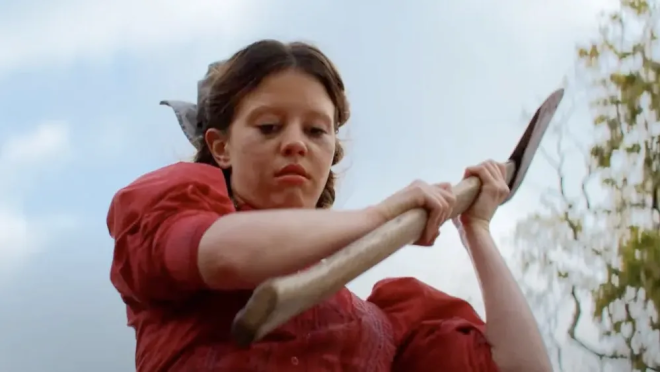
There is a kind of reel that stops our thumb. Not the funny ones, not the aesthetic ones, but the ones where we feel exposed, a fictional character saying out loud something we have never had the courage to say ourselves. We watch it twice. We simply save it and somewhere in that moment we think, “how does this thing know me so well”. This is how a lot of people found Pearl.
Pearl came out in September 2022, directed by Ti West. It is the second film in the X trilogy.
The story takes place in 1918 in Texas during the final year of the First World War, with the Spanish flu quietly present in the background. The movie is about Pearl…
Pearl is carrying around this enormous dream of becoming a dancer, a chorus girl, a movie star, someone whose life has colour and movement and freedom in it, but the reality of her life is much different. The movie shows that the gap between what she wants and what she has is the entire film.
Now a lot of people who found Pearl through those reels showed up expecting something with a romantic thread, and then the genre announced itself almost immediately.
In the first few minutes of the film, Pearl shares a sincere conversation with her horse about her dreams, and for a brief moment it feels genuinely moving. Then, without any pause or transition, she kills a goose for interrupting her, feeds it to an alligator, and smiles as if nothing unusual has happened. That scene is doing a lot. It is telling you who Pearl is and what kind of film you are watching all at once, and it does it without any explanation.
What follows is not really a traditional horror film, even though the horror and thrill are consistently present throughout the whole movie. Pearl is more like a slow and precise portrait of someone being ground down by the distance between who they are on the inside and who they are permitted to be on the outside.
Pearl’s wants are not complicated at all. She wants freedom and fame. She wants to be seen and recognised. She wants some version of a life that feels like it belongs to her. But she is buried under farm work, the sick father, the suffocating mother, the absent husband, and every expectation placed on a woman in 1918 who was simply supposed to endure quietly. The farm in this film is not just a location. It is a mood and a condition and a trap all at once.
Things shift when Pearl’s sister-in-law Mitsy visits and mentions an audition at the local church, a chance to join a travelling dance troupe. For Pearl, it is the only door she can see anywhere.
Around the same time, she becomes drawn to a local projectionist who has access to cinema and music and the outside world that Pearl has only ever glimpsed. She knows she is married. The film never blurs that. But it is also honest about the fact that knowing something and feeling something are entirely different experiences. Pearl’s feelings echo through her own words: “All I really want is to be loved”.
The whole thing rests entirely on Mia Goth, and she carries it without any visible effort, which is the highest compliment you can give a performance like this. She co-wrote the screenplay with Ti West, and that probably explains why Pearl never feels like a character being portrayed from the outside.
She feels like she owns Pearl. The clip in the reels, the one you can find by searching “Why are you leaving me? -Pearl” or “Pearl’s most iconic line” on YouTube, is a long uncut monologue where Pearl finally lets everything she has been holding beneath the surface all at once.
Goth did not perform any of it. She just lets it exist on her face, and the camera stays there for an uncomfortable amount of time, and the film is completely unbothered by that discomfort. That is exactly why the scene works the way it does.
Pearl is not always easy to be on the side of. Her own logic and her pain are understandable even when her actions are not, and somewhere along the way there is a slightly unsettling realisation that the emotional distance between Pearl and someone watching this alone at midnight might not be much.
Visually, Ti West shot the entire film in the exact palette of the Old Hollywood musicals that Pearl herself is obsessed with. The world looks beautiful and saturated and cinematic throughout, and that is entirely deliberate because it makes every dark turn land harder. The beauty of the frame and the ugliness of what happens inside it create a tension that does quiet, consistent work.
Pearl holds a 7 out of 10 on IMDb and has built a genuinely devoted audience through word of mouth. Many call Pearl a hidden gem.
If you have seen the clips and felt something, then you already know whether this film is for you. You do not need to be a horror person to get what Pearl is doing. You just need to have wanted something so much that the wanting itself started to feel like a problem.
You have made it this far without any spoilers. Maybe this is your sign to watch Pearl.