The man, the memory, the legacy: Bangladesh remembers Ziaur Rahman
The man, the memory, the legacy: Bangladesh remembers Ziaur Rahman
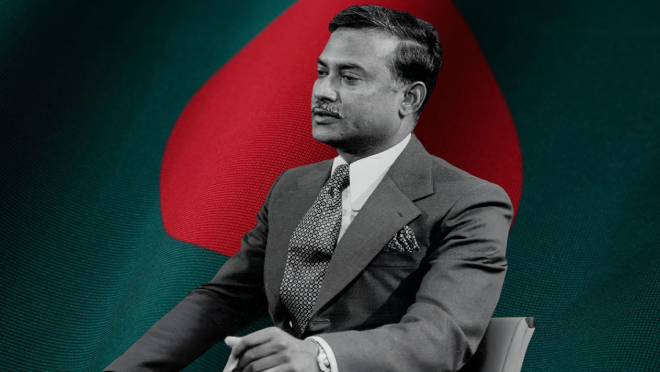
Across the country, Bangladesh Nationalist Party leaders, supporters, and ordinary citizens will gather at his mausoleum at Sher-e-Bangla Nagar to lay wreaths, offer prayers, and recite from the Quran. It is a quiet act of remembrance, one that his followers have kept alive for four and a half decades.
Flags will fly at half-mast at party offices. Food and clothing will be distributed to the poor, a tradition his supporters have maintained year after year. For many who gather, the occasion is less a political rally than a personal tribute.
A life briefly told
Ziaur Rahman was born in 1936 in Bogra. He served as a military officer and, on 27 March 1971, the day after the Pakistani army launched its crackdown, he broadcast a declaration of independence over Kalurghat Radio in Chittagong. Widely broadcast at the time, that speech is an integral part of the documented record of Bangladesh’s liberation. He went on to fight in the war as a sector commander.
After independence, Bangladesh passed through years of political turbulence, coups, counter-coups, and the suspension of multiparty politics. Ziaur Rahman emerged as the dominant figure by the late 1970s. He restored multiparty democracy and held elections in 1979, a step that political scientists have noted as significant after years of one-party governance. He was elected president and governed until his assassination on this date in 1981.
During his presidency, several policy initiatives took shape. The canal-digging programme, which mobilised rural labour to improve irrigation, is credited by agricultural economists with contributing to improved food output in a country still recovering from post-war famine and scarcity. The establishment of a manpower export framework helped lay the groundwork for what would become one of Bangladesh’s largest sources of foreign income: remittances from workers abroad. Policies that made early garment exports viable were also introduced during this period.
These are not unchallenged claims. Historians debate the extent of his personal role versus the role of broader circumstances and institutions. That is as it should be, history is not a verdict, it is a conversation.
A legacy that belongs to history
Like all political figures, Ziaur Rahman was a product of his time and carried the contradictions of that time. He rose through military hierarchy in an era when civilian institutions were fragile. His government was not without its critics, and serious scholars have raised legitimate questions about governance and civil liberties during his tenure.
At the same time, dismissing his contributions entirely, or scrubbing his memory from public life, serves no honest historical purpose. A leader who governed Bangladesh for several years, who oversaw genuine policy efforts, belongs in the national record and deserves to be evaluated fairly.
What is certain is that millions of Bangladeshis remember him with genuine affection. Not because of party affiliation, but because of lived experience: farmers who saw canals dug near their land, families whose sons went abroad to work and sent money home, citizens who remembered the restoration of open political competition after years of restriction.
On this 45th anniversary, there will be no grand spectacle. Supporters will gather. Prayers will be offered. His family and party will pay their respects. Ordinary people, many of them elderly and many from outside Dhaka, will make their way to the grave of a man they remember with loyalty.
Bangladesh is a country with a rich and complicated history, shaped by many figures and many sacrifices. Ziaur Rahman is one part of that history. Remembering him honestly, acknowledging both what he contributed and where questions remain, is not a political act. It is simply what a mature nation does with its past.
May his soul rest in peace.