The voice that plays God
Some of the best masterpieces in cinema, if you look closely enough, have a secret ingredient hiding in plain sight.
The voice that plays God
Some of the best masterpieces in cinema, if you look closely enough, have a secret ingredient hiding in plain sight.
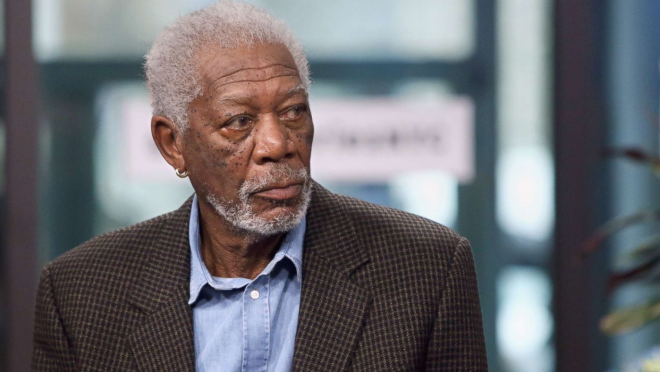
It is, more often than not, a voice, low, unhurried, carrying the specific gravity of someone who has seen things and chosen, deliberately, not to rush the telling of them.
That voice belongs to Morgan Freeman. And it has been present at so many of cinema’s greatest moments that its absence, at this point, would feel like a gap in the atmosphere. Today is his birthday.
The man who arrived late and never left
There is something worth noting before anything else: Morgan Freeman was forty-nine years old when he appeared in Driving Miss Daisy. He had been working in film and television for two decades before that, doing stage work and small roles. His breakthrough arrived right on time, which is a different thing entirely, and perhaps explains why there is never anything hurried about him.
That patience lives in every performance. When Red, his character in The Shawshank Redemption, speaks about hope, the word does not sound like a platitude. It sounds like something earned through extended residence in its opposite.
The film works as well as it does, and it remains perhaps the most beloved film in the history of popular cinema, because Freeman’s narration provides it with a conscience. He works as the film’s moral gravity.
The architect of authority
There is a specific kind of role that Hollywood invented, or perhaps discovered, through Freeman: the figure who stands slightly outside the immediate action and confers legitimacy on everything around him. The president. The mentor. The detective whose instincts are never wrong. God.
He has played God twice. Once in Bruce Almighty, the joke was that God is tired and slightly amused, and the joke worked because Freeman played it with the serene patience of someone who genuinely expects better from humanity but has stopped being surprised. Once in Evan Almighty: same character, different attire. The remarkable thing is that neither performance felt absurd. When Morgan Freeman plays God, the metaphysical casting feels almost obvious in retrospect. Who else?
Somerset in Se7en is perhaps the finest piece of quiet acting in David Fincher’s filmography. In a film that insists on spectacle, on the horror and extravagance of violence, Somerset walks through every scene like a man who has already made his peace with the world’s cruelty and is now simply, carefully, documenting it. He is surrounded by urgency and remains unhurried. The contrast alone is a performance.
Lucius Fox across Christopher Nolan’s Batman trilogy is a different human being. Dry, intelligent, and slightly amused by the grandiosity surrounding him. He is the most competent person in every room he enters and has no particular interest in being recognised for it. Freeman plays him as someone whose ego has been dissolved by genuine expertise.
The voice as instrument
To talk about Morgan Freeman without talking about the voice he has would not do justice to him.
The voice is not simply deep. Many actors have deep voices. What Freeman’s voice possesses is something harder to classify, a quality of settled certainty, of someone who has arrived at what they know through a long, uncoerced process and is now simply reporting back. It does not persuade. It confirms.
This is why he became the default narrator of the natural world. The March of the Penguins, the Discovery Channel documentaries, and the National Geographic specials are an entire genre of filmmaking that asks one man to stand between the raw indifference of nature and the human audience and make the distance navigable. He has narrated the cosmos. He has narrated the ocean floor. He has narrated the life cycle of penguins in Antarctica in a way that made people cry.
The voice is also why the World Cup 2022 opening ceremony in Qatar chose him as its host and narrator. It was a peculiar, somewhat controversial choice of tournament in many respects, but the decision to anchor its public face with Freeman was entirely coherent. When 1.5 billion people are watching, you want a voice the world has already agreed to trust.
What it means to be a constant
There is something worth saying about what it means for a cultural figure to be genuinely, persistently present across generations. Freeman has been in films that children of the nineties watched, films that their parents watched before them, and films that those children’s own children now watch. He has outlasted trends, survived the shifts in what Hollywood believes itself to be, and remained, somehow, impervious to irrelevance.
He turns eighty-seven today. The career is not a surprise. It is the logical result of someone who understood, very early or perhaps very late but certainly once and for all, what they were for. Not a star. Something steadier. The voice the world borrowed when it needed to sound like it knew what it was talking about.