Why Bangladesh loves a tournament it never plays in
-
On a humid night in Dhaka, a power outage interrupted an Argentina match. The reaction was immediate. Tea stalls erupted in frustration. Hundreds rushed outside with battery-powered radios. Someone dragged a television set towards a generator-powered pharmacy. Children ran through narrow alleys asking one question:
-
“Score koto?”
-
For a few moments, it felt as if Bangladesh itself was playing. But Bangladesh was not on the field. It never was.
Why Bangladesh loves a tournament it never plays in
-
On a humid night in Dhaka, a power outage interrupted an Argentina match. The reaction was immediate. Tea stalls erupted in frustration. Hundreds rushed outside with battery-powered radios. Someone dragged a television set towards a generator-powered pharmacy. Children ran through narrow alleys asking one question:
-
“Score koto?”
-
For a few moments, it felt as if Bangladesh itself was playing. But Bangladesh was not on the field. It never was.
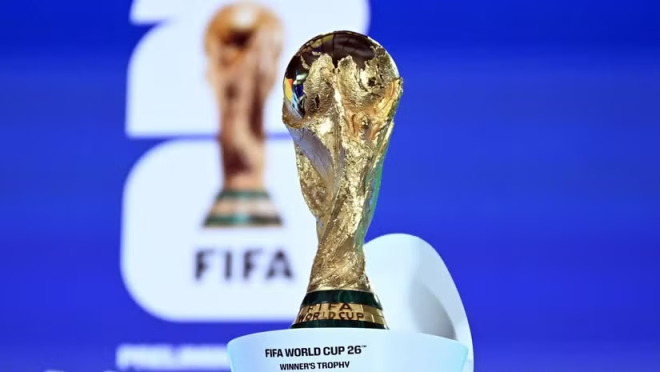
As of today, Bangladesh sits far from the elite ranks of international football and has never qualified for a FIFA World Cup. Yet every four years, something extraordinary happens.
Streets become oceans of blue-white Argentina flags or yellow-green Brazil banners. Rooftops transform into miniature embassies. Families stop sleeping. Friends stop speaking after defeats. Entire villages organise giant-screen viewings.
The question has puzzled international journalists, football analysts, and even Brazilians and Argentines themselves: why does a country that has never played in the FIFA World Cup love it so deeply? The answer lies somewhere between history and heartbreak, nostalgia and identity, dreams and escapism.
And perhaps, hidden beneath the celebration, there is also a darker story.
Football goes back to the roots
Many outsiders assume Bangladesh has always been a cricket-obsessed country. That is only half true. Long before cricket became a national obsession, football occupied the imagination of Bengal. During the British colonial period, football spread rapidly across the region. Local clubs turned into symbols of community pride. Beyond sport, football became a cultural movement.
Older generations still remember a different Bangladesh. A Bangladesh where stadiums were packed for domestic matches. A Bangladesh where Abahani and Mohammedan rivalries divided households. A Bangladesh where football discussions filled newspaper columns. The World Cup arrived as a window to a larger universe.
For people who loved football but lacked a national team capable of competing globally, supporting foreign teams became natural. The choice was usually simple: Brazil or Argentina. Pelé or Maradona, later Ronaldo, Ronaldinho, Kaká, Neymar. Then comes Messi, Cristiano Ronaldo and Neymar.
The emotional inheritance passed from one generation to another. A father who loved Maradona raised a son who worshipped Messi. A grandfather who admired Pelé inspired his grandchildren to wear yellow jerseys. Thus, fandom slowly evolved into tradition.
The influence of television
Many Bangladeshis experienced their first global football match through television. During the 1980s and 1990s, international broadcasts brought the images of worldwide football that carried its aroma to every street of Bangladesh: Maradona dribbling through defenders, Romário dancing after goals, Ronaldo’s explosive runs and Roberto Carlos bending physics with free kicks. For young viewers in small towns and villages, these players seemed larger than life. They represented something rare: perfection, beauty and freedom.
The football itself mattered. Brazil played with flair. Argentina played with passion. Both embodied emotion rather than calculation. For millions of Bangladeshi viewers, football was not simply about winning. It was about feeling. And feelings are remembered far longer than statistics.
The World Cup in Bangladesh behaves less like a sporting event and more like a cultural festival. Weeks before kick-off, flags appear everywhere. Some are small. Others stretch hundreds or even thousands of feet. In 2022, Bangladeshi supporters created an enormous 3,000-foot-long Argentina flag in Mymensingh that attracted international attention. International media repeatedly documented entire neighbourhoods decorated in the colours of Brazil and Argentina.
Children paint their faces. Street vendors sell jerseys. Restaurants offer match-night specials. People who rarely watch football suddenly are found delivering their self-made expertise on formations and tactics. The tournament creates a rare shared experience.
A garment worker in Gazipur, a university student in Dhaka, a farmer in Rangpur, and a shopkeeper in Khulna can all discuss the same match the next morning. In a society often divided by class, politics and geography, football briefly creates common ground. That emotional unity is difficult to measure.
But it is real.
Why Argentina and Brazil?
This is perhaps the most fascinating part of the story. Why not Germany? Why not France? Why not England?
The answer is partly historical and partly emotional. For decades, Brazil symbolised beautiful football. Their style looked joyful, creative, artistic. Many Bangladeshis fell in love with the spectacle itself.
Argentina’s appeal followed a different path. Diego Maradona became a hero across the developing world. He was imperfect, rebellious and charismatic. He often appeared to challenge powerful institutions. Many people saw parts of themselves in him.
Years later, Lionel Messi inherited that emotional connection. The legendary journey of Messi from repeated heartbreaks to finally winning the World Cup felt deeply relatable to millions of Bangladeshis who felt the connection with their own struggle and perseverance.
The result was extraordinary. Bangladesh became one of Argentina’s most passionate overseas fan bases. During the 2022 World Cup, Argentine media extensively covered Bangladeshi celebrations. Consequently, the attention contributed to strengthening the diplomatic engagement between the two countries. Therefore, Argentina reopened its embassy in Bangladesh after decades.
Football had unexpectedly become diplomacy.
Ask someone in Bangladesh why they love the World Cup, and they may mention Messi, Ronaldo or Neymar. But beneath those answers lies nostalgia. Nostalgia is powerful because it has little to do with football itself. People remember gathering around a single television with twenty neighbours. They remember newspaper posters, sticker collections, late-night matches watched under mosquito nets, the smell of tea, the excitement of penalty shoot-outs, and the joy of skipping sleep before an exam just to watch Ronaldo play.
Many Bangladeshis associate World Cups with childhood itself. In reality, they are not just supporting teams. They are protecting memories. That is why even people who barely follow football between tournaments suddenly become emotionally invested every four years. They are returning to a part of themselves.
A country looking for representation
There is another layer to this phenomenon. Bangladesh rarely sees itself represented on the biggest global sporting stage. In football, there is no Bangladeshi team competing against Brazil, France or Argentina.
The World Cup therefore creates a unique emotional vacuum. People adopt teams. Not because they forget Bangladesh, but because they want to participate in a global story. Supporting Argentina or Brazil becomes a way of feeling included in the world’s largest sporting event. It offers a sense of belonging, a sense of identity, a sense that one’s emotions matter in a conversation happening across continents.
Not all consequences are positive. The same passion which creates unity can also result in division. Bangladesh’s Argentina–Brazil rivalry is legendary. Most of the time it remains playful. Friends exchange jokes. Families debate endlessly. Social media gets flooded with memes and videos.
However, emotions occasionally lead to unwanted consequences. Reports over the years have documented clashes and violent conflicts associated with football rivalries. There have been several incidents where supporters of Argentina and Brazil have sometimes resulted in injuries and police intervention. Football is powerful because it creates emotional investment. Yet emotional investment can become tribalism when people begin treating sporting results as personal battles.
The irony is painful. Two teams located thousands of kilometres away can create conflicts between neighbours who have lived together for decades.
The dark side: Betting and gambling
Perhaps the most concerning situation surrounding the popularity of football in Bangladesh is the rise of sports betting. Although gambling laws in Bangladesh remain strictly restrictive, online betting still operates within a legal grey area. Moreover, participation has expanded rapidly through international platforms adopting illegal means and transactions.
A recent market survey has estimated the online betting market of Bangladesh at approximately 68 million US dollars, which will approach 93 million dollars by 2029, and active participants could reach 20 million people.
Football and cricket both dominate the betting market of Bangladesh. These numbers reveal a significant transformation. For many young people, football no longer remains just a medium of entertainment. Rather, they treat it as financial speculation. They view football matches through odds, predictions and betting markets. The emotional excitement of supporting a team turns into the possibility of monetary gain or loss.
Football remains one of the largest betting markets worldwide and therefore particularly vulnerable to integrity concerns. The consequences extend beyond money. Students lose savings. Workers gamble salaries. Families experience tension and debt. What begins as a small wager during a World Cup match can evolve into a habit.
This reality rarely appears in highlight reels. Yet it increasingly forms part of the World Cup experience.
Social media and the amplification of obsession
The World Cup craze of previous generations was largely local. Today’s craze is global and algorithm-driven. Every goal becomes a meme. Every controversy becomes content.
Every rivalry becomes a trend. Social media rewards extreme reactions. The loudest fan often receives the most attention. As a result, football identity sometimes becomes performative.
People compete to display larger flags, louder celebrations and stronger loyalty. The tournament becomes not only about football but also visibility, validation and online relevance.
Yet the magic remains
Despite the excesses, despite the betting concerns, despite the occasional violence, something beautiful remains at the centre of Bangladesh’s World Cup obsession and hope.
For one month every four years, ordinary routines are interrupted. Factory workers discuss tactics. Rickshaw pullers debate line-ups. University students stay awake until dawn. People who disagree on almost everything find something to talk about. Football creates conversations where politics often creates divisions. That is not insignificant.
Perhaps Bangladesh loves the World Cup because it represents possibility, a chance to dream, a chance to belong, and a chance to feel connected to something larger than everyday struggles.
The country may not play in the tournament. Its flag may never appear in a World Cup group stage. Its anthem may never echo through those stadiums.
Yet when the World Cup arrives, Bangladesh participates in its own way through rooftops covered in flags, sleepless nights, arguments, celebrations and memories, fathers explaining Maradona to sons, neighbourhoods transformed into miniature Buenos Aires or Rio de Janeiro.
And maybe that is why the phenomenon continues. Because Bangladesh’s World Cup story is not really about football. It is about emotion. It is about nostalgia. It is about finding joy in a world that often feels heavy. The World Cup gives Bangladesh a dream every four years. And sometimes, dreams do not require qualification.