Roid: A film that asks you to surrender, not understand
This Eid-ul-Adha, 2026, Roid stands on a different frame in terms of conventional Bangla films. To me, it seemed something far more elusive than any other releases.
Roid: A film that asks you to surrender, not understand
This Eid-ul-Adha, 2026, Roid stands on a different frame in terms of conventional Bangla films. To me, it seemed something far more elusive than any other releases.
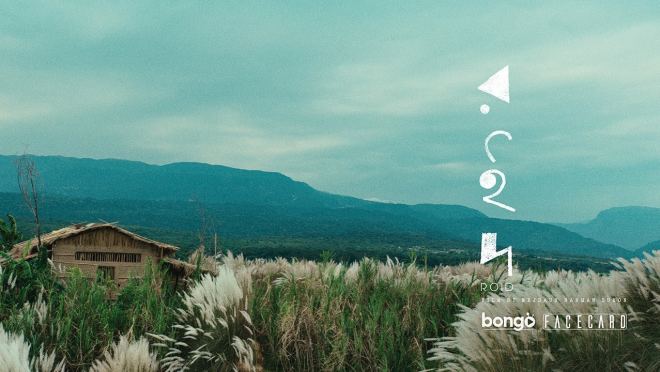
Directed by Mejbaur Rahman Sumon, the filmmaker behind the critically acclaimed Hawa, Roid is not merely a film but a film to be experienced, contemplated, and perhaps even wrestled with long after the credits roll.
Witnessing all the reviews, comments and perhaps the creativity level, I could not resist. Following curiosity, I went to watch Roid at 10:45 am.
Since its release, the film has generated a remarkable range of reactions. Some viewers have hailed it as a visual masterpiece and one of the most ambitious works in contemporary Bangladeshi cinema.
Others have found it challenging, dreamlike, and resistant to conventional interpretation, as Bangla cinema is increasingly expected to provide immediate answers, clear narratives, and easily digestible messages.
Yet despite these differing responses, there appears to be a growing consensus that Roid represents a bold expansion of what Bangladeshi cinema can aspire to be.
At the heart of Roid lies a deceptively simple story, but beneath its surface unfolds a rich tapestry of mythology, folklore, religion, desire, memory, symbol and human instinct. The film’s central symbol, the palm fruit, functions as a powerful metaphor that invites multiple interpretations.
For many viewers, it recalls the forbidden fruit from the Abrahamic religious tale of Adam and Hawa. Like the biblical fruit, the palm fruit in Roid becomes a symbol of temptation, longing, greed, and the perpetual human pursuit of something just beyond reach.
The film’s haunting final moments crystallise this idea with devastating clarity. Even after being overwhelmed by the consequences of his obsession, Sadhu reaches once again towards another palm fruit, suggesting a truth as old as humanity itself: desire does not end when fulfilled. It simply renews itself. The cycle continues.
Yet reducing Roid to a straightforward allegory would be to underestimate its complexity. Sumon constructs a cinematic world where symbols remain fluid rather than fixed. The palm fruit can signify temptation, fertility, memory, loss, or desire depending on the emotional context of a scene. Much like folklore itself, the film refuses to provide a single authoritative interpretation.
This ambiguity is central to the film’s power.
Rather than unfolding through a conventional three-act structure, Roid moves with the logic of dreams and myths. Events recur. Characters return transformed. Time appears less chronological than cyclical. The narrative often feels suspended between reality and memory, between the physical world and the subconscious. As a result, the film demands patience from its audience, rewarding emotional engagement more than analytical certainty.
Tushi played the role of Sadhu’s wife and throughout the film she was termed “Sadhur bou”. The relationship between Sadhu and his wife forms the emotional core of the film. Their connection is not presented through the familiar language of modern romance. Instead, it exists somewhere between devotion, dependency, tenderness, possession, fear and longing. Their bond feels almost primordial, rooted in instincts that predate contemporary ideas of love and partnership.
Much of this emotional complexity is brought to life through extraordinary performances from Mustafizur Noor Imran, who played the role of Sadhu, and Nazifa Tushi. Imran reflects in embodying a man shaped by both his environment and his desires. Tushi, meanwhile, commands the screen with remarkable emotional intelligence, conveying entire worlds of feeling through silence, expression and presence. Together, they create one of the most compelling screen relationships in recent Bangladeshi cinema, a relationship where intimacy exists not in words but in signs and expressions.
Visually, Roid is breathtaking. Cinematographer Xoaher Musavvir crafts images that feel simultaneously tangible and dreamlike. Rain-soaked landscapes, muddy paths, dark interiors and endless stretches of Bengal art become more than locations. They become emotional states. All the locations will compel every Bangladeshi to rethink: “Where does this location even exist in Bangladesh?” Nature is not merely a backdrop but an active participant throughout the narrative. Trees, storms, heat, silence, animals and palm fruits all contribute to the film’s psychological atmosphere.
The sound design is equally remarkable and deserves high praise. Through the work of Rasheed Sharif Shoaib, Sajib Ranjan Biswas and the broader sound team, the film creates an immersive auditory landscape where wind, insects, distant thunder and silence carry as much narrative weight as dialogue. Often, emotions emerge through sound long before they can be articulated through words.
One of the film’s most significant achievements lies in its portrayal of rural Bengal. For decades, village life in South Asian cinema has frequently been depicted either through romantic nostalgia or through exaggerated depictions of suffering. Roid avoids both traps. Poverty exists within the film, but it is never sensationalised. Instead, Sumon focuses on something deeper: the psychological, emotional and spiritual realities of people living within an intimate relationship with nature.
This approach places the film within a rich artistic tradition that recalls the works of writers such as Manik Bandopadhyay and filmmakers like Buddhadeb Dasgupta. Like those artists, Sumon is less interested in documenting rural life than in exploring the hidden desires, fears, instincts and contradictions that shape human existence within it.
Religious and mythological imagery also permeates the film. Viewers have identified echoes of Adam and Hawa, Noah’s Ark, Mother Mary, miraculous conception narratives and various folk traditions. Yet these references never function as direct retellings. Instead, they operate as archetypal shadows, enriching the film’s emotional and symbolic dimensions without confining it to any singular reading.
Perhaps the most fascinating aspect of Roid is the conversation it has sparked among audiences. Some have labelled it inaccessible arthouse cinema, while others have elevated it into a sacred object meant only for a select group of viewers. Both positions arguably miss the point.
Roid is neither an intellectual puzzle designed exclusively for cinephiles nor a conventional entertainment vehicle. It exists somewhere in between, inviting interpretation while remaining deeply rooted in feeling and sensation.
The most jaw-dropping and eye-catching part of the film was the make-up artist’s contribution. The make-up of Tushi shook the entire hall. The detailing, the attributes, the tone capturing the rural women, the dialogue tone of a mentally ill person, everything so perfectly blended into her character is truly appreciated.
At the end, the film asks its audience for something increasingly rare in contemporary culture: to surrender. It does not demand that viewers solve it. It asks them to inhabit it. To sit with its mysteries, its contradictions and its emotional residue.
If Hawa was a film about the chaos of the storm, then Roid is a film about what remains buried beneath the soil after the storm has passed. It is a work concerned with longing, memory, myth and the darker corners of human desire. More importantly, it demonstrates a level of cinematic ambition rarely seen in contemporary Bangladeshi filmmaking.