ULAB marks World Environment Day 2026 with student innovation and dialogue on nature-based solutions
ULAB marks World Environment Day 2026 with student innovation and dialogue on nature-based solutions
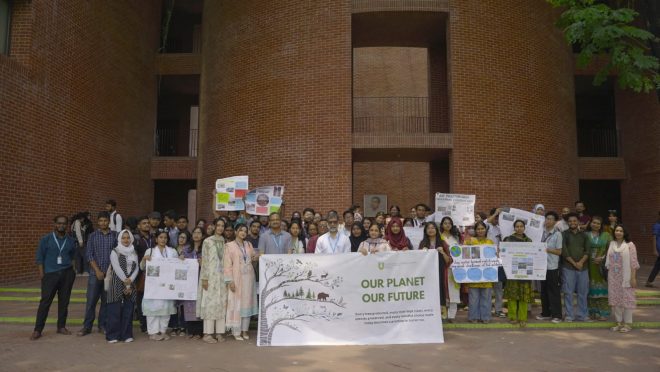
The Department of Environmental Studies and Sustainability (ESS) at the University of Liberal Arts Bangladesh (ULAB) celebrated World Environment Day 2026 on 9 June through a series of engaging activities highlighting the importance of environmental stewardship, climate action and sustainable urban development.
The event brought together students, faculty members, environmental practitioners and policymakers to raise awareness of pressing environmental challenges and explore innovative pathways towards a greener future.
As part of the celebration, ULAB students presented a range of creative and research-based eco-concepts through poster exhibitions addressing real-world urban environmental challenges. The presentations demonstrated the students’ commitment to developing practical and sustainable solutions to issues including pollution, waste management, biodiversity conservation and climate resilience.
The programme also featured an awareness rally led by students and faculty members across the campus. The rally served as a visible demonstration of solidarity and collective responsibility, encouraging the university community to take meaningful action in support of environmental protection and sustainable living.
A key highlight of the celebration was a panel discussion titled, “From Grey to Green: Can Nature-Based Solutions Transform Our Cities?” The session examined how nature-based approaches can help address critical urban challenges, including air pollution, plastic waste and the loss of green spaces.
The discussion was moderated by Mr Hasib Irfanullah, Visiting Research Fellow at the Centre for Sustainable Development (CSD), ULAB. The distinguished panel comprised Dr Md Niamul Naser, Professor at the University of Dhaka; Mr Solaiman Haider, Director of the Department of Environment, Government of Bangladesh; and Mr Arif M. Faisal, Programme Specialist at UNDP Bangladesh.
Drawing on their diverse expertise, the panellists emphasised the urgent need to integrate nature-based solutions into urban planning and governance. They highlighted how ecosystem restoration, the expansion of urban green spaces and sustainable waste management practices can contribute to healthier, more resilient and climate-adaptive cities.
The World Environment Day celebration reaffirmed ULAB’s commitment to sustainability education, environmental research and community engagement. Through student-led initiatives and knowledge-sharing platforms, the university continues to foster environmental leadership and inspire action towards a more sustainable future.
As Bangladesh faces growing environmental and climate-related challenges, the event served as a reminder that transforming cities from grey to green requires collective effort, innovative thinking and strong collaboration among academia, government institutions, development partners and citizens.