Inside Norway’s football revolution: How strategic infrastructure and state-regulated funding built a World Cup powerhouse
While global football attention frequently centres on superstars like Erling Haaland and Martin Ødegaard, Norway’s rapid ascent to the 2026 World Cup quarter-finals is fundamentally the result of a highly structured, two-decade economic and tactical blueprint.
Inside Norway’s football revolution: How strategic infrastructure and state-regulated funding built a World Cup powerhouse
While global football attention frequently centres on superstars like Erling Haaland and Martin Ødegaard, Norway’s rapid ascent to the 2026 World Cup quarter-finals is fundamentally the result of a highly structured, two-decade economic and tactical blueprint.
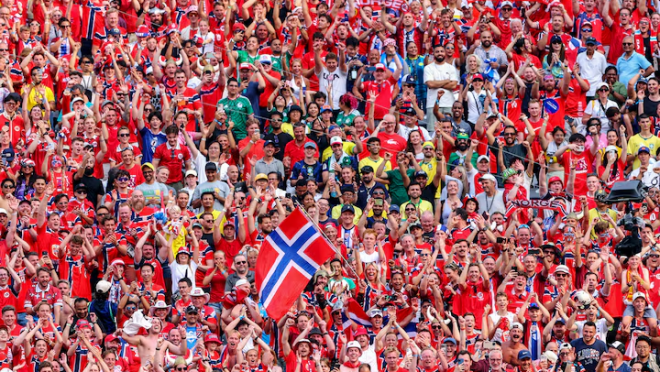
Once predominantly known for winter sports, the Nordic nation has successfully engineered a sustainable talent pipeline that offers a masterclass in long-term sports management and public-private synergy.
Between 2000 and 2010, the Norwegian Football Federation executed a massive capital expenditure strategy focused on winter-proofing the sport. According to Håkon Grøttland, Head of Player Development at the federation, the primary catalyst was transitioning football from a seasonal summer game to a year-round sport via artificial pitches.
“When I started with the football federation in 2010, it was my dream that Norway could compete at the World Cup because we had too many years of talking about 1998,” Grøttland told BBC Sport.
The scale of the infrastructure push remains significant. Between 2016 and 2025 alone, according to a BBC report, Norway constructed 539 new artificial pitches and renovated 586 others. This predictable infrastructure directly facilitated a shift from the physical, defensive tactics of the 1990s to the highly technical, ball-dominant style seen in the current national team.
What sets the Norwegian model apart is its self-sustaining funding mechanism. Backed by its massive, oil-wealth-driven economy, Norway strictly regulates domestic betting. The state-owned gambling operator, Norsk Tipping, is legally mandated to divert 64% of its proceeds directly into sporting purposes, with a primary focus on community and grassroots facilities. In 2026 alone, this structure generated over 2 billion Norwegian kroner (£152.7 million / approximately $195 million) for sports infrastructure, ensuring local clubs do not face financial barriers to maintenance and development.
Following a failure to qualify for Euro 2012, the federation launched the Landslagsskolen (National Team School, or NTS) in 2013. Unlike centralised academies like France’s Clairefontaine, the NTS operates as a collaborative network connecting grassroots clubs, regional districts, elite top-flight clubs, and the national federation.
The return on this structural investment is clearly visible in the current squad. Out of the 26-man World Cup squad, 17 now play in Europe’s elite “Big Four” leagues (Premier League, Bundesliga, La Liga, and Serie A). In Norway’s recent 2-1 knockout victory over Brazil, 14 of the 15 players utilised had come directly through the NTS pathway.
Furthermore, Norway’s philosophy intentionally delays aggressive talent filtering. Unlike English academies that scout and sign children at the age of eight, Norwegian players remain with local grassroots clubs until the age of 12, preventing early burnout and keeping doors open for late bloomers.
For Norway, player development has also become a highly profitable export industry. Midfielder Martin Ødegaard was signed by Real Madrid at just 16 years old for €4 million, while Erling Haaland’s market value has skyrocketed during his tenures at Borussia Dortmund and Manchester City.
“One of our main goals in Norwegian football is to produce and sell players to the big leagues,” Grøttland noted. “At the same time, over the last couple of years, our domestic league has developed. The two things work together.”
By treating youth development as a long-term economic strategy rather than a short-term hunt for victories, Norway has proved that targeted infrastructure investment and transparent funding models can turn a country of just 5.5 million people into a global sporting powerhouse.