Air pollution kills 242 people daily in Bangladesh's major cities, study finds
The study also estimates that the pollution causes annual economic losses of nearly $23 billion.
Air pollution kills 242 people daily in Bangladesh's major cities, study finds
The study also estimates that the pollution causes annual economic losses of nearly $23 billion.
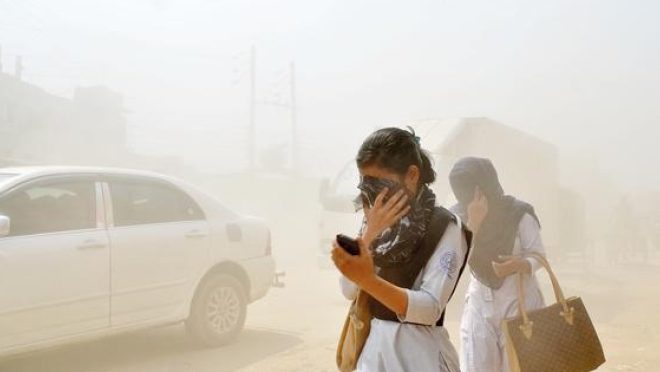
Air pollution caused by fine particulate matter (PM2.5) is responsible for an estimated 88,240 premature deaths every year across Bangladesh’s six major cities, equivalent to around 242 deaths a day, according to a new study by Jahangirnagar University.
The study also estimates that the pollution causes annual economic losses of nearly $23 billion, or around Tk2.8 lakh crore.
The study, titled Mortality and Economic Costs of Ambient Air Pollution in Six Major Cities of Bangladesh, was conducted by the university’s Department of Public Health and Informatics under the supervision of its chairman and associate professor, Dr Md Sakhawat Hossain.
It analysed the health and economic impacts of PM2.5 pollution in Dhaka, Chattogram, Rajshahi, Khulna, Sylhet and Barishal, and was recently published in the journal Pollution.
The researchers estimated that PM2.5 pollution caused around 88,240 premature deaths across the six cities in 2021, about 260 deaths per 100,000 people, or an average of 242 deaths a day.
The resulting annual economic loss was estimated at nearly $23 billion, or around Tk280,000 crore at the current exchange rate, equivalent to about 5% of Bangladesh’s GDP.
Among the pollution-related deaths, an estimated 37,519 were linked to heart disease, 8,344 to chronic respiratory diseases and 811 to lung cancer.
City-wise analysis showed Dhaka recorded the highest number of premature deaths associated with PM2.5 pollution at around 68,703, followed by Chattogram (11,202), Rajshahi (2,827), Khulna (2,625), Sylhet (1,488) and Barishal (1,395).
The study found that premature deaths linked to air pollution rose steadily across all six cities between 2013 and 2021, with Dhaka recording the sharpest increase, an average of 3,484 additional PM2.5-related deaths annually. The researchers said the trend reflects worsening urban air quality and underscores the urgent need for effective pollution control measures.
“We often view air pollution as only an environmental issue. But our study shows it causes nearly 88,000 premature deaths every year and economic losses equivalent to around 5% of the country’s GDP,” said Dr Md Sakhawat Hossain, the study’s lead researcher.
“Our findings serve as a warning for policymakers. Without immediate and effective action to control air pollution, the country’s health and economic losses will continue to grow,” he added.
The study said a significant share of premature deaths and economic losses could be avoided through the strict implementation of the World Health Organization’s (WHO) air quality guidelines.
The researchers recommended evidence-based policies to reduce PM2.5 emissions from multiple sources, strengthen integrated urban air quality management and adopt coordinated measures to protect public health.
Ambient air pollution is one of the world’s leading environmental risk factors for premature deaths and economic losses.
In Bangladesh, rapid urbanisation has worsened the problem, though city-level evidence on its health and economic impacts remains limited.
The Climate Change, Air Quality and Health Research (C2AHR) Unit at Jahangirnagar University’s Department of Public Health and Informatics has been conducting long-term research on the issue.