Before you watch The Odyssey, read this
Christopher Nolan is adapting a poem that is roughly 2,700 years old, composed before anyone agreed on how to spell things consistently, by a poet whose existence some scholars still argue about.
Before you watch The Odyssey, read this
Christopher Nolan is adapting a poem that is roughly 2,700 years old, composed before anyone agreed on how to spell things consistently, by a poet whose existence some scholars still argue about.
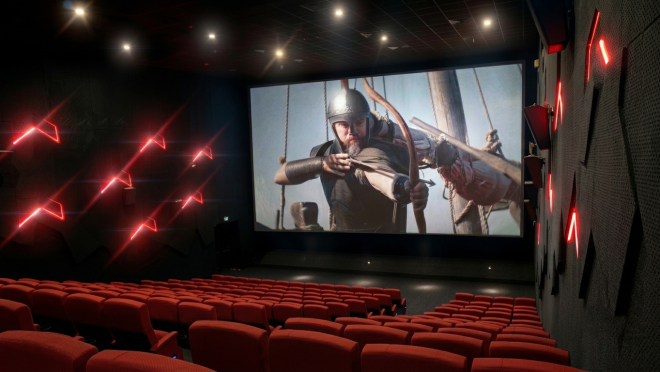
Walking into this movie with zero context will be like walking into The Dark Knight Rises having never seen Batman Begins; except the “previous movie” here is the entire foundation of Western storytelling.
So let’s do the actual homework: not what happens in Nolan’s film, but what you need to have loaded into your brain about the myth itself.
The Odyssey is technically Homer’s second epic. The first is the Iliad, which covers the final weeks of the ten-year Trojan War, the siege of the city of Troy by a coalition of Greek kings. The Odyssey picks up after that war ends, following one of those kings, Odysseus, on his brutal, decade-long attempt to get home. So the war itself, and everything that happened during it, is backstory, already finished before page one. You don’t need to have read the Iliad, but knowing it exists, and knowing Troy already fell before this story begins, will save you some confusion.
Now the question arises: who is Odysseus? Odysseus is the king of Ithaca, a small island kingdom in Greece. He’s not the strongest Greek hero, that’s usually Achilles; and he’s not the most tragic. His whole reputation, both in the ancient world and today, rests on being clever and devious. He’s the guy who supposedly came up with the Trojan Horse: the plan to hide Greek soldiers inside a giant wooden horse to sneak into Troy, which isn’t actually in the Iliad at all; it’s referenced in The Odyssey and other later texts. That’s important context: Odysseus’s whole mythological brand is “the smart one who wins through trickery, not brute force.” Word association: Achilles is rage; Odysseus is the guy who thinks his way out of everything, sometimes to a fault.
Odysseus’s journey home from Troy to Ithaca should take a matter of weeks by ship. It takes him ten years because he keeps angering a god along the way; specifically, Poseidon, God of the Sea, who has a personal grudge against him for most of the poem. This is the core engine of the whole story: a mortal man versus vindictive, meddling gods who can make or ruin his life on a whim. Ancient Greek religion didn’t have a single all-powerful god; it had an entire feuding family of them (the Olympians), each with their own agendas, favourites, and grudges, and mortals were essentially pawns caught between their squabbles. Understanding that gods in this world are petty, jealous, and actively interventionist, not distant, abstract forces, reframes basically everything that happens to Odysseus.
While Odysseus is gone for twenty years total (ten fighting at Troy, ten trying to sail home), his wife Penelope is left alone in Ithaca, and their son Telemachus grows up without a father. Because everyone assumes Odysseus is dead, Penelope is besieged by suitors, a horde of entitled young noblemen who move into her palace uninvited and pressure her to remarry, assuming Odysseus is never coming back.
Penelope becomes a whole separate archetype in Western culture: the emblem of loyalty and patience, famous for stalling the suitors for years through clever tricks of her own. She’s not a passive damsel waiting around; rather, she’s arguably as cunning as her husband. This dual story, Odysseus struggling to get home, Penelope struggling to hold the home together, is the actual shape of the epic, not just a single-track adventure story.
Pop culture has flattened The Odyssey into “a guy fights a bunch of monsters,” and yes, that’s a real chunk of it, but structurally, the poem doesn’t even start with Odysseus. It opens with Telemachus, now a young man, going searching for news of his missing father. Odysseus himself doesn’t show up as our narrator until several books in, and a large stretch of his most famous adventures are actually told in flashback, recounted by Odysseus himself at a feast, not shown as they happen. That nested, non-chronological structure is, frankly, very Nolan, which likely explains part of why this story appealed to him in the first place.
Officially, the tagline of this movie is blunt: “Defy the Gods.” Worth sitting with before the lights go down, Nolan’s films are rarely just adaptations; they’re usually an argument about something. Given his track record with obsession, time, and men who won’t stop building towards their own undoing (Cobb, Oppenheimer, the list goes on), a story about a man cursed by divine forces to wander the sea for a decade before he can go home is not exactly a neutral choice of material for him.
You will lose track of who’s who if you don’t brace for it beforehand. The headline names: Matt Damon as Odysseus, Anne Hathaway as his wife Penelope, Tom Holland as his son Telemachus, Lupita Nyong’o as Helen of Troy, and Zendaya as the goddess Athena. Beyond that, the supporting cast reads like an awards-season guest list: Charlize Theron, Robert Pattinson, Jon Bernthal, Benny Safdie, Samantha Morton, and John Leguizamo, among a genuinely startling number of others. A few casting curiosities are worth flagging before you go in, so you’re not distracted mid-film wondering, “wait, is that…”: rapper Travis Scott has a role in the film, and Logan Marshall-Green replaced Cosmo Jarvis partway through production.
Strip away the monsters and gods, and The Odyssey is fundamentally a story about identity and homecoming, about whether the people and place you left behind will still recognise you, and whether you’ll still recognise yourself, after enough time and enough suffering have passed. That’s the thread scholars generally agree gives the poem its staying power, and it’s very likely the thread Nolan is most interested in pulling on, given his career-long fascination with time, memory, and men who lose themselves chasing something.
That’s the actual prep work. The rest, what Nolan does with it, is what you’re paying for a ticket to find out.