Scientists find human brain may have evolved from two separate nervous systems
Scientists find human brain may have evolved from two separate nervous systems
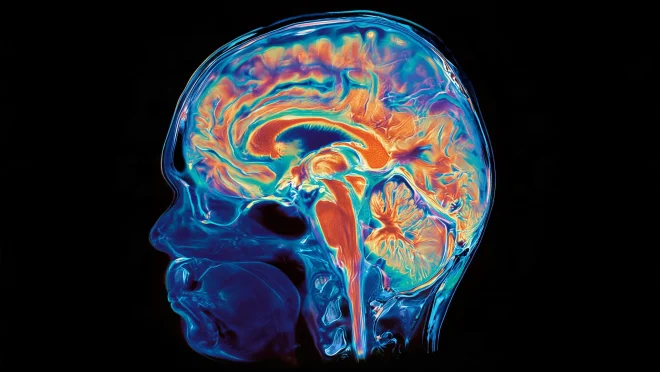
Scientists at Stanford Medicine have found evidence that the human brain develops from two distinct cellular systems, suggesting that evolution may have fused two ancient nervous systems into a single organ.
The discovery could change how researchers understand brain development and help them study neurological diseases affecting the brain stem, including amyotrophic lateral sclerosis (ALS) and spinal muscular atrophy (SMA).
Researchers found that the front and back of the brain develop from different populations of progenitor cells at a very early stage of embryonic development.
One population, marked by the gene Otx2, develops into the forebrain and midbrain, which are involved in functions including language, consciousness and abstract reasoning. Another, marked by Gbx2, develops into the hindbrain, which controls vital functions such as breathing, heartbeat, sleep and swallowing.
The team found the two cell populations remain separate from the earliest stages of development, with fundamentally different chromatin configurations guiding them along different developmental paths.
The finding also helped researchers grow functional human hindbrain motor neurons in the laboratory for the first time. The neurons produced electrical signals and developed proteins associated with areas controlling facial and swallowing muscles.
The researchers then found evidence of a similar two-system arrangement across more than 550 million years of evolution, including in chickens, zebrafish and acorn worms.
They also noted that jellyfish, which diverged from humans hundreds of millions of years ago, have two nervous systems positioned at different ends of their bodies. The findings raise the possibility that the modern vertebrate brain evolved when two existing neural systems were brought together.
The researchers say the work could improve studies of ALS and SMA, which affect neurons in the brain stem. Growing human hindbrain neurons in the laboratory could give scientists a way to study these diseases without relying on tissue collected from living patients.
The team now plans to investigate the developmental origins of the spinal cord and how ALS and SMA damage hindbrain neurons.
“Now we have a model to better understand these devastating diseases, and work toward regenerative therapies for them,” said Rayyan Jokhai, one of the study’s co-first authors.