Why are we lazy?
Why are we lazy?
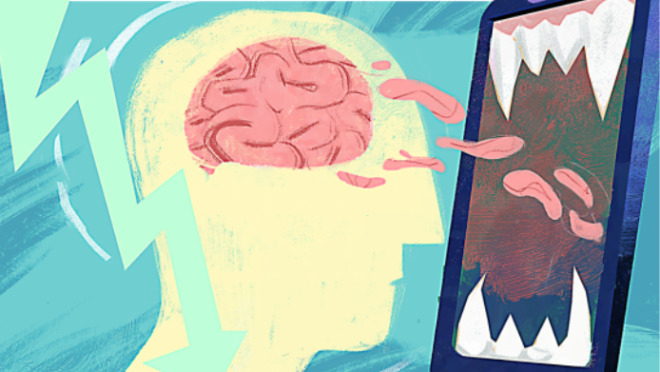
Understanding why apathy appears in some people and not in others can reveal scientific ways to strengthen motivation. We all know individuals who will push themselves in almost any situation, while others seem perfectly content doing very little. It is easy to label the latter group as lazy, more comfortable on the sofa than pursuing a new idea. We usually explain this difference through upbringing, personality, confidence or life circumstances.
However, recent work in neuroscience, along with findings from patients with brain disorders, paints a more complex picture. Researchers are discovering that motivation depends on specific systems in the brain. When those systems fail, even highly driven people can become unusually indifferent to work, hobbies and social life. A piece published in The Guardian explored this shift in detail, showing how a sudden change in brain function can transform someone from energetic to uninterested almost overnight.
One example comes from a patient called David, a young professional who had always been enthusiastic, sociable and proactive. Almost abruptly, he lost interest in his job, his friends and even basic responsibilities. He was not sad or hopeless, as one might expect with depression. Instead, he simply could not be bothered to do anything. He even lost his job and reacted with indifference. His friends eventually took him in, though they soon realised he would not lift a finger unless someone explicitly told him to.
Eventually doctors discovered the cause: two tiny strokes in a part of the brain called the basal ganglia. This region connects our desires and goals to our actions. When it fails, people often remain physically capable but lose their internal drive to initiate tasks. Research shows that such individuals struggle to find everyday activities rewarding enough to justify the effort.
For some patients, medicines that stimulate the dopamine system can revive motivation. Dopamine is central to the brain’s reward network. Scientists used to believe it produced feelings of pleasure, but now understand that it drives the urge to pursue meaningful outcomes. Once David began taking medication that activated dopamine receptors, his interest in life slowly returned. He found work again, became more independent and even developed a new relationship.
Studies of healthy people show similar patterns on a smaller scale. At Oxford University, scientists scanned the brains of students with varying levels of motivation. Those who described themselves as apathetic did not have weaker motivation circuits. Instead, those circuits worked harder whenever they had to decide whether an activity was worth the effort. In other words, the decision-making process was more taxing for them, making them more likely to avoid the choice altogether.
This explains a common experience: most people will take action when the reward is clearly worthwhile, but apathetic individuals often struggle with the borderline cases. When the benefit is small or uncertain, they hesitate. Their brains have to think harder to judge the effort involved, and because thinking itself can feel like a burden, they quickly drift towards saying no.
This has important implications. Treating apathy like a moral failing rarely helps, and nagging or scolding usually makes no difference. Instead, researchers suggest removing the need for constant effort-based decisions. One practical method is to plan tasks in advance. A weekly or daily schedule reduces the repeated mental calculations that drain motivation. When the decision is already made, the brain does not need to argue with itself about whether a task is worthwhile.
Another helpful approach involves physical activity. Repeated findings show that aerobic exercise, regular dance sessions or brisk walking can improve motivation, possibly by influencing dopamine-related pathways. External cues such as phone alarms or visual reminders can also encourage action by prompting the brain at the right moment.
The ultimate goal is to work with the brain’s natural systems by reducing the mental cost of making decisions. By understanding unusual cases like David’s and applying those lessons to everyday life, researchers hope that even the most unmotivated among us can learn to turn an instinctive “not worth it” into a more open “perhaps I will”.