IUB graduate Farzana Islam brings Global South realities into AI-driven healthcare research
Her work seeks to ensure that AI-driven health solutions are not only technologically advanced, but also ethical, understandable, inclusive and relevant to the communities they are designed to serve.
IUB graduate Farzana Islam brings Global South realities into AI-driven healthcare research
Her work seeks to ensure that AI-driven health solutions are not only technologically advanced, but also ethical, understandable, inclusive and relevant to the communities they are designed to serve.
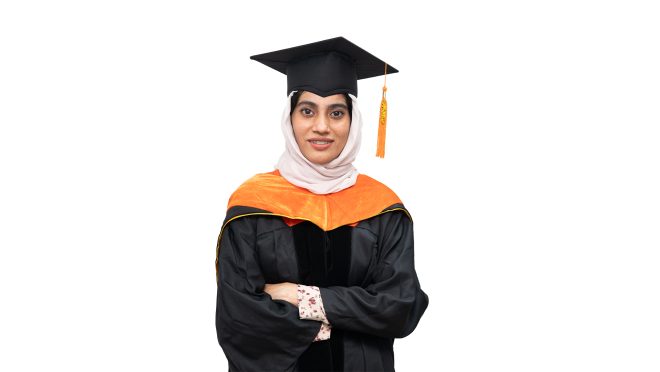
As artificial intelligence becomes increasingly embedded in healthcare, questions around transparency, ethics and real-world applicability are becoming more urgent, particularly in developing countries, where many existing frameworks do not reflect local realities.
Against this backdrop, a young Bangladeshi researcher has contributed to an important gap in the field. Farzana Islam, an MSc graduate in Computer Science from Independent University, Bangladesh (IUB) and affiliated with IUB’s Center for Computational & Data Sciences (CCDS), has published a study in the Journal of Medical Internet Research (JMIR) proposing a participatory framework for explainable artificial intelligence (XAI) in mobile health (mHealth).
Her work seeks to ensure that AI-driven health solutions are not only technologically advanced, but also ethical, understandable, inclusive and relevant to the communities they are designed to serve.
The article, titled A Proposed Participatory Framework for Explainable AI in mHealth: Integrating User and Stakeholder Requirements, is a direct outcome of her MSc thesis work at IUB. The research was supervised by Dr Ashraful Islam, current director of CCDS, and co-supervised by Prof Dr M Ashraful Amin, founder director of CCDS, and Prof Dr Moinul Zaber of the Institute of Development Studies at the University of Sussex in the UK.
Explaining the study, Farzana Islam said the research examines how artificial intelligence used in mHealth applications can be made easier to understand and more trustworthy for users.
“It proposes a framework in which patients, doctors and other stakeholders are involved in designing these systems so that the technology explains its decisions clearly. The goal is to create AI-powered health solutions that better fit the needs of people, especially in low-resource countries and the Global South,” she said.
Farzana, who received the Top Achiever’s Award at the 26th Convocation of IUB held in January 2026, said the issue is particularly relevant in local contexts.
“Consider a pregnant woman in Bangladesh using a mHealth app to make decisions about her care. If the system gives her advice without clearly explaining why, or if it is based on data that does not reflect her reality, it can create confusion or even risk. This research is about building a framework so that such technologies are understandable, trustworthy and truly useful for people in contexts like ours,” she said.
JMIR is a peer-reviewed, open-access journal in digital health and medical informatics. According to the researchers, it holds Q1 status in both Scopus and Web of Science, with a CiteScore of 11.7 and an impact factor of 6.0.
Dr Ashraful Islam said the publication is significant because of its focus.
“To the best of our knowledge, this is the first policy article addressing explainable artificial intelligence for mHealth solution development specifically targeting countries in the Global South, a region long underrepresented in such high-impact research discourse,” he said.
JMIR Publications also granted the team a substantial waiver on article processing charges, waiving 71% of the total fee, or $2,350 out of the standard $3,350, according to the institution.
Currently, Farzana is working as a senior lab instructor in the Department of Electrical and Computer Engineering at North South University. She has also been accepted into a fully funded PhD programme at the University of Connecticut in the US.
Dr Islam said the combination of a high-impact international publication, a major APC waiver, an academic research position and a fully funded doctoral placement reflected IUB’s growing capacity to produce research graduates prepared for top-tier PhD programmes, academia and the global industry.
IUB’s Center for Computational and Data Sciences is a research-focused initiative promoting interdisciplinary work in data science, artificial intelligence and computational technologies. It supports faculty and student research, facilitates collaboration and aims to develop data-driven solutions to real-world challenges.