Journalism and public relations studies offer expanding career paths in Bangladesh
Public relations and journalism extend far beyond the creation or presentation of news. They represent a dynamic and multidimensional field of study that is closely connected to every layer of society.
Journalism and public relations studies offer expanding career paths in Bangladesh
Public relations and journalism extend far beyond the creation or presentation of news. They represent a dynamic and multidimensional field of study that is closely connected to every layer of society.
Through academic training in this discipline, students can pursue careers in journalism, public relations, filmmaking, advertising, banking, research and academia. In today’s world, particularly within our society, it is difficult to find an individual whose daily life is not influenced in some way by media.
In contemporary times, both traditional and social media platforms have become integral to human existence. They play a vital role in sharing information, providing entertainment, supporting education, enabling the expression of opinions and shaping public discourse. While perceptions of media may differ based on age, religion, culture or political outlook, its influence is undeniable. Although media outlets are often criticised for spreading misinformation, they also possess a vitality that helps keep society informed, engaged and aware.
Building a successful career in journalism and public relations requires a set of core qualities. These include sound judgement, strong communication skills, integrity, a confident personality, courteous behaviour, prudence, objectivity, perseverance, discipline, accountability and courage. Such attributes distinguish professional journalists and public relations practitioners from others in the field.
Students frequently ask what career options are available after studying journalism, whether the profession is safe and whether sufficient opportunities exist in Bangladesh. Due to limited access to accurate information, clear answers are not always available. However, in the context of Bangladesh, prospects in journalism and communication are increasingly promising. The rapid growth of digital media has significantly expanded employment opportunities in recent years.
The discipline is particularly suited to creative individuals, offering multiple avenues to express ideas, emotions and innovation. Reputed media organisations across the country continue to show strong demand for graduates in journalism and communication, reflecting the sector’s growing relevance.
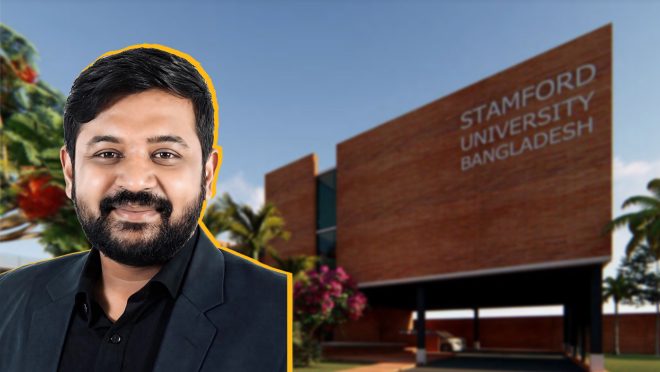
The institutional journey of journalism and communication education in Bangladesh began in the 1960s. In 1962, the University of Dhaka introduced a one year postgraduate diploma programme. This was followed by a two year Master’s programme in 1969 and an honours programme in the 1977 to 1978 academic session, which was later extended to a four year course. During the 1990s, journalism departments were established at Rajshahi University and Chittagong University. Programmes were later introduced at Jahangirnagar University, Begum Rokeya University, Khulna University, Islamic University Kushtia and Jatiya Kabi Kazi Nazrul Islam University. Today, several private universities, including Stamford University Bangladesh, the University of Liberal Arts Bangladesh and Daffodil International University, also offer degrees in media studies and journalism.
Opportunities for higher education in this field are equally wide ranging. Universities across Europe, America and other regions offer Master’s and PhD programmes in journalism and communication. Within Bangladesh, institutions such as the Press Institute of Bangladesh provide short courses and postgraduate diplomas aimed at raising professional standards. The institute has played a long standing role in the development of journalism in the country.
Many students who study this subject do not necessarily plan to become journalists. This, however, is not a limitation. The skills and knowledge gained can be applied in advertising agencies, public relations firms, corporate communications, non government organisations and research institutions. Students also develop competencies in statistics, economics and general knowledge, which enhance their competitiveness across a wide range of professions.
At present, there are no inherent barriers within the profession, and future prospects are expected to grow stronger. Journalism remains a diverse and engaging career, offering new experiences each day. For those who enjoy challenges and maintaining a close connection with society, the field holds strong appeal.
Journalism and public relations are not merely academic disciplines. They are powerful mediums through which society can be influenced, truths can be uncovered and pathways for change can be created. With the right guidance, skills and dedication, it is possible to build a successful and respected career in this field.