Toughest exams in the World: China’s Gaokao
Toughest exams in the World: China’s Gaokao
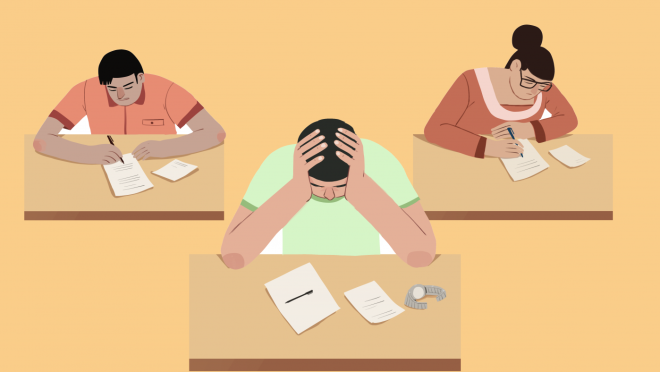
If you think the admission tests of Bangladesh are unbearably hard, where 40 to 50 students compete for one seat, then you have no idea how intense things can get in other parts of the world.
In this series, I will explore some of the toughest exam systems around the world. Exams that are so demanding that they make our experience look almost trivial in comparison.
Today’s exam: China’s Gaokao exam.
The Gaokao is China’s national university entrance exam which is held in every June. It is often described as the toughest exam in the world and rightly so. It is 2 to 4 days of entrance exams, lasting for less than 2 hours each, into which students pour everything that they have learned in 12 years. More than 13 million students sit for it each year. In 2024, China’s top 115 universities took in only 5,800 students out of more than 13.4 million applicants, which means 2,310 people competed for one position. The statistics is nothing compared to that of our country.
The structure and syllabus of Gaokao is itself extremely demanding. The questions exceed their school syllabus and sometimes even university students find it hard to solve them. Everyone has to take the mandatory core subjects which are Chinese, Math and a foreign language, usually English. Then, they also must choose three more subjects from science and humanities. The individual subjects include a vast syllabus itself that requires 12 to 15 hours of rigorous studying everyday by the students. It is far beyond what most teenagers study anywhere else.
The pressure of such a system pushes students to take drastic measures. Reports from various Chinese media outlets describe students studying through IV drips to stay awake and alert. Doctors supposedly prescribe birth control pills to female students whose parents wants to ensure their daughters are not menstruating during the exams. Other than these, sleep deprivation is the most common issue during this time. Some desperate parents even hire people known as surrogate exam takers, who use forged identity, to sit in the exam on behalf of their children by paying them millions of yuan. The competition is so fierce that is becomes a lifestyle for the students.
Because if the students fail this exam, it is a lifetime of mediocre jobs for them.
Not just the students but their families also participate in this race with them. Just as we once had lodging masters who lived with the students and taught them, China has its own Gaokao nannies. These nannies are highly educated young graduates who move in with the student’s full time to help them study, revise and prepare. Moreover, cities deploy police at dawn to ensure smooth traffic on the days of exams. Taxi companies designate special vehicles to transport examinees. Some parents book hotels close to the exam center so their children do not waste time while commuting. Many hotels offer Gaokao Package, charging up to 2,000 yuan a night and still selling out.
The Gaokao becomes a national phenomenon, unlike Bangladeshi admission tests. In Bangladesh, traffic does not seem to care about exams but not in China, where streets fall silent near test centers even construction works pauses.
Success in Gaokao brings more than just a university seat. The toppers literally become celebrities overnight. Newspapers and TV channels profile these toppers and elite universities invite them to study there. In a sense, Gaokao toppers in China enjoy a level of prestige equivalent to the toppers of Dhaka University Ka unit but in a much much larger national scale.
While Bangladeshi university admission tests are painful and pressurising, China’s Gaokao exists on an entirely different scale. It is a national phenomenon in their country and for millions of students, a decisive moment of their entire life.
In the next part of this series, we will explore another extreme exam culture.
Until then, bye bye.