007 First Light: A promising Bond adventure that plays it safe
‘007 First Light’ is a gritty origin story that follows a young, reckless James Bond as he hunts down a rogue agent across the globe to earn his legendary double-0 status and license to kill
007 First Light: A promising Bond adventure that plays it safe
‘007 First Light’ is a gritty origin story that follows a young, reckless James Bond as he hunts down a rogue agent across the globe to earn his legendary double-0 status and license to kill
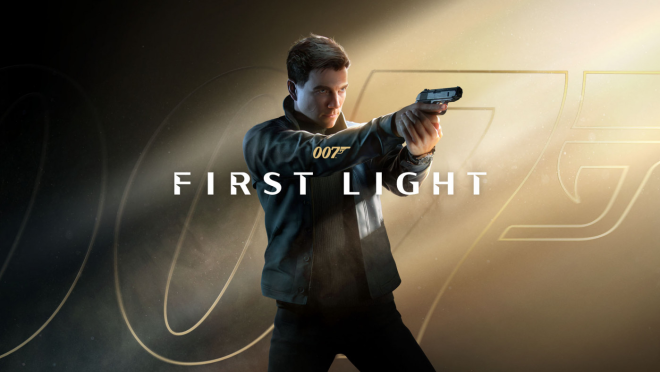
When IO Interactive, the developers behind the fan-favourite ‘Hitman’ series, announced ‘007 First Light’, it was easy to imagine the giant potential of the game. The Hitman series was known for its creativity and the freedom it gave its players in how they wanted to execute missions. The sky was the limit, and combine that with the charisma and action of James Bond, and you would have a perfect Game of the Year contender.
But even with all that it had going for the project, it fails to live up to its own potential, yet still manages to leave a fun experience in its wake.
The end result is a polished and entertaining Bond adventure that captures much of the character’s charm and cinematic appeal. It looks fantastic, travels to stunning locations and tells a compelling origin story for Britain’s most famous spy. Yet despite its undeniable strengths, First Light never quite reaches the heights many hoped it would. Beneath the glamour and spectacle lies a game that often feels surprisingly conventional.
At its core, First Light explores Bond’s early days before he became the legendary secret agent audiences know today. This younger version of Bond is confident, reckless and eager to prove himself. The game spends considerable time showing how he develops the physical skills, instincts and combat abilities required to become a 00 agent.
In fact, it spends perhaps a little too much time on that journey. The opening hours function as an extended tutorial, carefully explaining Bond’s training and growth. While this helps establish the character, it also slows the pace considerably. Players hoping to jump straight into high-stakes espionage may find themselves waiting longer than expected for the story to truly ignite.
The narrative itself is a mixed bag. On one hand, it delivers an authentic Bond adventure filled with exotic destinations, secret organisations and larger-than-life villains. On the other, some of the more interesting character questions remain frustratingly unexplored. Bond’s emotional response to his first kill, for example, receives almost no attention despite seeming central to his transformation into a spy.
Instead, the story often focuses on less compelling details while overlooking opportunities for deeper character development. By the time the credits roll, Bond has certainly become more capable, but whether he has truly changed as a person is less clear.
That said, the world-building deserves praise. IO Interactive excels at creating memorable locations, and First Light takes players on an impressive international tour. From the deserts of Mauritania to the icy wilderness of the Antarctic Circle, every destination feels distinct and visually striking.
These settings help maintain a sense of adventure throughout the campaign. Like Agent 47 before him, Bond is constantly moving between vastly different environments, ensuring that the game rarely becomes visually repetitive. The variety of locations is one of First Light’s greatest strengths and contributes significantly to its cinematic feel.
Where the experience becomes less consistent is in its gameplay.
First Light alternates between two primary styles: action-heavy combat sequences and more investigative, stealth-focused missions. Unfortunately, the action segments prove to be the weaker half of the package.
IO Interactive’s expertise has always been in open-ended sandbox design rather than traditional third-person shooting. That difference becomes apparent throughout many of the game’s combat encounters. The cover system feels awkward and unreliable, often behaving unpredictably when players attempt to move between positions. Simple actions can occasionally become frustrating as Bond sticks to the wrong surface or unexpectedly exposes himself to enemy fire.
The shooting itself is functional but lacks impact. Gunfights rarely evolve beyond straightforward encounters against standard enemies, leaving combat feeling somewhat repetitive over the course of the campaign.
Thankfully, melee combat fares much better. Bond’s punches, counters and takedowns carry satisfying weight, making fistfights considerably more enjoyable than shootouts. There is a welcome sense of physicality to close-quarters encounters, and the variety of enemy types helps keep these battles engaging.
Even so, the combat system is not without issues. Context-sensitive interactions can become messy during hectic encounters, leading Bond to perform unintended actions. One moment you might be trying to throw an object at an enemy; the next, Bond is interacting with a completely different object nearby. These small frustrations appear regularly enough to prevent the combat from ever feeling truly polished.
Even then, the game is relatively forgiving. Enemy artificial intelligence is remarkably lenient, often failing to notice disturbances happening only metres away. While this keeps the action flowing smoothly, it also reduces tension and undermines the fantasy of infiltrating highly secure locations.
Ironically, the sections where First Light shines brightest are those that most closely resemble IO Interactive’s previous work.
The investigative missions allow players to gather information, eavesdrop on conversations and explore semi-open environments. These sequences offer glimpses of the studio’s trademark design philosophy and provide some of the game’s most enjoyable moments.
However, comparisons with Hitman are impossible to avoid. The sandbox areas are significantly smaller and less complex than those found in Agent 47’s adventures. Opportunities for experimentation are more limited, and player freedom is noticeably restricted. Missions often present the illusion of choice while guiding players towards a single intended outcome.
That doesn’t make these sections bad. Far from it. They remain entertaining and often provide welcome breathing room between action set-pieces. Yet they consistently leave the impression that the game could have been much more ambitious.
The most memorable moments arrive during the unexpected sequences that break away from both combat and investigation. These one-off set-pieces showcase creativity and variety, offering glimpses of a bolder, more distinctive Bond experience. Unfortunately, such moments are relatively rare.
By the end of its roughly 15-hour campaign, 007 First Light leaves quite an impression. It is a game filled with talent, craftsmanship and genuine affection for the Bond franchise. The visuals are excellent, the locations are memorable and the story successfully establishes a new interpretation of the iconic spy.
Yet it also feels surprisingly restrained. Whether due to the expectations surrounding the Bond licence or a cautious approach to launching a new series, IO Interactive often plays things safe where many hoped it would take risks.
First Light is not a bad game. In fact, it is often a very good one. But it rarely feels exceptional. For a studio capable of producing the remarkable freedom and creativity seen in Hitman: World of Assassination, that may be the greatest disappointment of all.
Still, there is plenty of promise here. If IO Interactive builds upon these foundations and embraces greater ambition in a sequel, Bond’s future in gaming could be extremely bright indeed.