Growth without guardrails: Food safety concerns rising in Bangladesh
Bangladesh’s food industry is on fire. Once a modest patchwork of local eateries and family-run shops, it has now grown into a Tk 10,000-crore ecosystem that feeds millions of people every day across cities and small towns alike. But behind this impressive growth lies a worry that should concern every household: is the food we eat safe?
Growth without guardrails: Food safety concerns rising in Bangladesh
Bangladesh’s food industry is on fire. Once a modest patchwork of local eateries and family-run shops, it has now grown into a Tk 10,000-crore ecosystem that feeds millions of people every day across cities and small towns alike. But behind this impressive growth lies a worry that should concern every household: is the food we eat safe?
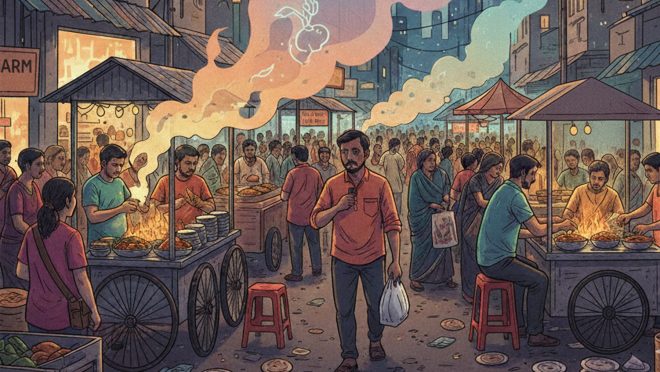
The streets of Dhaka, Chattogram and Gazipur are alive with the scent of sizzling snacks, fresh rotis and steaming plates of curry. Sidewalk cooks, tea stalls, roadside vendors and high-end restaurants now form the backbone of daily life. Yet, for many of these places, hygiene, monitoring and regulation are barely words on paper — not realities in the kitchen.
When the Bangladesh Safe Food Authority (BFSA) tested over 11,000 food samples last year, the results were sobering: nearly 41 percent were unsafe to eat; a jump from just 8.5 percent three years ago. Things that should never get near your plate, like harmful chemicals, contaminated water, pesticide-soaked veggies, are turning up where we least expect them.
For everyday people like Sumon Dutta, who walks past crowded food carts near Bailey Road every evening, the danger feels personal. “We eat from these stalls because life’s too busy to cook,” he says. “But nobody checks how clean the food is, and that scares us.”
The numbers tell the same story: street-side tea stalls and food carts now number in the hundreds of thousands, employing millions but often operating without licenses, inspections or proper hygiene standards. Even small restaurants can open doors without any official check-ups.
Experts argue that food safety can’t be an afterthought. It must be built into every part of the chain, from farm to fork. But with limited resources, overlapping authorities and a growing food economy moving faster than regulations can keep up, protective measures lag behind.
Behind the headlines and fancy business figures lies a simple truth: a nation’s health is only as strong as the food its people eat. And for Bangladesh, that challenge is ready for a serious reckoning.