When the air hurts the mind: Pollution’s hidden toll raises concern for Bangladesh
For millions in Bangladesh’s cities, breathing polluted air has long been treated as an unavoidable part of urban life.
When the air hurts the mind: Pollution’s hidden toll raises concern for Bangladesh
For millions in Bangladesh’s cities, breathing polluted air has long been treated as an unavoidable part of urban life.
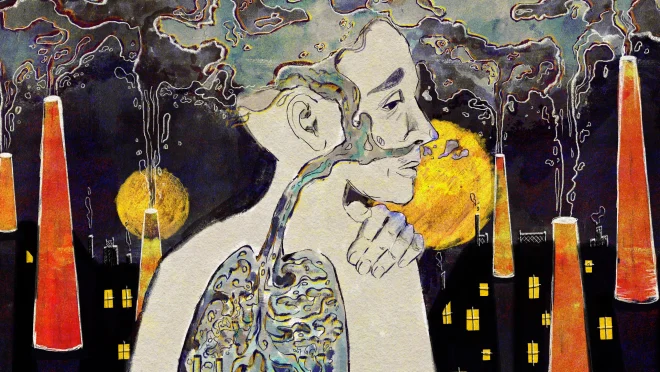
This is something we have endured quietly while commuting through traffic-clogged streets or walking beneath a blue but dusty sky. But new evidence suggests the damage may go far beyond lungs and hearts. Pollution, as scientists warn, may also be quietly weighing on people’s minds.
A recent briefing from the European Environment Agency (EEA) points to growing scientific evidence linking exposure to environmental pollution, including dirty air, traffic noise and toxic chemicals, with an increased risk of mental health problems such as depression and anxiety. Researchers say long-term exposure to pollutants like fine particulate matter (PM2.5) and nitrogen dioxide (NO₂) can influence brain health, potentially contributing to mood disorders and other psychiatric conditions.
For Bangladesh, the findings carry a painful familiarity.
In Dhaka, the air itself often feels heavy, not only with dust and smoke, but with a sense of resignation. On many winter days the capital ranks among the world’s most polluted cities. On Thursday, the city’s Air Quality Index (AQI) hovered around 253, placing it in the “very unhealthy” category, according to global air monitoring data.
For residents, the numbers are not abstract. They are felt in burning eyes, persistent coughs and the thick haze that blurs the skyline. But increasingly, scientists say the invisible consequences may run deeper.
Studies cited by the EEA suggest long-term exposure to polluted air may be linked to higher rates of depression. Short-term spikes in pollution may also worsen symptoms among people already struggling with anxiety or other mental health conditions. Researchers believe microscopic particles can enter the bloodstream through the lungs and trigger inflammation in the brain, a process that may affect mood, cognition and emotional stability.
For a city like Dhaka that is already stretched thin by overcrowding, traffic congestion and relentless noise, the implications feel deeply unsettling.
Some days the air seems to settle on the city like an invisible weight. Breathing is no longer something people do without thinking; it becomes a quiet awareness in the back of the mind, a slight tightness in the chest during the morning commute, a faint irritation in the throat that refuses to leave. On many days, the city’s Air Quality Index climbs into levels considered unhealthy, and the sky takes on that familiar foggy haze that blurs buildings into shadows.
Noise pollution adds another invisible burden. The constant chorus of horns, engines and construction drills rarely pauses. Nights are rarely silent, even in the quiet hours a distant truck or a sudden horn cuts through the darkness. Over time, this endless soundscape chips away at rest. Sleep becomes shallow, interrupted. For many residents, calm is no longer a normal part of urban life but something they occasionally encounter when leaving the city.
Children may face the most troubling consequences. Scientists have increasingly warned that exposure to polluted air during pregnancy and early childhood can influence brain development, shaping emotional and cognitive health in ways that may not fully appear until years later. Substances such as lead and other environmental toxins have been linked to behavioural difficulties, attention problems and learning challenges.
In Bangladesh, this reality often unfolds quietly. Children grow up playing beside dusty construction sites, walking to school along traffic-choked roads, or sitting in classrooms while the smell of exhaust drifts through open windows. It is difficult not to wonder what they are breathing in, day after day, while their bodies and minds are still forming.
Brick kilns burn through the winter on the outskirts of the city. Exhaust fumes pour from thousands of buses, trucks and motorcycles weaving through narrow roads. Construction dust rises into the air with every new building. Each source may seem small on its own, but together they thicken the atmosphere until the skyline fades and the sun looks dull behind the haze.
And still, life goes on.
Morning begins with the rush of commuters. Rickshaw bells echo through crowded streets. Vendors arrange fruit and tea stalls along pavements. Offices open, schools fill with students, and the city moves with a resilience that borders on stubborn determination.
But resilience does not mean immunity.
The cost of living under polluted skies may be accumulating quietly, not only in hospital wards treating asthma or respiratory disease, but in the subtle emotional toll of constant discomfort. When breathing feels heavier, when the air smells faintly burnt, when silence never quite arrives, it becomes harder to feel fully at ease.
The European Environment Agency notes that improving environmental conditions, reducing air pollution, limiting exposure to toxic substances and expanding access to green spaces, can significantly improve mental well-being. Cities with more trees, parks and cleaner air often report lower levels of stress and better public health outcomes.
Yet in Dhaka, green spaces have been steadily shrinking. Parks disappear under concrete, wetlands give way to housing projects, and the rare patches of open air grow rarer with each passing year.
The message from researchers feels both urgent and heartbreakingly simple: the environment people live in shapes how they breathe, how they think and how they feel.
And when the air itself begins to feel heavy, it may not only be the lungs that struggle. It may also be the quiet spirit of a city trying, day after day, to endure the weight of its own sky.