Inside IBA-JU’s Batch Manager role: More than emails and attendance
Honestly, before coming to IBA-JU, I thought a Batch Manager was just another administrative title. Someone who sends reminder emails about deadlines and shows up when attendance gets messy. I was wrong, and I suspect most students are too.
Inside IBA-JU’s Batch Manager role: More than emails and attendance
Honestly, before coming to IBA-JU, I thought a Batch Manager was just another administrative title. Someone who sends reminder emails about deadlines and shows up when attendance gets messy. I was wrong, and I suspect most students are too.
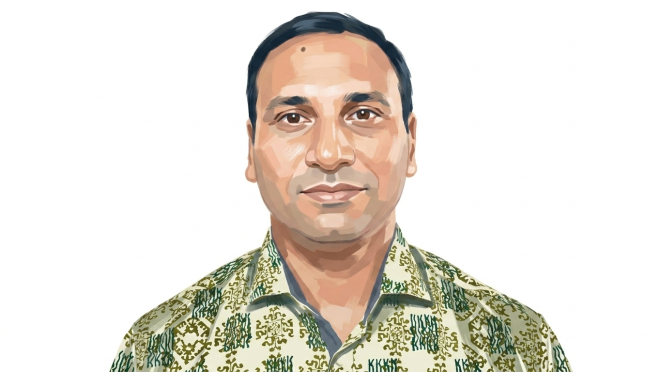
The role is something else. Yes, there is paperwork. Yes, there are exam-related responsibilities. But what actually takes up the most space is something harder to put on a job description — the quiet, ongoing work of making sure students do not fall through the cracks, academically, personally, professionally. All of it.
“We try to maintain contact with students to ensure they face no problems, either personally or academically. We look after class progress, co-curricular activities and their overall growth. Since students tend to avoid sharing their concerns directly, communication is of utmost importance,” Palash sir, my batch manager told me.
Industrial tours, career sessions, mentorship programmes, motivational talks — all of that falls under the same role. The idea is to close the distance between what happens inside a classroom and what waits outside of it. Whether that actually works depends enormously on the person holding the title.
The students walking into IBA today are not the same as the ones who walked in a decade ago. Something has shifted, and it is not subtle. Where an older generation might have arrived focused primarily on finishing a degree, today’s students show up already anxious about internships, industry exposure, and whether their LinkedIn looks competitive enough. They are thinking about careers before they have finished their first semester.
He does not find this surprising.
“With the rise of information technology, career options are no longer limited to local work only. They can find opportunities to work anywhere in the world, online, or as freelancers, and even gain immense experience through global connections. The exposure has been so high that students have become more conscious of their careers much earlier than they used to be.”
And he is right. A student today does not need a formal training institute to learn graphic design, data analysis or digital marketing. The resources exist, they are largely free, and the competition is global. Of course that raises the stakes. Of course it raises the anxiety too.
There used to be a kind of comfort attached to getting into IBA. A sense that the hard part was over, that the degree would carry you. That comfort has eroded, and most students feel it even if they cannot quite name it.
The pressure now is not just to pass. It is to stand out.
“Not only do recruiters consider the student’s CGPA, but they also evaluate other criteria, such as confidence, co-curricular activities, research skills, teamwork, and the ability to lead, adapt and learn. Therefore, most students feel pressured to equip themselves with skills that give them an edge.”
Social media has made all of this worse in a specific way. When your feed is full of batchmates announcing internships, competition wins and international admissions, your own steady, unannounced progress starts to feel like falling behind. The comparison is relentless, and it is almost never accurate.
What I found most interesting about this conversation was how he actually evaluates students. Not by grades, though grades clearly matter, but by something smaller and harder to fake.
“While academics are of prime importance in every institute, I believe it’s a student’s behaviour, however minor, that reveals who they are as an individual and what they are likely to become in the future. Responsibility, honesty, discipline, accountability and attitude are very important; even a simple conversation can reveal a person’s personality and their will to prove themselves and overcome any challenging situation they face.”
He has watched students with impressive transcripts stumble badly once they enter professional environments, and students who barely scraped through academically go on to become genuinely competitive candidates. The difference, consistently, comes down to character. How someone handles pressure. Whether they are honest about what they do not know. Whether they show up.
“Many students may have great grades, but what is the point of it all if they do not know how to communicate, are not honest, and cannot maintain a professional demeanour?”
On the CGPA question, the one every student wants a definitive answer to — he is honest about the complexity.
“During initial applicant selection, CGPA can be important because it is the easiest way for companies to quickly narrow down their long list of applicants. But beyond that, the value of CGPA diminishes in the recruitment process. The recruiters then scrutinise skills such as the student’s communication level, confidence, practical knowledge, involvement in extracurricular activities and leadership potential, among others.”
So yes, CGPA gets you in the room. What you do once you are there is a different question entirely.
One tension that comes up often among public university students is the feeling that peers at private institutions have a structural advantage better industry connections, more flexible curricula, more exposure built into the programme itself. It is a real frustration, and he does not dismiss it.
“Some private universities might offer far more opportunities for industry exposure or be more flexible with their curricula. However, students from public universities also possess considerable qualities, such as resilience, an adaptive approach and strong academic backgrounds.”
The gap exists. But it is not fixed. It narrows every time a student enters a competition without being pushed to, learns a skill without being required to, or builds a connection without being told to. Initiative is the part of the equation that institutions cannot manufacture for you.
“While institutions can provide support to guide and facilitate the path, it is up to students to take the initiative and achieve results.”
When I asked what advice he would give to students about to face everything that comes after graduation, he did not reach for anything vague or motivational.
“Students need to be self-reliant and acquire the required skills to be competitive in this digital era. While academics are of primary importance, they must also acquire skills that will benefit them later, such as communication and presentation skills, leadership potential through involvement in various clubs and voluntary activities, an adaptive attitude and a drive to acquire knowledge at all times.”
Grades are part of the story. Just not the whole one.
“Students may not limit their capabilities to earning only grades; other professional qualities will help them succeed and prosper in their careers.”
The world is not waiting for anyone to finish reading the last chapter. The students who figure that out early — and actually do something about it — tend to be the ones who end up ahead.