Murabata: A CSE student's guide to transforming the soul "digitally"
In this day and age, where almost all solutions of inconveniences are available, very few are focusing on the most fundamental spiritual unit, the human soul.
Murabata: A CSE student's guide to transforming the soul "digitally"
In this day and age, where almost all solutions of inconveniences are available, very few are focusing on the most fundamental spiritual unit, the human soul.

Every spiritual enlightenment starts with the human soul, and productivity tools most often miss the spiritual connection required to give a human the purpose to improve his life.
As Islam is the way of life for Muslims, it features a lot of philosophical thoughts that can transform a human life from fighting against inner evil to achieving timeless spiritual discipline.
With the thought of catering to the soul, Akhlak Hossain Jim, an undergraduate student from East West University’s CSE department, has built Murabata.
Built with the knowledge of classic Islamic philosophy, it is made to help people achieve disciplined self development and spiritual enlightenment. The principles behind this app mostly come from the teachings of Al Ghazali and his masterwork, Ihya Ulum al Din.
Motivation
“I wanted to build a proper framework that takes a person through the difficult journey of breaking a bad habit for the sake of Allah,” shared Jim.
The word “Murabata” comes from the Arabic word “Ribat.” The word “ribat” historically meant “fortress” on the frontiers of the Islamic world. The fortress is constantly guarded by soldiers to intercept any raid. Here, the guard refers to the user, and the murabata is the act of stationing oneself at the crossroads of spiritual and worldly paths.
The app builds a notion that the user is not just a spiritual seeker but also the guardian of his heart against spiritual threats like distractions, temptations, and heedlessness.
According to Jim, “Murabata is designed to be that digital Ribat (fortress), keeping the loop of self correction closed so the progress does not slip through the cracks.”
Contrary to popular belief, doing rituals like prayer, fasting, and remembrance is not the ultimate source of salvation. Rather, true istislam (inner surrender) can be achieved once these rituals are combined with self accountability, discipline, and conscious choice.
That is where Murabata comes in. Murabata helps create discipline along with transforming the user from imitation to understanding the significance of each action.
The app integrates multiple features to improve the quality of users’ spiritual path. One of the core features of this app is the intention checker. Its main usage is to create meaning in the user’s spiritual journey.
For example, one can initiate their salah before initiating this feature, which mostly questions, “Why am I doing this?” This shifts the perspective. Typically, we offer a prayer as it is obligatory.
Unfortunately, most of us forget the underlying meaning behind the prayers. This issue is tackled by this feature. This initiates a proper spiritual connection with the Lord along with proper submission of one’s soul.
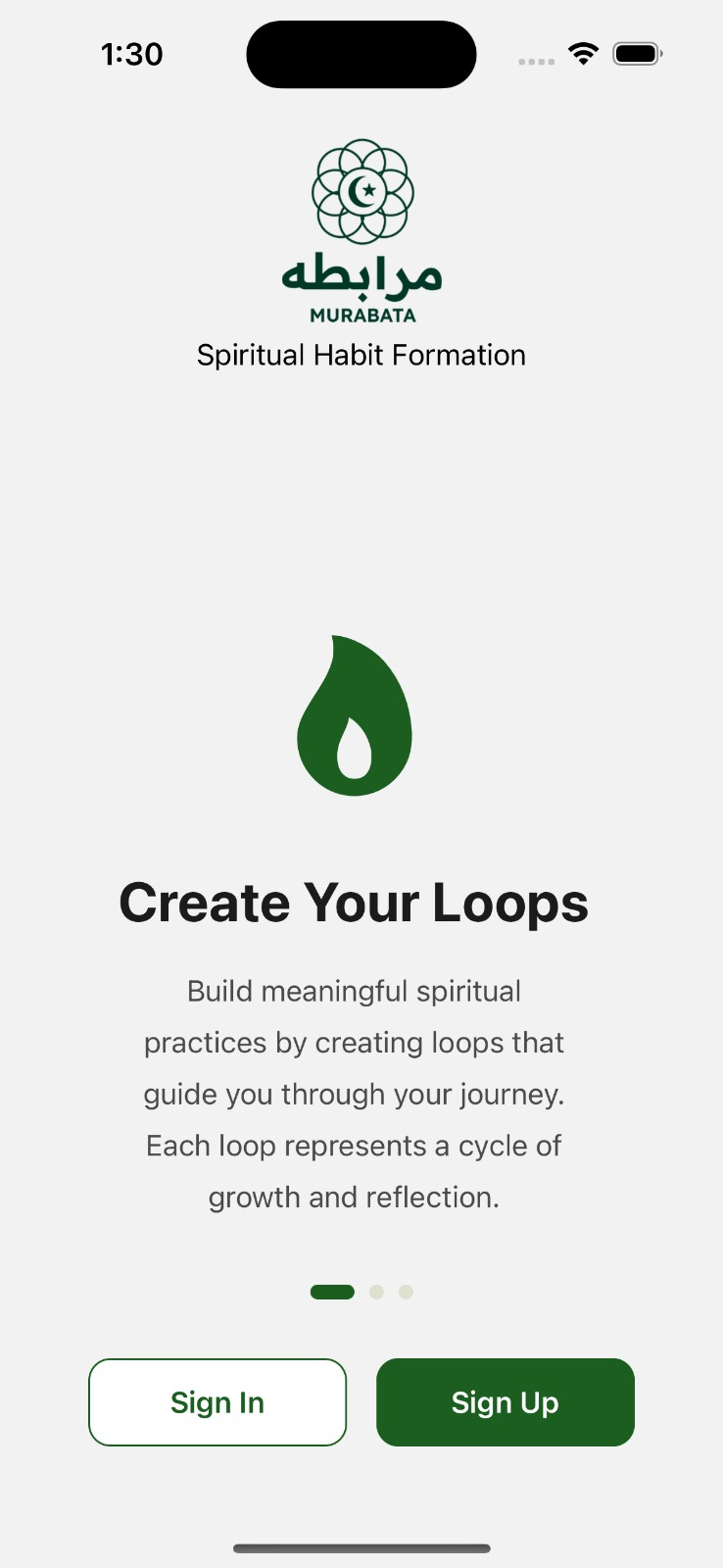
Photo: Courtesy
This app focuses on spiritual transformation through six different cycles. These are Musharata (pre act conditions), Muraqaba (vigilance), Muhasabah (self examination), Mu‘aqaba (discipline), Mujahada (renewed striving), and Mu‘ataba (self censure). Let us learn about each of these transformational cycles.
Musharata (pre act conditions)
Here, the phase starts way before the start of the day. This is termed the “morning contract.” Here, the app features a “gatekeeper dashboard.” This is to keep track of commitment to seven members that are considered to be the doorkeepers to the heart, eyes, ears, tongue, stomach, hands, feet, and private parts.
It has a “Duniya map” that is dedicated to protecting the soul from places that distract from spiritual paths and connections.
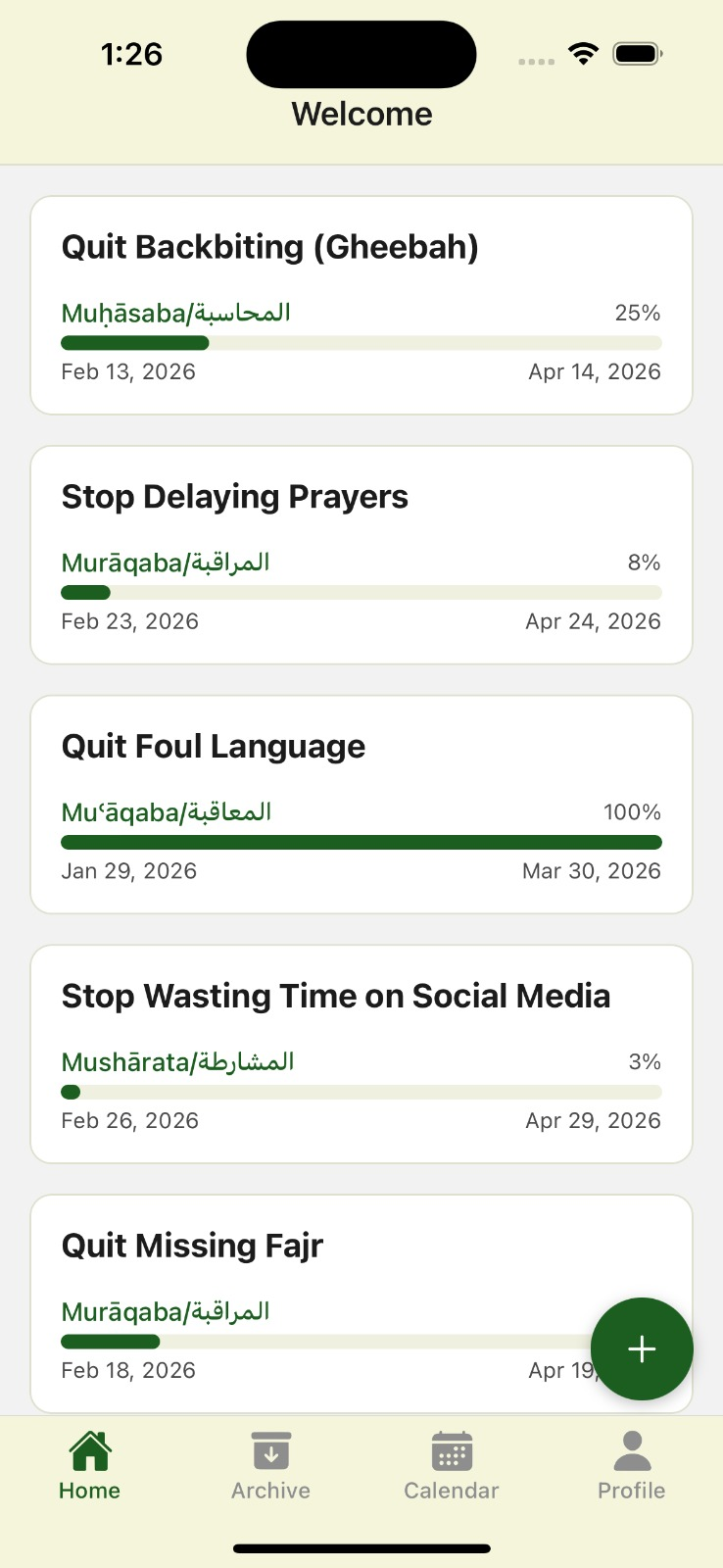
Photo: Courtesy
Muraqaba (vigilance)
This includes features that pull users back to the path of spiritual enlightenment. The inspiration is mostly taken from the word “Ihsan” (to worship Allah as if you see Him). This can be random or during prayers, where a prompt could notify users with things like “Are you with Him?” or “Allah sees everything.”
These prompts are specifically designed to bring spiritual awareness in real time instead of after committing a mistake. The best part about this app is the meditation tool that uses the “cat waiting for a mouse” metaphor.
The metaphor forces a user to take a meaningful break to watch their pulse and understand the consequences before initiating work. This is used to create self control and emotional regulation.
Despite it being used by modern psychology today, Islamic scholars had been using this technique long before.
Mu‘aqaba (discipline)
This is the ultimate auditing of the user’s day. The concept is similar to the way a business values profit and loss. Good deeds are considered profit, and bad deeds are considered losses.
This is a method called “nafs al lawwamah,” which focuses on self accountability. It relies on three questions that mainly target the soul’s motive, method, and target. Mu‘aqaba provides a nightly auditing journal and calculates spiritual net worth.
This practice eliminates the chances of repetition and creates self accountability. Being aware of our own mistakes can cause transformation, which can lead to closeness with Allah.
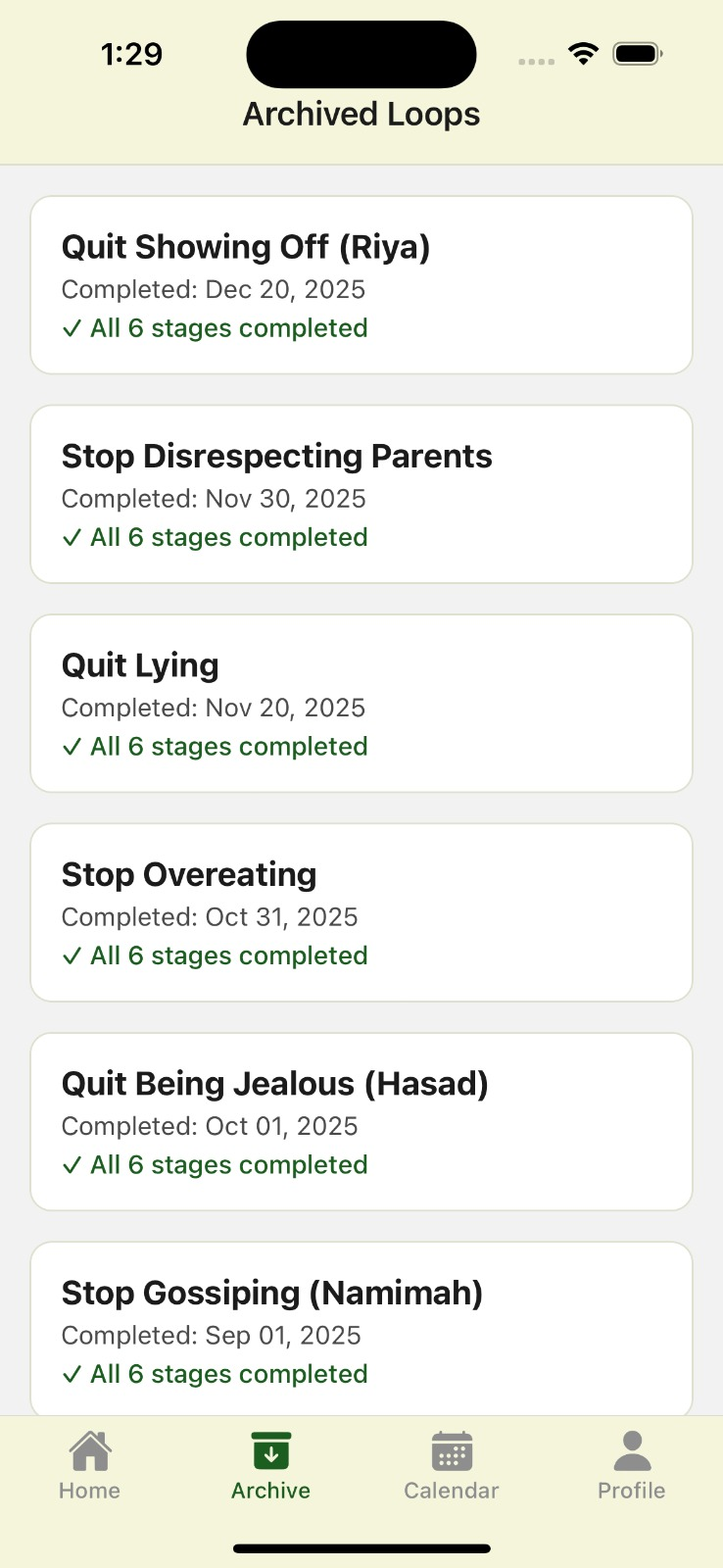
Photo: Courtesy
Mu‘aqaba (discipline), Mujahada (renewed striving), and Mu‘ataba (self censure)
These cycles mostly focus on response and growth. They include features like a correction menu, which offers spiritual penalties for missing targets. A “Nafs Stretch” is built to control the human ego, which gives daily tasks like forgiving someone who was extremely rude someday.
For self censorship, there is an “Aspiration Prompt.” This keeps users humble despite their growth and success throughout life. For guidance, there is a “Sunnah Blueprint” and “Company of the Saliheen” that help users follow the lifestyle of Prophet Muhammad (SM) or get guidance from his companions and saints. This will work as a digital mentor throughout the difficult paths of life.
This is according to the teaching of Umar ibn al Khattab, who urged, “Call yourself to account before you are called to account.”
The fundamental essence behind murabata is taking care of the human heart that gets corrupted in the digital world. The rustiness of the human heart can only be cured through repentance (istighfar) and remembrance (dhikr). In this case, the app will help transform a user’s spiritual journey through guidance and the six cycles.
By following the teaching and finding proper meaning in prayers, a person can truly accomplish his spiritual journey.
Challenges
Jim was asked quite bluntly, “Do you think Murabata relies too heavily on self discipline?”
He replied, “In Islam, the primary battleground is within the self. While the app does require a level of commitment, it is actually designed to build discipline rather than just consume it.”
He further added, “By following Imam Al Ghazali’s framework, we use a process that has been proven effective for centuries. The app acknowledges human frailty; it is built on the fact that we will fall and make mistakes. Instead of a ‘game over’ screen, the process encourages the user to log those mistakes and set balanced consequences (Mu’aqaba) for the nafs.”
Ultimately, the main aim will always be an identity transformation. By constantly engaging in self accountability, awareness, and struggle, one can achieve the purest form of his soul called “fitra.” That is how a person can craft the truest form of himself from an artificially constructed soul.
Murabata is a unique digital tool. A modern solution to a pre existing problem mostly twisted by modernity.
Moreover, whether this app succeeds in providing someone spiritual structure or not, the fact that an idea so profound has befallen an undergrad through self reflection is in itself a success.