PETman’s playbook: Making waste management simple, transparent, and rewarding
In an era when environmental challenges are becoming more urgent, innovative solutions that tackle waste pollution are not just welcome, but significant. PETman is one such platform emerging from Bangladesh with a bold mission to turn everyday waste into worth.
PETman’s playbook: Making waste management simple, transparent, and rewarding
In an era when environmental challenges are becoming more urgent, innovative solutions that tackle waste pollution are not just welcome, but significant. PETman is one such platform emerging from Bangladesh with a bold mission to turn everyday waste into worth.
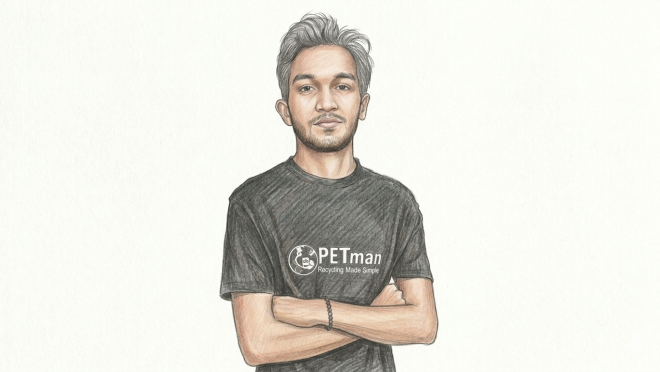
PETman is not a typical recycling initiative. It is Bangladesh’s digital on-demand recycling platform, connecting households and businesses for doorstep scrap collection. It manages recyclable materials such as plastic, old clothes, and selected household recyclables, aiming to divert valuable waste from landfills and return it to the circular economy. To know more about it, I spoke with Shuvo Mandal Debashish, the Founder and CEO of PETman.
By combining sustainability goals, circular economy principles, and digital convenience, the concept was developed.
“We studied successful global recycling models and adapted them to Bangladesh’s socio-economic context.”
Forming inspiration
Debashish is currently a second-year university student. Creating such a platform at such an early stage is remarkable. His observations from daily life and self-driven questions inspired him to found this platform.
“During my daily life, I noticed recyclable waste piling up at home with no easy or trustworthy way to recycle or donate it. The process was often confusing, informal, and unreliable. I started asking myself: if I am struggling with this, how many others face the same problem? Why doesn’t a simple, transparent, and reliable system exist?”
While searching for a solution to this question, he discovered an even better answer.
“The foundation of PETman, a Digital on-Demand Recycling Platform—the Uber for Recycling.”
From the beginning, with personal research on waste management and recycling in urban areas, the ideas took the shape of an initiative in many steps, including validating the problem with households and students to understand real challenges, building a dedicated team to design and manage the platform, conducting community surveys to gather insights and feedback, participating in competitions and leveraging other opportunities to gain exposure, mentorship, and resources, creating a minimum viable platform for pilot testing and refining the concept, partnering with local scrap collectors to ensure reliable recycling channels, and running pilot collection operations to improve logistics and user experience.
“These steps helped me to transform PETman from a concept into a practical, community-focused recycling initiative.”
Tailored for the Local Community
The platform works in a very systematic way. While asking Debashish about the work procedure, he said, “Users gather items they want to recycle and schedule a pickup through PETman.biz. Trusted collectors then pick up the materials, which are processed at a PETman hub. Users receive fair digital rewards for their participation, making recycling simple, convenient, and rewarding.”
To fit each neighbour’s needs, PETman combines digital convenience with local collaboration. It works with people of all professions, such as community members, universities, and local helpers. The platform adapts pickup schedules, engagement campaigns, and service methods to match local lifestyles.
“It approaches recycling practically, is easy to adopt, and builds trust at the community level.”
Many platforms in Bangladesh perform recycling work, whether government or non-government organisations. While asking why PETman’s system of recycling is different from that of others, Debashish said, “Traditional recycling in Bangladesh is mostly informal and unstructured. PETman digitises the entire process, ensuring fair pricing, verified collectors, digital records, impact tracking, and reward systems. It brings transparency, safety, and accountability into waste management.”
Since the core of PETman is based mostly on technology, it needs to work efficiently. They use a simple digital platform that allows users to schedule pickups, while verified collectors manage collections efficiently.
“Every activity is recorded to track materials and estimate the environmental benefits, making the process convenient, transparent, and impact-driven.”
Challenges
Every start has challenges, as faced by the founder of PETman. Upon asking about them, Debashish affirmed, “The biggest challenges we faced were limited funding to fully implement all our ideas, building trust in a traditionally informal waste management sector, convincing users to shift from conventional methods to a digital model, and managing logistics and operations efficiently.”
Over time, PETman expanded through various partnerships. It successfully graduated from The Restoration Factory Bangladesh 2025, a six-month incubation programme, where the platform received grants and mentorship to transform the idea into implementation. In addition, they received a University Partnership to build a campus-based recycling ecosystem, as well as local recycling partnerships that significantly strengthened their operational capacity and community reach.
Maintaining a public engagement ratio is a key factor for a platform that works for the public. Currently, PETman has more than 500 registered members, many of whom actively participate in waste collection and awareness activities.
“So far, we have collected 700+ kg of recyclable waste from households and major events. Through our role as a Recycling Partner with Uttara University, ActivePulse Women’s Run 2025, and Haier JCI Dhaka West Rise Up Run 2025, we have expanded community-level engagement. Through these activities, PETman has reached 50,000+ individuals, encouraging responsible recycling and sustainable practices.”
Understanding environmental impact is equally important. Nevertheless, knowing the impact boosts work systematically and more precisely. When asked about the impact, Debashish said, “PETman tracks the amount and type of materials collected, estimates the reduction in carbon emissions, and monitors how much waste is kept out of landfills. This helps users see the tangible positive effect of their recycling efforts.”
Winning trust and ensuring transparency are necessary for every platform to grow, evolve, and secure longevity. PETman tried to secure that spot by working with verified collectors and keeping clear digital records of all collections and transactions. Users can see the impact of their contributions, while community engagement helps maintain accountability and reliability at every step.
“Transparency is at the core of PETman’s operations.”
In summary, users’ appreciation of PETman clearly reflects the platform’s meaningful impact on everyday recycling. The verified collector system builds confidence and trust, reassuring users that their recyclables are handled responsibly. Doorstep pickup adds a layer of convenience that fits seamlessly into busy routines, while transparent weighing and fair rewards reinforce a sense of honesty and accountability. Beyond these practical benefits, many users express pride in knowing they are contributing to a more sustainable environment.
“Overall, PETman is widely regarded as simple, reliable, and easy to use, an accessible solution that turns responsible recycling into a positive and rewarding daily habit,” concluded Debashish.
One of PETman’s strengths lies in its tech-driven approach. The platform is developing tools, including an upcoming mobile app, that will allow users to book waste pickups, track their recycling activities, and earn rewards for participating in eco-friendly behaviour. These “green points” can later be redeemed for sustainable products like jute bags or other eco-friendly items, making recycling not just responsible but gratifying.
This model is especially relevant in Bangladesh, where managing plastic waste has long been a challenge. Every day, significant amounts of PET waste are generated, yet only a fraction is recycled efficiently, creating environmental strain on land, water, and public health. PETman’s efforts, aimed at integrating recycling into everyday life, offer a practical, grassroots solution to part of that broader challenge.
Looking ahead
Behind PETman is a passionate team of young entrepreneurs based in Dhaka, including founder Shuvo Mandal and co-founder Shahriyar Hasan. Their vision goes beyond simple waste pickup; they want to cultivate a culture where sustainability becomes second nature for individuals and organisations alike.
Their work has already begun to attract recognition. PETman has participated in national and regional start-up competitions, earning accolades such as 1st Runner-Up at the 5th International Robo Tech Olympiad 2025 and reaching the finals in inter-university innovation events. These achievements not only reflect the platform’s innovative promise but also its growing momentum within Bangladesh’s green start-up ecosystem.
As PETman continues to grow, from refining its technology to expanding partnerships with universities, businesses, and civic groups, the platform represents an inspiring example of how technology and community action can work together to solve real environmental issues. With plastic waste posing a persistent challenge in Bangladesh and worldwide, initiatives like PETman provide a blueprint for scalable, tech-driven recycling solutions that benefit both people and the planet.
In a world increasingly conscious of environmental impacts, PETman is more than just a platform; it is a movement toward cleaner cities, greener habits, and a sustainable future.