'BookTok' vs 'Brain rot': A Malaysian bookstore's novel cure for 'doomscrolling'
In Europe alone, the #BookTok hashtag helped sell over 50 million books in 2025, generating roughly $920 million in revenue
'BookTok' vs 'Brain rot': A Malaysian bookstore's novel cure for 'doomscrolling'
In Europe alone, the #BookTok hashtag helped sell over 50 million books in 2025, generating roughly $920 million in revenue
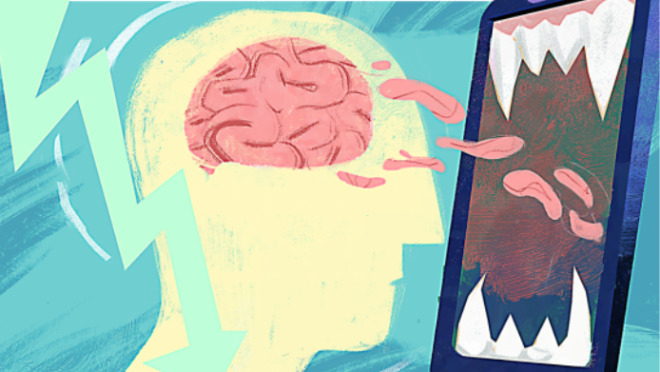
In an era where the digital sludge of “brain rot” clips – those noisy, high-speed, and endlessly recommended videos – is blamed for wrecking the collective attention span, a Malaysian bookstore is fighting fire with fire.
BookXcess has launched the “Brain Un-Rot Library,” a campaign designed to trick the TikTok generation into picking up a physical book by using the very format that supposedly rotted their focus in the first place.
The initiative, based at the 24-hour Sunway Library, has transformed 100 literary titles into short-form videos. The clips begin with the familiar sensory triggers of social media: flashy graphics and a rolling script, reports South China Morning Post.
However, as the video goes on, the text lengthens and the distracting visuals slowly fade away, nudging the viewer toward a 180-degree turn: the deliberate, “top-down attention” required for reading.
The “un-rot” curriculum includes everything from school staples like “Animal Farm,” “Wuthering Heights,” and “1984” to modern blockbusters like “The Hunger Games.”
According to BookXcess Co-Founder and Executive Director Jacqueline Ng, the goal is not to stage a digital intervention.
“We’re not trying to take them away from social media or from their phone,” she explained during the launch.
“We’re just trying to introduce another habit.”

BookXcess’ “Brain Un-Rot Library” is a series of social media content featuring 100 of the world’s best-loved books. Photo: Collected
The term “brain rot” was named Oxford University Press’s word of the year for 2024, following a 230% surge in usage. It describes the intellectual decline linked to the overconsumption of trivial content.
For parents like Firdaus Omar, a 39-year-old civil servant, the threat is tangible.
He told South China Morning Post that his young sons struggle to focus and have even seen a decline in fine motor skills, such as writing, after hours of “nonsense” clips.
Data from the end of 2025 shows that 85% of Malaysians are active on social media, yet the reading landscape remains complex. While the average Malaysian now reads 24 books a year – a massive leap from just two in 2005 – a 2025 survey of students found that more than a quarter do not read as a hobby.
Interestingly, some 73% of frequent young readers get their fix from digital devices, suggesting the screen is already a primary gateway.
Neuroscientists, however, offer a more nuanced take.
Stijn Massar, a research assistant professor at the National University of Singapore, suggests that while attention spans might not be literally shrinking, our “capacity for focus” is not being sufficiently trained.
He notes that people are simply becoming “much less tolerant of boredom.”
TikTok itself has become an unlikely titan in the publishing world.
In Europe alone, the #BookTok hashtag helped sell over 50 million books in 2025, generating roughly $920 million in revenue.
In Malaysia, the platform recently rolled out its #ThinkTwice Training to help parents and educators build safer online habits.
For BookXcess, the experiment is about finding a middle ground.
Beyond the digital clips, the store has also set up “Brain Un-Rot Islands” nationwide to showcase the featured titles.
The ultimate hope is that a viewer might start with a Minecraft-themed background on their phone and end up immersed in a book for a “meaningful half an hour” of “me time.”
The company is trying to work out how to move people from one space to the other, and keep them there long enough to remember what immersion feels like.
As Ng puts it, “At least there’s no notification that comes through the book.”