Shroud of Turin exposed: 600-year-old document calls it a medieval fraud
In a rediscovered 14th-century text, Oresme delivers what might be the earliest written takedown of the Shroud of Turin. Writing in the 1370s, he didn’t hedge, mystify, or defer to authority
Shroud of Turin exposed: 600-year-old document calls it a medieval fraud
In a rediscovered 14th-century text, Oresme delivers what might be the earliest written takedown of the Shroud of Turin. Writing in the 1370s, he didn’t hedge, mystify, or defer to authority
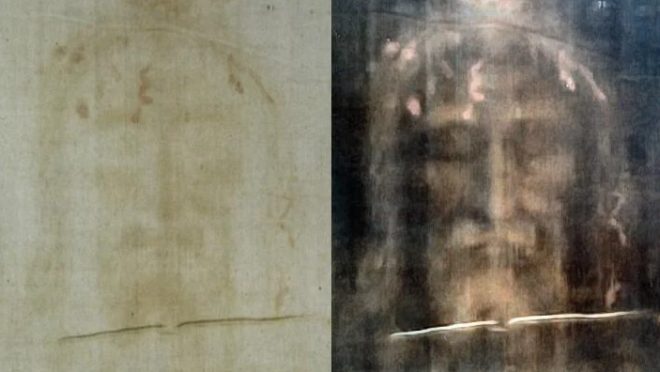
Long before lab coats, carbon dating, and 3D simulations entered the chat, a 14th-century scholar took one look at one of Christianity’s most debated relics and essentially shrugged: this isn’t divine — it’s a hustle.
Meet Nicole Oresme — bishop, mathematician, royal advisor, and, it turns out, one of history’s earliest documented myth-busters, says a study published in the Journal of Medieval History.
A medieval mic drop
In a rediscovered 14th-century text, Oresme delivers what might be the earliest written takedown of the Shroud of Turin. Writing in the 1370s, he didn’t hedge, mystify, or defer to authority. Instead, he cut straight to the problem with a line that still lands:
“I do not need to believe anyone who claims: ‘Someone performed such miracle for me’, because many clergymen thus deceive others, in order to elicit offerings for their churches.”
And he didn’t stop there. In another passage, he sharpened the point into a direct accusation:
“This is clearly the case for a church in Champagne, where it was said that there was the Shroud of the Lord Jesus Christ, and for the almost infinite number of those who have forged such things, and others.”
That Champagne reference? It’s the Lirey shrine — not an abstract target, but a real place where the Shroud was exhibited. In medieval terms, this wasn’t just skepticism. It was calling out the system by name.
For context, the earliest previously known denunciation came from Pierre d’Arcis in 1389. Oresme beats him to it by at least a decade, suggesting the quiet realization that “something’s off here” had already reached the upper tiers of medieval thought.
Not some random critic
Oresme wasn’t shouting from the sidelines. He was Bishop of Lisieux, a court intellectual under Charles V of France, and a polymath whose work stretched across mathematics, philosophy, and early science.
So when he dismissed the Shroud as a fabrication, it carried weight — not just as opinion, but as analysis. As historian Nicolas Sarzeaud puts it, what has been uncovered in his writing amounts to a significant dismissal of the Shroud.
A mindset way ahead of its time
What makes Oresme feel surprisingly modern isn’t just what he concluded — it’s how he got there.
He argued that simply because “good people,” including members of the clergy, claimed events had occurred did not make them true. Instead of leaning on authority, he questioned it.
His approach stands out, Sarzeaud explains, because he tried to provide rational explanations for unexplained phenomena rather than interpreting them as divine or demonic. In doing so, Oresme also evaluated the reliability of witnesses and warned against the dangers of rumor — a method that feels strikingly close to modern critical thinking.
Naming names, medieval-style
Oresme didn’t just critique the idea of fake relics — he used the Shroud as his prime example. As Sarzeaud notes, he did not pick just any revered object but specifically chose the claim of the Lirey shrine in Champagne as a striking case of lies fabricated by clergy.
That level of specificity was rare. Medieval criticism of the Church usually stayed safely general. Oresme, instead, zoomed in.
Six centuries later… science nods
Fast forward to the modern era, and the scientific verdict feels eerily aligned with Oresme’s instincts.
Radiocarbon dating in 1988 placed the Shroud’s fabric squarely in the 13th–14th century — exactly when Oresme was writing. More recent 3D modeling studies suggest the image itself couldn’t realistically have been formed by a human body.
As Andrea Nicolotti notes, this adds further historical evidence that even in the Middle Ages, people understood the Shroud was not authentic, while the broader body of scientific and technological research continues to point in the same direction.
The oldest “hot take” still standing
There’s something quietly absurd — and fascinating — about the whole story.
A 600-year-old document exposes what appears to be a historic fraud. Long before skeptics with laboratories, a scholar dismissed revered artifacts as clerical tricks.
In other words, we may still be arguing about something that at least some 14th-century thinkers had already tried to put to rest centuries ago.
Oresme didn’t have modern tools or data. What he had was a simple, enduring instinct: question the claim — even if it’s sacred.