The return question: Can Bangladesh bring its scholars home?
Like many others of my generation, I left Bangladesh after graduation in search of better research facilities and professional opportunities. The thought of returning home, however, continues to follow me.
The return question: Can Bangladesh bring its scholars home?
Like many others of my generation, I left Bangladesh after graduation in search of better research facilities and professional opportunities. The thought of returning home, however, continues to follow me.

I often wonder, do other Bangladeshis living abroad feel the same? I would like to believe they do, especially after witnessing pledges made by thousands of Bangladeshi intellectuals abroad during the peak of the July Movement, many of whom took to social media using the #ReverseBrainDrainBD hashtag to outline plans to come back and contribute to national reform, reinforcing the movement’s momentum.
Yet intent alone is insufficient. Mobilising actual return depends on whether Bangladesh is ready to actively pull its migrant scholars home. Migration scholar Everett S. Lee famously argued that people move because of “push” and “pull” factors: adverse conditions that drive people to leave their home countries and attractive conditions that draw them elsewhere. As political shifts turn once-welcoming destinations into sources of push through tighter immigration regimes, policymakers in Bangladesh are newly positioned to pull talent back and promote reverse brain drain.
Academia remains the most practical space through which scientists, physicians, engineers, and other researchers could return. Any serious effort to make that happen must begin with competitive remuneration. A high-paying salary can offset opportunity costs and make return financially feasible for mid-career and senior researchers. A few Bangladeshi universities have already shown that better pay can attract faculty back from prestigious institutions abroad. However, salary alone cannot substitute for weak research infrastructure with limited funding. Nor can an elite-only approach generate the scale needed to effectively reverse brain drain. For academic return to be sustained, competitive pay must be embedded within a broader framework that includes research funding, transparent career progression, and institutional support that allows scholars to remain globally relevant.
Beyond remuneration, South Korea in the 1970s showed how heavy investment in research institutions and administrative reforms can accelerate talent repatriation. Bangladesh already possesses a network of dedicated research institutions, but following South Korea’s model would require easing bureaucratic constraints on hiring and granting returnees greater professional autonomy than existing institutional norms typically allow. Equally necessary is the availability of clear pathways for career advancement within these institutions. Sustained opportunities for professional development are vital for return; without them, researchers risk professional stagnation and diminished global relevance, which makes long-term reintegration far less attractive.
If skilled professionals do relocate, they could bring not just expertise but networks and ideas to create new businesses. India’s tech hubs, like Hyderabad, benefited immensely from returnees who had worked in Silicon Valley. For a similar transformation to take root in Bangladesh, the start-up ecosystem must be deliberately welcoming, with streamlined institutional procedures, simplified regulations, and a transparent and predictable legal framework. Targeted seed funding and innovation grants could further catalyse this process by lowering entry barriers for researchers seeking to commercialise their expertise.
Fiscal incentives can complement these reforms. China’s “Thousand Talents Plan,” for instance, paired preferential tax treatment with relocation subsidies to attract expatriate researchers. Still, one of the strongest deterrents to return is uncertainty around family integration. Addressing this requires policies that extend beyond the individual, including spousal employment support, access to quality housing, and seamless integration into education systems for children. Without these assurances, even well-designed economic incentives struggle to convert interest into sustained return.
Returning home is not a short-term experiment; it is a long-term commitment. That requires policy predictability. Multi-year funding guarantees, contract stability, and continuity across political cycles are essential to building trust among expatriate researchers. Closely related are concerns around job security and workplace culture. A stable work environment, grounded in merit-based evaluation and promotion, is necessary for giving highly skilled returnees confidence in long-term career prospects. Clear expectations around workload, attention to work–life balance, and predictable professional norms can further ease reintegration. For many researchers accustomed to flexible or hybrid arrangements abroad, the availability of remote or flexible working options would serve as an additional pull factor.
At the heart of it all lies a quieter question many of us carry: what kind of life would we be stepping back into? Beyond the workplace, broader societal conditions also shape return decisions. Political stability and personal safety affect the certainty required to come back. Insured access to quality healthcare is another deeply practical concern for returnees and their families. Everyday realities matter just as much. Confidence in public services, legal protections, and civic infrastructure influences whether return is perceived as viable over the long term.
Being only recently out of university, I do not have to look far for examples when I think of Syed Saad Andaleeb’s argument about the institutional barriers that stifle research. In his book Research Universities and Academic Renaissance in the Global South: Lessons from Bangladesh, he asserted that funding alone is not the binding constraint in public universities. Even a dramatic expansion of research budgets, he argues, would be unlikely to translate into impactful gains in research output under existing institutional conditions.
One of the most discouraging realities often discussed among Bangladeshi researchers abroad is the politicisation of public universities. Faculty are often expected to align themselves with campus factions, while appointments and promotions may be influenced by political allegiance rather than academic merit. This weakens recruitment standards, marginalises capable scholars, and erodes confidence in institutional fairness. Resource allocation can likewise be driven by partisan priorities, neglecting areas critical to research. When university leadership is appointed on the basis of political patronage rather than scholarly credentials and recognised performance, the capacity to lead innovative research programmes is severely constrained. Under such conditions, returning researchers have little incentive to commit to long-term academic careers.
Beyond politicisation, a lack of a research-oriented institutional culture remains a formidable obstacle to long-term retention. In many universities, research is treated as secondary to teaching. Unlike research universities in developed countries, where faculty responsibilities are balanced, often around 40 percent teaching, 40 percent research, and 20 percent service, academicians in Bangladesh are frequently burdened with heavy teaching loads alongside research expectations. This leaves little time or energy to pursue research. Waiving excessive course loads would allow universities to develop genuinely research-intensive roles.
Transparent career progression tied to research output, rather than seniority or informal networks, is essential to restoring confidence among returning scholars. In addition, structured professional development opportunities, like continuous learning, access to international collaborations, joint research programmes, and visiting appointments, help academicians maintain global relevance. The absence of such pathways discourages long-term commitment.
Physical and institutional infrastructure also matters. Dedicated laboratories, research autonomy, and the establishment of centres of excellence can attract high-calibre researchers. By contrast, outdated facilities and limited access to modern technology undermine research ambition. Finally, the weak integration between universities, industry, and the private sector restricts opportunities for applied research and knowledge transfer. Stronger public–private partnerships would not only expand funding sources but give researchers greater reason to commit to long-term academic careers.
For returning researchers to produce high-quality work in Bangladesh, effective demand for academic research must first exist, particularly from policymakers. At present, there seems to be a gap on both sides: limited demand for evidence-based input and weak mechanisms for integrating academic expertise into policy design.
Universities in Bangladesh primarily function as undergraduate teaching institutions based on a rigid UGC-mandated curriculum focused on basic competencies. Faculty responsibilities are largely confined to lecturing, examinations, and grading, leaving little space to embed a research mindset. Multidisciplinary postgraduate programmes are the required support structure that can provide the academic depth, intellectual challenge, and research-driven environment necessary for returning researchers to produce high-quality work. Another support element is a steady pipeline of high-quality PhD students inclined towards problem-solving and discovery. Advanced research cannot progress without doctoral researchers who drive experimentation. Such talent, however, can only be cultivated where strong research infrastructure already exists, creating a virtuous cycle in which investment in research capacity attracts both skilled researchers and the next generation of scholars.
This requires robust investment in research infrastructure. That includes not only physical assets such as laboratories, data systems, archives, and research equipment, but also the institutional scaffolding that supports discovery: grant administration, research-oriented curricular reform, transparent hiring and promotion protocols, availability of research assistants, and stronger collaboration between academia, industry, and government.
When faculty members ask what tangible benefits accompany high-quality research, the answer is often unclear. Nearly five decades after independence, systematic rewards for research productivity remain largely absent. Innovation, high-impact publications, and citation records are markers of research excellence that should be rewarded. This gap can be addressed with the introduction of merit-based career advancement, performance-linked rewards, opportunities to contribute to national priorities, and credible national research awards.
In developed countries, universities are supported by trained and dedicated administrative structures designed explicitly to advance research, from early-stage ideas to commercialisation. In this model, universities function as knowledge brokers, generating funding while supporting high-impact, socially useful, and marketable research. Contrarily, Bangladesh’s universities lack comparable research-focused administrative capacity. University administrators are often neither trained for research management nor embedded in academic culture, and many are drawn from outside academia. The managerial norms they bring, shaped by civil service, NGO, or military hierarchies, frequently clash with academic practice, alienating faculty and discouraging serious research engagement.
It is also required to establish a National Research Council, modelled on institutions such as the US National Science Foundation or the National Institutes of Health. Such a body, overseen by experienced academics and knowledge managers, could provide coordinated funding, strategic direction, and institutional autonomy conditions essential for nurturing high-quality research at scale.
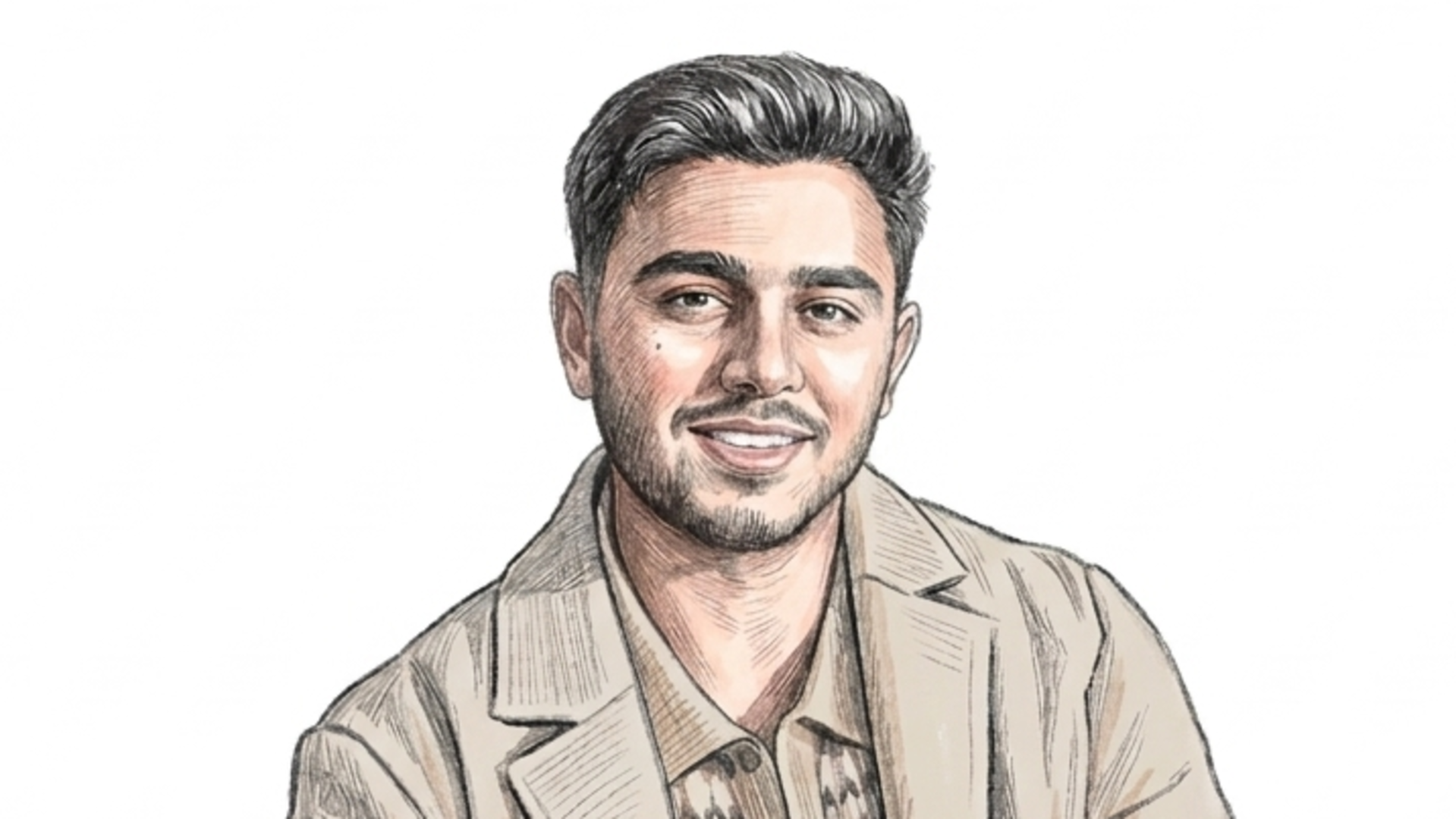
Nafees is currently completing his MSc in Global Health Science and Epidemiology at Oxford University
Disclaimer: The views and opinions expressed in this article are those of the author and do not necessarily reflect the opinions and views of TBS Graduates.