Why Bangladesh must institutionalise youth representation in governance
Bangladesh’s future inevitably belongs to its youth. The question is whether its present institutions are prepared to share power accordingly
Why Bangladesh must institutionalise youth representation in governance
Bangladesh’s future inevitably belongs to its youth. The question is whether its present institutions are prepared to share power accordingly
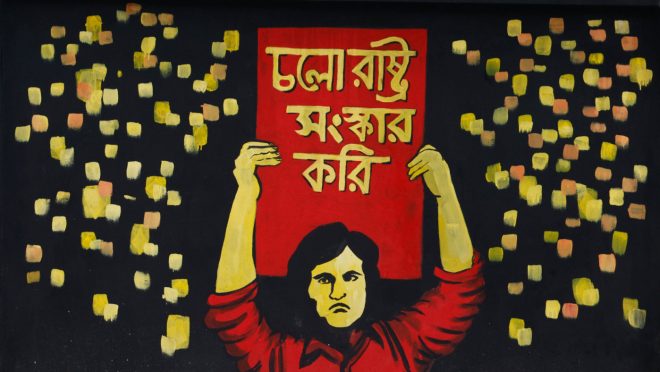
Bangladesh stands at a defining political juncture. After an election that has stirred debate about accountability, governance and reform, the question before us is not only who will govern, but how governance itself will evolve.
In a country where a significant share of the population is aged under 35, institutionalising youth representation in policy-making is no longer an abstract aspiration. It is a democratic imperative.
For decades, young people have been the driving force behind Bangladesh’s political turning points. From the Language Movement to the Liberation War, from the 1990 mass uprising to the more recent July uprising led by students and first-time voters demanding dignity and democratic space, youth have repeatedly shaped the direction of the republic.
Yet when we examine the formal architecture of policy-making—cabinet committees, parliamentary bodies, statutory commissions—the youth presence is strikingly thin. Energy is visible on the streets; influence is scarce in institutions.
Bangladesh adopted its National Youth Policy in 2017 under the Ministry of Youth and Sports. The policy speaks of empowerment, employment and participation. It recognises youth as development partners and envisions platforms through which their voices can be heard. In principle, the framework is progressive. In practice, however, implementation has often been fragmented. Youth engagement frequently takes the form of project-based consultations, donor-supported dialogues, or politically affiliated youth wings, rather than a coherent, statutory mechanism embedded in the state’s decision-making system.
The National Youth Council concept has circulated in policy discourse for years, yet it lacks strong legislative backing, financial autonomy and clear procedural authority. There is no binding requirement for ministries to seek structured youth input before passing major policies affecting education reform, digital governance, climate action or employment strategies. As a result, youth participation risks becoming symbolic—consulted occasionally, but rarely empowered to shape outcomes.
If Bangladesh is serious about transforming its demographic dividend into a democratic dividend, then institutionalisation must replace tokenism. The solution lies not in sporadic forums but in durable mechanisms anchored in law and routine practice.
One pathway is the creation of a statutory National Youth Council with clearly defined consultative authority over legislation that directly affects young citizens. Such a body should be inclusive, non-partisan and representative of rural and urban constituencies, women, persons with disabilities, and marginalised communities. Its mandate should require ministries to formally respond to its recommendations, ensuring that consultation translates into accountability.
Beyond national structures, universities across Bangladesh offer an untapped reservoir of policy innovation. Student unions, once vibrant spaces of intellectual and civic debate, can be revitalised as structured policy platforms. University-based student unions could be formally recognised as advisory contributors to local governance processes. Through policy recommendation papers, thematic consultations and civic research initiatives, students can generate grounded solutions to local problems—whether waste management in city corporations, traffic congestion near campuses, or digital service delivery in municipalities.
Collaboration between student bodies and local government institutions can create a practical model of participatory governance. Students can organise “solution challenges” in partnership with municipal authorities, inviting interdisciplinary teams to propose data-driven, low-cost innovations to address pressing community issues. Winning ideas could be piloted with local government support, creating a feedback loop between youth creativity and public administration. Such partnerships would transform student politics from partisan mobilisation into problem-solving engagement.
At the national level, Bangladesh could draw inspiration from global practices by establishing a Prime Minister’s Youth Advisory Group. The United Nations Secretary-General has created youth advisory mechanisms to bring diverse young leaders directly into dialogue with the highest executive office. Many countries have followed suit. A similar model in Bangladesh would institutionalise generational dialogue at the apex of government. The Prime Minister could convene this advisory group every two months to listen to youth perspectives on employment, climate resilience, digital transformation, governance reform and many more. Members should be selected from multiple sectors—entrepreneurs, climate activists, rural youth leaders, researchers, persons with disabilities and representatives of minority communities. Such regular engagement would not only capture the “youth pulse” but also signal political respect for emerging leadership.
This moment carries particular weight because of the spirit of the July uprising. The mobilisation of students and young citizens was not merely about immediate grievances; it reflected a broader yearning for voice and accountability. That energy cannot be allowed to dissipate into cynicism. Institutional pathways must absorb it. When youth feel structurally excluded, protest becomes their language. When institutions open space, participation becomes their preference.
In this regard, expectations surrounding a BNP-led government are significant. The party’s manifesto emphasises decentralisation, employment generation, anti-corruption reform and digital governance. These commitments intersect directly with youth aspirations. Decentralisation, if implemented meaningfully, can open avenues for youth collaboration with local administrations. Anti-corruption drives, if transparent and participatory, can incorporate youth watchdog initiatives and digital monitoring tools. Employment strategies, if innovation-focused, can be co-designed with young entrepreneurs and industry-linked student bodies.
The hope lies not in rhetoric but in reform. A new administration has the political capital to introduce a Youth Participation Bill that formalises consultative processes across ministries. It can embed youth advisory requirements within cabinet procedures and parliamentary committee workflows. It can ensure that youth engagement is not an afterthought but a statutory norm.
Challenges, of course, remain formidable. Political polarisation may distort youth platforms into partisan battlegrounds. Capacity gaps mean that not all young citizens possess equal access to policy literacy. There is also a trust deficit born of contested elections and institutional fragility. Overcoming these barriers requires transparency in selection processes, investment in civic education and cross-party consensus that youth participation strengthens democracy rather than threatens incumbency.
Meaningful youth engagement must also be measurable. Ministries can publish periodic reports outlining which youth recommendations were adopted, modified or rejected, along with justifications. Digital platforms can enable nationwide consultations on draft policies, while offline town halls ensure inclusion of rural voices. Engagement must be continuous, not episodic.
Ultimately, institutionalising youth representation is about legitimacy. A political system that mirrors its demographic reality commands deeper credibility. Bangladesh has long spoken of its demographic dividend as an economic asset. Yet democracy too yields dividends when younger generations are meaningfully included. Participation fosters ownership; ownership fosters stability.
As Bangladesh enters its next political chapter, the stakes are high. The July uprising demonstrated that youth are ready to claim space when denied it. The responsibility now rests with elected leaders to design that space into the architecture of governance. If the post-election government—particularly under BNP leadership—chooses to formalise youth advisory structures, empower student-policy collaboration and institutionalise regular dialogue at the highest executive level, it can transform a cycle of protest into a culture of participation.
It is worth noting that BNP has already experimented with digital engagement through its “Match My Policy” platform—an initiative designed to connect young voters with policy priorities in an interactive format before election. That innovation signalled an understanding that today’s youth seek alignment not only with leaders, but with ideas. Now is the time to move beyond digital outreach and embed that same spirit of policy-driven engagement into formal governance structures. Platforms must evolve into partnerships, and conversations into concrete policy collaboration.
Bangladesh’s future inevitably belongs to its youth. The question is whether its present institutions are prepared to share power accordingly.

Sketch: TBS
Hasibul Islam Rafi is an International Consultant for UNDP Asia and the Pacific.
Disclaimer: The views and opinions expressed in this article are those of the author and do not necessarily reflect the opinions and views of The Business Standard.