Caught between cost and culture: Inflation is reshaping the wedding market in Bangladesh
Inflation and shrinking purchasing power have reshaped not only the wedding market but also how people think about marriage expenses more broadly
Caught between cost and culture: Inflation is reshaping the wedding market in Bangladesh
Inflation and shrinking purchasing power have reshaped not only the wedding market but also how people think about marriage expenses more broadly
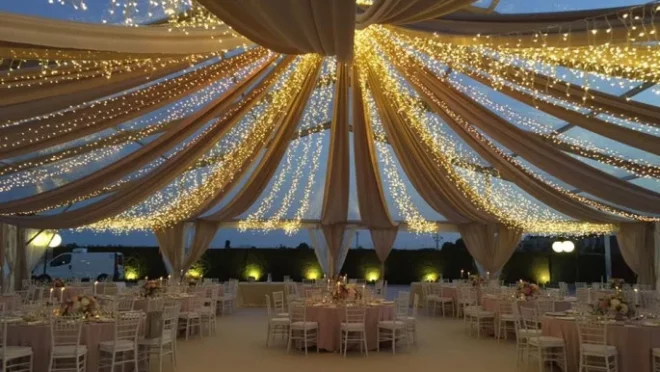
Two years ago, Shafi and Nadia tied the knot after a three-year relationship. Their families spent as much as they could, believing that a modest wedding might undermine their social standing.
However, Jarin and Fahad, who married this year, had a different experience. They cut back on the hall, decoration and several arrangements. Otherwise, they said, they would not have been able to ensure decent food for their guests.
These contrasting stories reflect a growing divide in Bangladesh’s wedding landscape. While wealthier families continue to spend lavishly, middle- and lower-middle-income households struggle to finance even modest ceremonies.
Just two decades ago, weddings in Bangladesh were meant to be a ‘community festival’. Families decorated their homes, set up temporary pandals on open yards, hired local decorators and cooks, and hosted hundreds of guests for at least a couple of days.
“That community festival has now transformed into a socio-economic competition of spending and show-off,” remarked Mahtab Uddin, an assistant professor of Economics at Dhaka University.
“Today, a grand celebration, lavish outfits, an elegant venue, and carefully curated photographs for social media have become central to the idea of a ‘successful’ wedding. But as living costs rise and incomes stagnate, this ideal is increasingly slipping out of reach — especially for middle- and lower-middle-income families,” he added.
Since the early 2000s, a broader cultural shift shaped by media and rising consumer aspirations has helped build a vast, multi-billion-taka wedding market in Bangladesh. The sector is estimated to be worth between Tk12,000 crore and Tk14,000 crore.
According to the latest Consumer Price Index (CPI) data released by the Bangladesh Bureau of Statistics on 7 December, inflation rose to 8.29% in November, up from 8.17% in October. Yet weddings remain a “must-spend” event — one that families are often unwilling, or unable, to scale back on.
A shift in consumer spending
A modern wedding now involves expenses for convention halls, catering, decoration, photography, videography, apparel and accessories, bridal makeup, and jewellery — most of which have become significantly more expensive.
“Over the years, spending has almost doubled in every value chain,” said Mahtab Uddin.
“This transformation has changed not just the look of weddings, but the entire economics behind them,” said Samina Luthfa, professor of Sociology at Dhaka University.
The scale of expenditure, however, varies by income group. High-income families face few financial constraints, with average wedding expenditure ranging from Tk30 lakh to Tk80 lakh.
For middle-income households, the picture is far more strained. Before 2021, a typical middle-class wedding cost Tk8–10 lakh; today, that figure has climbed to Tk12–15 lakh. For lower-income families, wedding expenses now stand at a minimum of Tk3–5 lakh.
“Despite economic limitations, people still want to spend,” said professor Luthfa. “In contemporary society, weddings have become highly competitive social events.”
She attributes this trend largely to social media and a wider cultural shift that began around 2007–08, when digital platforms reshaped social aspirations and public visibility.
However, interestingly, this entire scenario is quietly making budget weddings more popular. Most families now plan weddings within strict and carefully calculated budgets. Inflation and shrinking purchasing power have reshaped not only the wedding market but also how people think about marriage expenses more broadly.
“Even a few years ago, people rarely overthought their wedding plans. Now they calculate every step and negotiate at every point,” said Ataur Rahman Ananta, owner of an event management company.
“Customers want to know the price of every item, the quantity of ingredients, and how the cost adds up. Even while hall rents are fixed, many still try to negotiate. This reflects the broader economic reality,” he said.
To finance weddings, young couples are not hesitating to take the burden of loans from banks or relatives.
When Nahid married Faiza earlier this year, he took a Tk2 lakh personal loan from Brac Bank. “I started my job at an NGO only last year,” he said. “I didn’t want to spend my savings or burden my retired parents.”
Beyond formal loans, borrowing from relatives remains widespread among middle- and lower-income families, driven by rising living costs and persistent social expectations.
What really influenced this modern culture? Social media and Bollywood-inspired Instagram aesthetics have transformed wedding fashion, reshaping consumer preferences. Indian and Pakistani-style outfits have become aspirational, even for families with limited budgets.
Where the money goes
Wedding celebrations have shifted to air-conditioned convention halls, community centres, luxury restaurants, and even destination venues. Venue rentals are now among the biggest expenses. Organisers say hall, lighting, and stage costs have risen by 10–20% in recent years.
In 2021, renting a floor at Senamalancha cost about Tk2 lakh; today, it costs around Tk3 lakh. At the Officer’s Club in Bailey Road, rates increased from Tk1.68 lakh in 2021 to Tk1.92 lakh, including VAT.
If venue costs have climbed, catering expenses have risen even faster. At Officer’s Club, the average menu price is now Tk800 per person, up from around Tk500 in 2021. Popular buffet restaurants in Dhaka charge Tk1,000–1,500 per person, compared to Tk500–800 five years ago.
Then come the prices of outfits for the bride and groom. “Six years ago, muslin sarees cost Tk10,000–Tk80,000. Now they sell for Tk15,000–Tk100,000,” said a retailer.
“Five to seven years ago, the maximum price of a sherwani in our shop was Tk12,000–13,000,” said Hazi Absar Uddin, a sherwani shop owner at Elephant Road. “Now that is the starting price. Some sets go up to Tk80,000–Tk100,000.”
Expensive attire feels incomplete without photography and videography. This segment has grown into one of the fastest-expanding ones of the wedding economy. A full-day package now ranges from Tk15,000 to Tk80,000, sometimes more, marketed under different package names.
Giving gold jewellery to the bride remains one of the most enduring traditions in Bengali weddings. But rising and unstable gold prices are steadily eroding this custom. Many families can no longer afford full bridal sets. Some buy cost-effective imitation gold to maintain the ritual.
In October 2025, the price of 22-karat gold crossed Tk200,000 per bhori, driven by global supply disruptions and currency depreciation. The impact is visible in Dhaka’s major gold hubs, such as Baitul Mukarram and New Market, which now remain unusually quiet despite the peak wedding season.
Retailers from Amin Jewelers, Apan Jewelers, and Swananda Jewelers say customers now mostly buy only essentials — rings, earrings, or thin chains.
“During the wedding season, monthly sales used to reach around Tk10 crore. After the recent price hike announced by the Bangladesh Jewelers Association (Bajus), our sales dropped sharply,” said a manager at Amin Jewelers.