Why CSR is not just about ‘being good by doing good’
Corporate Social Responsibility (CSR) is too often performed as public charity while internal responsibility is ignored. True corporate responsibility begins within—through ethical practices, fair treatment of its employees, and consistency when no one is watching.
Why CSR is not just about ‘being good by doing good’
Corporate Social Responsibility (CSR) is too often performed as public charity while internal responsibility is ignored. True corporate responsibility begins within—through ethical practices, fair treatment of its employees, and consistency when no one is watching.
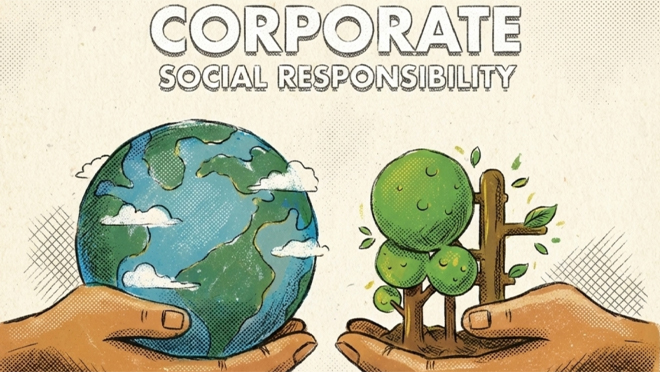
We grow up learning that doing good automatically makes us good. We become deeply moral, kind-hearted, generous—simply because we perform visible acts of charity. We feed the poor, donate during Ramadan, sponsor students facing financial hurdles—and that settles our moral account.
But real life does not adhere to this simple formula. In truth, we have honed the skill of seeming good without truly being good. “Being good” and “doing good” are not the same—yet we often mistake one for the other.
Let me start with someone I personally knew. This person performs his prayers five times a day and regularly donates to the elderly beggars outside the mosque. But at his home, he often shouts at his wife if lunch is not served exactly at 2pm.
He proudly states that he allowed his daughter to study only until graduation so she would become more “marriageable,” and he does not want her to pursue higher education because “she will go to another family anyway.”
Worse still, he employs a 12-year-old girl as a domestic worker—underpaid, overworked, underfed—but then donates generously to a local madrasa so children of the same age can survive.
If goodness is only what we display in public, then what do we call what we do in private?
The truth is simple: doing good deeds does not make you a good person.
Organisations are no different. While many define CSR (Corporate Social Responsibility) as “being good by doing good,” it often results in companies carrying out PR stunts.
Companies today proudly showcase their CSR initiatives—scholarships for students, health camps in remote areas, and tree-planting events, to name a few. These are noble acts, no doubt. But how noble is a company that funds cataract surgeries for villagers while its own employees struggle to afford their parents’ treatment?
How responsible is an organisation that launches a “Climate-smart Award” while every floor of its headquarters keeps all the lights on like a 24/7 Eid fair?
Or one that sponsors a national awareness campaign on water conservation but leaves office taps leaking for weeks? This is the corporate version of giving Zakat externally but shouting at home: a convenient display of charity without genuinely practising goodness at the core.
Let us be honest: CSR handshakes look impressive in photographs. They earn applause, likes, and shares on social media and may even result in awards. Genuine internal efforts, such as how we treat employees, reduce waste, make decisions, and transparently disclose these initiatives, including successes and failures, are the most important.
However, they are often unseen and inconvenient. Doing good requires accountability, discipline, sincerity, and most importantly, consistency.
Doing good publicly is easy.
Being good in private is hard.
Being consistently good is the hardest—and this final one matters the most.
A company that claims to care about society through its CSR but neglects its own staff is no different from the man who donates to the poor yet terrorises his family.
True goodness does not begin with external charity. It starts internally—at home for individuals and within the organisation for companies. To “be good”, you do not always need a camera, a press release, or an award ceremony.
For individuals, goodness is shown in how we treat our family, children, drivers, and domestic workers. Likewise, for organisations, goodness (CSR) is demonstrated through fair and competitive wages, practical medical coverage, a positive culture, ethical leadership, and the responsible management of resources.
As Adam Grant states in his 2021 book, Think Again: The Power of Knowing What You Don’t Know, “Faithful givers do not give selectively for credit; they give consistently because that is who they are.”
Doing good is external—something you do.
Being good is internal—something you are.
One lasts for a moment. The other lasts for a lifetime.
Being good does not require wealth, influence, or corporate budget allocations. It requires a moral spine—the discipline to behave decently when no one is watching. And perhaps that is why people prefer “doing good” instead. It is easier, more glamorous, and conveniently measurable.
Let us reconsider: a scholarship is beneficial; so is medical support for colleagues. If those under your roof are suffering, then your CSR remains unfinished.
We do not need more public displays of CSR goodness. We have plenty of banners, photos, and announcements. What we need are people, institutions, and meaningful CSR initiatives that are genuine even when the cameras are off.
The lesson is simple for both society and corporations: do not just do good. Be good. Everything else grows from there.
Shafiq R Bhuiyan is a storyteller who examines the intersection of social progress, effective communication, cultural development, and corporate social responsibility while sharing insights to inspire change.
Disclaimer: The views and opinions expressed in this article are those of the author and do not necessarily reflect the opinions and views of The Business Standard or TBS Graduates.