Scientists discover possible new kind of planet beyond solar system
Astronomers have identified what may be a new type of planet beyond our solar system, based on new findings published in Nature Astronomy.
Scientists discover possible new kind of planet beyond solar system
Astronomers have identified what may be a new type of planet beyond our solar system, based on new findings published in Nature Astronomy.
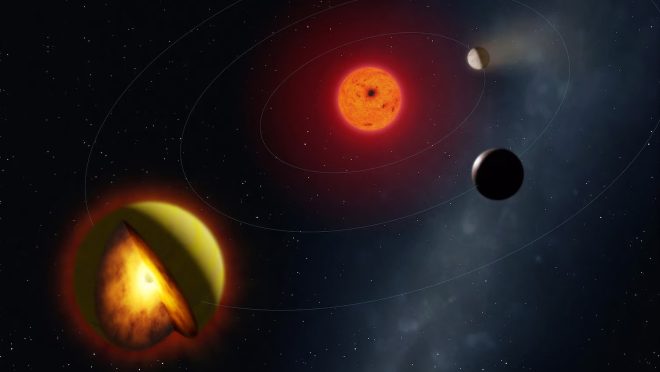
The exoplanet, L 98-59 d, was first discovered in 2019, but recent observations using the James Webb Space Telescope have revealed unusual features. Scientists say the planet likely has oceans of molten magma and an atmosphere rich in sulfur-based gases.
According to NASA, L 98-59 d is a rocky planet about 1.63 times the size of Earth and 1.64 times its mass. However, its composition does not match existing models such as gas dwarfs or water worlds.
Instead, researchers believe the planet has a molten silicate mantle and a volatile-rich atmosphere containing gases like water vapor, sulfur dioxide, and hydrogen sulfide. These conditions make it highly unlikely to support life, reported by ABC news.
Located about 35 light years from Earth, L 98-59 d adds to the growing list of unusual worlds discovered in recent years, highlighting the diversity of planets beyond our solar system.