The lesson Sundar Pichai learned as a student that now drives billion-dollar decisions
Running a company worth nearly $2 trillion is not a role for the indecisive.
The lesson Sundar Pichai learned as a student that now drives billion-dollar decisions
Running a company worth nearly $2 trillion is not a role for the indecisive.
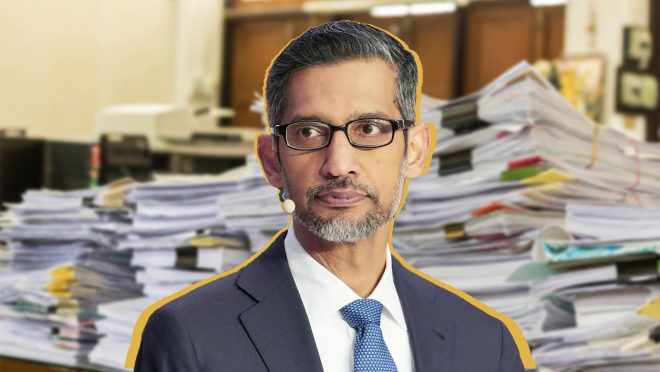
For Sundar Pichai, the head of Alphabet Inc. and Google, leadership largely comes down to making tough calls and resolving problems others cannot.
Speaking at Stanford Graduate School of Business, Pichai explained that he relies on a simple mindset to handle pressure. The first principle is to make a decision rather than getting stuck overthinking. The second is to remember that most decisions are not permanent and mistakes can be corrected.
In his role, Pichai often faces situations where teams are split between competing ideas. Instead of delaying, he pushes himself to choose a direction quickly. Waiting too long, he noted, can slow down progress and increase stress across the organisation.
He emphasised that taking action is often more important than getting every decision perfect. What may seem like a critical moment at the time often turns out to have less long-term impact than expected.
Experts say this approach can also improve overall wellbeing at work. Kandi Wiens from the University of Pennsylvania suggests that people often create worst-case scenarios in their minds when facing uncertainty. This can lead to self-doubt and unnecessary stress.
Instead, she recommends questioning those assumptions and focusing only on what is actually known. This helps break negative thinking patterns and encourages a more balanced perspective.
Pichai credits much of his leadership style to guidance from Bill Campbell, a former leader at Intuit and a board member at Apple Inc.. During his time at Stanford University, Campbell regularly challenged him with a simple question: what decisions he had made to break deadlocks within his team.
That lesson stayed with Pichai. He learned that a leader’s role is not just to guide discussions, but to step in when needed and make the final call.