Breaking barriers in Nuclear Science: Nuzhat's journey as a Marie Skłodowska-Curie fellow
Years have passed, yet women still have to fight through institutional bias and a male hegemony when it comes to contributing in STEM (Science Technology Engineering and Mathematics) fields.
Breaking barriers in Nuclear Science: Nuzhat's journey as a Marie Skłodowska-Curie fellow
Years have passed, yet women still have to fight through institutional bias and a male hegemony when it comes to contributing in STEM (Science Technology Engineering and Mathematics) fields.
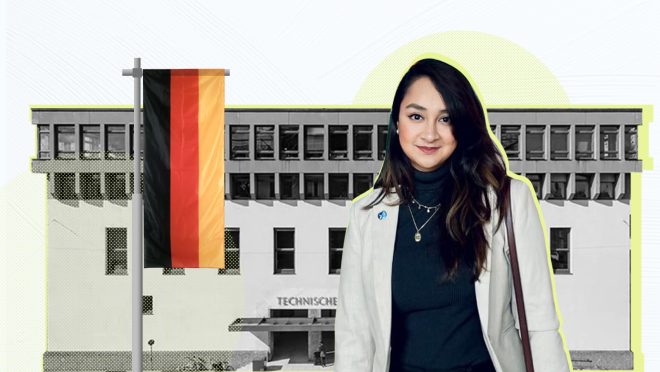
Women in STEM continue to break barriers in traditionally male-dominated fields. Looking at history, no one personifies this trailblazing achievement more than Marie Curie, who broke institutional barriers at a time when women were not even accepted in many academic spaces.
In honour of Madame Curie, the Marie Skłodowska-Curie Fellowship Programme, supported by the International Atomic Energy Agency, is designed to encourage and support women pursuing studies in nuclear-related fields such as nuclear medicine, radiation science, nuclear engineering, physics and nuclear law. It provides financial support, professional development opportunities and international exposure.
To learn more about the programme and how a young female researcher from Bangladesh achieved this prestigious fellowship, I interviewed Nuzhat Zahin, who has completed her Master’s degree in Radiation Biology at the Technical University of Munich in Germany. Previously, she completed her Bachelor’s degree in Pharmacy from BRAC University. During her undergraduate studies, she developed a strong interest in cancer biology and treatment strategies. Cancer research, nuclear medicine and radiation therapy were core components of her Master’s programme.
In addition to financial support, the fellowship offers mentorship, networking opportunities with global experts, internships at leading institutions and access to international training. It focuses not only on education but also on long-term career development in the nuclear sector. The fellowship specifically supports female students in order to increase women’s participation and leadership in the nuclear field, where women remain underrepresented. It provides both financial stability and a strong professional network.
The application journey
“After receiving admission to TUM, I was looking for a scholarship that would allow me to focus fully on my studies and research without financial pressure. When I learned about the Marie Skłodowska-Curie Fellowship Programme, I found that its objectives and eligibility criteria matched my profile perfectly, and I applied with the goal of advancing my academic journey in nuclear science,” said Nuzhat, explaining her motivation for applying.
As nuclear science is a challenging field, Nuzhat’s motivation to continue on this path came from its potential to improve cancer diagnosis and therapy.
“During my Master’s programme, I worked directly with radioactive materials such as lutetium and technetium and handled X-ray and gamma radiation used in cancer treatment. This required strict safety training, regulatory approval and regular contamination monitoring. I even had to undergo various blood tests in order to be able to work in the laboratory. The field demands patience, responsibility and precision.”
The application process is conducted entirely online through the official portal of the International Atomic Energy Agency during the open call period. Before starting the application, candidates must first secure admission to a Master’s programme in a relevant nuclear-related field, as proof of enrolment or an official acceptance letter is a mandatory requirement.
Once eligible, applicants complete the online form and upload all required documents in English, including a passport or ID, university acceptance or enrolment letter, proof of tuition costs, academic records and other supporting materials. Applicants must also arrange reference letters from mentors or professors, with at least one submitted directly by the referee.
After submission, applications are evaluated by the Technical Selection Committee, which assesses eligibility, academic performance, motivation and the potential impact of the fellowship on the applicant’s career and contribution to the field. Successful candidates are notified by email and must confirm their acceptance within the specified timeframe.
The programme attracts applicants from many countries and diverse nuclear science disciplines. Although the exact number of applicants varies each year, it deliberately selects students who demonstrate strong academic performance, clear motivation and potential impact.
When asked what made her stand out, Nuzhat shared, “In my case, I believe a clear connection between my academic goals and the objectives of the programme, especially because nuclear science and medicine are central to my studies and future research interests, made my application stronger.”
She also mentioned that carefully prepared reference letters from mentors who knew her academic work well added significant weight.
“A well-structured motivation statement that explained not just my qualifications but how the fellowship would propel my career and benefit my home country sealed the deal. Accuracy is critical because incomplete or poorly translated applications are often excluded early,” she explained.
Eligibility
To be eligible, applicants must be female students from IAEA Member States who are accepted or enrolled in an accredited Master’s programme in a nuclear-related field. Preference is often given to those with above-average academic performance, for example a GPA above 3.0 or equivalent.
Nuzhat said, “You must submit a full application in English with clear documentation of your study programme, financial situation and academic credentials. Additionally, strong reference letters are required, typically one mandatory and one preferred, submitted directly by your referees.”
Offering practical advice, she added, “From my experience, the application becomes much stronger if you start early and give yourself enough time to prepare all the required documents, especially reference letters, as these often take the longest to arrange.”
It is also very important to understand the eligibility criteria carefully, because even small formal issues such as missing translations or incorrect documentation can lead to disqualification. Nuzhat strongly recommends writing a clear and genuine personal statement that explains not only what you have done, but also why this fellowship is important for your goals and how you plan to contribute to your field in the future. Choosing referees who know you well academically and can write detailed, personalised recommendations also makes a significant difference. Finally, before submitting, it is essential to review everything carefully to ensure all documents are complete and properly formatted.
The research
Nuzhat’s Master’s research at University Hospital Klinikum rechts der Isar at the Technical University of Munich focused on cancer biology and treatment response, particularly in prostate cancer.
“The aim was to understand how different treatment approaches, including radiation and targeted therapies, affect cancer cells and how treatment outcomes can be evaluated more effectively,” she explained.
She also gained international experience at the International Atomic Energy Agency, where she worked in cytogenetic biodosimetry, supported laboratory implementation and contributed to scientific documentation, training materials and international coordination activities. Additionally, she conducted research within the German Federal Armed Forces research sector, gaining experience in applied radiation research and safety environments.
All this experience contributed significantly to making her a stronger candidate for the fellowship.
Working at TUM Klinikum rechts der Isar influenced her learning and research experience. “Working in a clinical research environment helped me understand how laboratory research can directly contribute to patient care. It allowed me to see the real-world impact of nuclear medicine and radiation oncology and strengthened my motivation to work in research that supports improved cancer diagnosis and treatment.”
For her, the most interesting part of her work has been seeing how scientific research translates into real benefits for patients. “Knowing that careful laboratory work can contribute to better treatment strategies is very motivating,” she said.
Women in Nuclear Science
Addressing the difficulties of being a woman in STEM, she said, “One of the biggest challenges has been adapting to the high level of responsibility required in this field, working with radiation safely, maintaining strict quality standards and balancing complex research tasks under time pressure. These experiences have helped me become more disciplined, detail-oriented and resilient.”
On why fewer women choose nuclear science as a career, Nuzhat explained, “Nuclear science, and other STEM fields in general, is often perceived as technically demanding, high-risk and traditionally male-dominated. Limited awareness, fewer female role models and concerns about working with radiation or in laboratory environments may also discourage women from entering the field.”
Responding to how the fellowship contributes to a more inclusive environment, she stated, “The programme creates a supportive international network of women in nuclear science, provides visibility and encourages confidence by recognising and investing in female talent.”
Speaking about her own challenges, she added, “Funding is often a major challenge, and this fellowship significantly supports my education and research. In some technical environments, there is still a preference for male candidates, but receiving this fellowship strengthened my confidence and professional credibility.”
Future goals and advice
Nuzhat Zahin is preparing to pursue a PhD in nuclear medicine, focusing on innovative approaches to cancer treatment, an area with significant future potential.
“The fellowship has provided a strong academic foundation, international exposure and professional confidence, which are essential for building a long-term career in nuclear research.”
On the impact she hopes to create, she said, “I hope to contribute to the development of safer and more effective radiation-based cancer diagnostics and therapies.”
Offering advice to young women interested in nuclear science, she said, “Do not be discouraged by the technical complexity or stereotypes. With dedication, proper training and the right support, nuclear science offers meaningful and impactful career opportunities.”
In a field at the cutting edge of scientific discovery, where progress is made rapidly each year, Nuzhat emphasised that strong academic fundamentals, research experience, consistency, good documentation skills and clear motivation are essential to stand out and establish oneself.
Speaking about Bangladesh’s nuclear education potential, she noted that while the country has significant potential in nuclear medicine, research opportunities and access to advanced equipment remain limited. “Increased funding, infrastructure development and training opportunities are needed to strengthen the sector. Although research is taking place, it requires further advancement.”
Reflecting on what being a Marie Skłodowska-Curie Fellow means to her personally, she concluded, “Being a Marie Skłodowska-Curie Fellow is a great honour and a major milestone in my academic journey. It represents recognition of my efforts and gives me confidence to continue working in a challenging but impactful field. It motivates me to contribute meaningfully to nuclear science and to inspire more women to pursue careers in this area.”