Germany said wait, they didn’t: How twin sisters cracked TUM on a scholarship
Twins wearing the same clothes, going to the same school, reading in the same class is a very familiar image to us.
Germany said wait, they didn’t: How twin sisters cracked TUM on a scholarship
Twins wearing the same clothes, going to the same school, reading in the same class is a very familiar image to us.
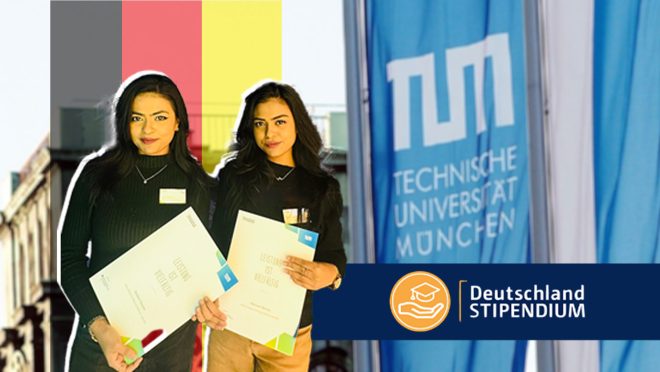
That is how we usually perceive twins, but at some stage, life forces them to diverge. Tasmia Tazrian Ilma and Tasnuva Tazrian Iqra, however, carried this shared journey far beyond the usual.
From getting admitted to Viqarunnisa Noon School and College in the first grade, that too by going through an admission test, to sitting for multiple university admission exams and still ending up securing the same subject, the same section, at a public university (BUP), and later working at the same job in the same institution for almost three years, and finally landing the Deutschlandstipendium Scholarship at the Technical University of Munich, it would not be very dramatic to say that their story was written in the stars.
Where it all started
In Tasmia’s words, “Our journey doesn’t make much sense unless you understand one thing: it was built on belief. Not the soft, hopeful kind, but the kind where you know something will happen and move accordingly, even when it looks unrealistic from the outside. So if anything we say sounds risky, absurd, or slightly insane, that’s because it was fuelled by conviction, not convenience.”
Tasmia and Tasnuva’s dream destination for higher studies was always Germany. To them, “Germany wasn’t a glamorous first choice; it was the most logical dream we could afford.”
When asked if they had any alternate destination in their mind, Tasmia shared, “No, not really. We were simply too focused on Germany to create alternatives.”
Despite being twins, they still had to apply and qualify as two independent candidates. In approaching their academic journey individually while moving in the same direction, Tasnuva shared, “I don’t know if I should call this a coincidence or just say ‘it’s a twin thing’, but we never really had to plan moving in the same direction.”
Having a sister has its perks. Throughout their academic journey, even on research and applications, they shared responsibilities among themselves, and for them, it was something not conscious but rather natural.
Tasmia shared, “We’ve been twins since birth, so somewhere along the way we developed an unspoken equation that if I take care of one thing, she automatically takes care of another.”
She further stated, “The same applied to applications. We learned the procedures side by side, mapped out every step, and applied within almost the same timeframe. We planned everything meticulously, breaking the journey down into small, manageable tasks and tackling them one by one. Also, to put things into perspective: when they started this journey in 2024, the twins did not have anything but birth certificates—not even their NIDs, let alone passports.
If you are familiar with the Bangladeshi administrative system, you can already imagine how wild that part was. There were countless small tasks in between, like documents, offices, and waiting periods.
So if Tasmia was running from one place to get their NIDs done, Tasnuva would be running to another to sort out the passports. And for some steps, “We had to run together. That’s genuinely how the entire process unfolded.”
Application in TUM and the waiting period
“As we all know, Germany brings a long and infamous waiting period. If I go strictly by the rules and timelines, we technically should not be studying at TUM in Germany right now based on when we started preparing and when we applied,” Tasmia said when asked about the initiation of their admission process.
They began planning countries and shortlisting universities around April 2024. By June, they had sorted their documents, prepared their profiles, and submitted their applications.
Although they received the offer letter from TUM in August 2024, the waiting period for a German embassy appointment in Dhaka was 19 months at that time.
Their appointment dates were automatically scheduled for December–January 2026. That made it impossible for them to start their studies in that semester. Thankfully, TUM offered the option to defer, and the twins deferred the admission to the next Winter Semester of 2026. However, life decided to throw a much bigger rock in their path.
Tasmia stated, “By April 2025, the waiting period extended from 19 months to 2.5 years, and the German Embassy announced that it could even take 40 years for new applicants. The announcement practically suggested looking for alternatives. At that moment, it really felt like everything was crashing down. By then, it had already been a full year since we started this journey, and it felt far too late to back off.
However, a small announcement on an official page was not going to shake a plan built on extremely high goals and even stronger faith. So they kept going, despite everything pointing in the opposite direction. Hence, it wasn’t early enough, and it definitely wasn’t by the book, but somehow, it worked anyway. ‘Not by logic, but by the miracle of God,’ they shared.”
They were asked about the factors that they considered critical behind their acceptance at TUM. To which Tasmia remarked, “Aside from an overall strong candidate profile with a solid motivational letter, academics played the most important role. TUM doesn’t just look at overall GPA; they evaluate subject-specific scores based on the exact requirements of the programme.”
She further explained, “For our degree, Management and Data Science was especially important. Although it is considered a science-based programme, it combines both business and technical subjects. So our SSC and HSC results from the Science background at Viqarunnisa Noon School and College laid the foundation, and our CGPA from our first year in Bachelor of Business Administration (General) at Bangladesh University of Professionals (BUP) played a crucial role. Without that year of undergraduate study in Bangladesh, we would not have been eligible for this programme at TUM. This is also a basic requirement for German universities, as they require 13 years of education for Bangladeshi students. That additional year wasn’t optional; it was essential.”
No tuition fees and yet a scholarship?
Tasnuva states, “Here’s the thing: many people don’t even know that scholarships exist in Germany, especially for bachelor’s degrees. Our case was different. In 2024, when we decided to go to Germany, we had already completed our 13th year of education. We didn’t even have passports at the time, let alone early visa appointments. But waiting was not an option for us, so we had to find a way to make it happen. And the only possible way was through a scholarship.”
Germany doesn’t offer many scholarships, especially at the bachelor’s level, so the twins had to search relentlessly. Saying it out loud now sounds bold, but back then, if they told people, “We’re planning to go to Germany despite a constantly increasing waiting period (almost two and a half years) but we don’t have a passport yet, nor have we taken IELTS, and we can’t even wait as the study gap will only grow,” most people would think they were crazy or tell the twins to drop the plan immediately.
Amongst all the doubters, there was one, the most important person who kept them motivated. “There was one person who believed in us—our mother.”
The twins shared, “She knew every risky decision we were making and still chose to stand by us, support us, and trust us, regardless of what the world said. With her support, we somehow knew we were bound to succeed.”
That belief gave them the courage to take the biggest leap of faith, to jump in, with no safety net.
Also she added, “It would be unfair to talk about our journey without mentioning our cousin, Ridwanur Rahman. Alongside our mother’s emotional support, he stood by us both practically and mentally from the very beginning. From lending us his credit card for application fees to booking our flight tickets, and guiding us through every small and big decision, his support had a huge impact on our journey. Despite having no prior experience with this process, he stayed with us at every step. Since we had no one else to rely on who had gone through a similar path, he became our main source of guidance and support throughout this entire journey.”
After exploring every possible scholarship, they eventually found one, the one that allowed applications before enrolment and was open to bachelor’s students.
“We applied on our first attempt and were selected, which reduced our waiting time to just 20 days. We applied through the Consular Service Portal (CSP), a route typically meant for master’s candidates. We didn’t have to face the visa embassy at all. All our documents were processed online within a week, and we submitted our passports to VFS Global.”
They further added, “The staff seemed confused as we were the only two bachelor’s candidates whose files were being processed through VFS. They repeatedly asked whether we were master’s students or pursuing double bachelor’s degrees, since CSP explicitly states that bachelor’s visa files are usually processed only after the standard waiting period. Yet, we didn’t need to attend an interview, submit physical documents, or even pay visa fees. We received our visas within a week. And all of this happened because waiting 19 months—or 27 months, let alone 40 years—was never an option for us.”
Selection criteria and the twins’ conundrum
The Deutschlandstipendium Scholarship is awarded based on three categories: academic performance (60%), social involvement (20%), and personal circumstances (20%).
Tasnuva noted, “We had almost the same profile and qualifications, yet we never really went through each other’s applications. Although we figured everything out together, from how to apply, where to apply, and what was required—we didn’t go through each other’s documents, not even to proofread or check if everything was done correctly. I don’t know whether to call that a good thing or a bad thing, but it worked for us.”
Tasmia added, “We had equal faith in each other. It simply didn’t feel necessary to read through each other’s CVs or motivational letters. We only made sure that all the documents were submitted, in the right place and within the deadline—that was all. It wasn’t intentional, by the way. Not something we consciously decided on. But now that I think about it, maybe it was the best thing to do. Since we had almost identical profiles, not going through each other’s applications may have helped us keep them as unique as possible for the scholarship board.”
The sisters left a small suggestion to the readers: do not use AI tools, do not copy from others’ writing, avoid presenting scattered information with no flow of thought, and do not list unnecessary achievements that are not relevant to an individual’s field of study. They also suggested not to pretend to be someone you are not.
It remains a question how the selection committees view applications from twins: as an advantage, a coincidence, or entirely irrelevant? Tasmia shared her views, “I was actually very curious myself about how selection committees would view applications from twins, especially since this was our first time applying abroad and our profiles and grades were almost identical. I genuinely couldn’t predict how it would play out.”
There were instances of mishaps, as they ran this race without any outside assistance. During their second application to TUM, there was a document mix-up on their end because of the nearly identical names and records.
As a result, Tasmia’s previously secured and deferred admission letter from 2024 was declared invalid, and she had to reapply and go through the entire selection process again in 2025. While everything worked out in the end, it was a stressful situation and could have gone very differently.
“We experienced something similar with the scholarship committee as well. They were initially confused while processing our stipends, unsure whether they were transferring funds to the same person twice or to two different individuals. It was a funny incident in hindsight, but it highlighted the logistical challenges we had to face at every moment of the application process.”
There was also always a chance that one of the sisters might receive the scholarship and the other might not. On this, Tasmia shared, “Realistically, the risk was always there. As international applicants from Bangladesh applying to a highly lucrative scholarship with very limited slots, we were fully aware that the odds were not in our favour. This scholarship was also the only realistic way for us to avoid a long waiting period and begin our studies on time, so the stakes were undeniably high.”
However, when it came to mentally preparing for the possibility that only one of them might receive the scholarship, they simply didn’t. Despite understanding that they are two individuals with their own journeys, both Tasmia and Tasnuva could not genuinely imagine an outcome where one moved forward and the other didn’t.
“I can speak for both of us on this. We never sat down and planned for that scenario,” shared Tasmia.
Finally, in summarising their scholarship strategy in three practical steps, Tasnuva shared:
- Prepare all your documents well in advance and take the time to do them properly; apply as early as possible.
- Apply to strong universities that have better funding opportunities.
- Dedicate yourself fully to the process and believe that you will succeed.
Looking back
On being asked about the habits or decisions that mattered more than grades, Tasmia recalled, “I think authenticity, self-belief, and consistency mattered even more than grades. Of course, academics are important, but every small effort, experience, and contribution adds up and shapes your overall profile.”
One of the biggest decisions they made was not relying on any agencies or third parties. Handling everything themselves—from research and application to admissions—kept the twins’ applications honest, confident, and strong.
“When you go through the entire process on your own, you grow, not just as an applicant, but as a person,” shared Tasnuva.
Demonstrating extracurricular involvement, such as teaching at Mentors’, also played a crucial role in strengthening their applications.
Neither of them had a flashy ECA profile growing up. Not because they weren’t interested, but because doing anything extra usually cost money, which was a luxury they didn’t have.
However, joining Mentors’ and teaching there for almost three years made a huge difference. “It wasn’t just a part-time job; it was an experience that taught us skills, gave us perspective, and helped us grow into the people we are today. That growth influenced almost every decision we made after,” shared Tasnuva.
On top of that, the twins ran a small online business completely from home, participated and contributed in a few university clubs and social organisations, and even gained some teaching experience as voluntary assistant teachers at a kindergarten. “It wasn’t anything extravagant, but it all added up, and it definitely strengthened our applications,” shared Tasmia.
Being in Germany right now, the most important question that arose was about misconceptions Bangladeshi students commonly have about studying in Germany.
Tasmia pointed out the most common misconception, which is the belief that “Once I somehow arrive in Germany, everything will magically work out.” That is rarely the case. Germany runs on paperwork, appointments, and strict rules.
Students must deal with Anmeldung (registration), health insurance, residence permits, bank accounts, contracts, and all of it mostly in German and under deadlines. “Without proper preparation and knowledge, it is very easy to feel lost,” shared Tasmia.
Looking back, Tasmia and Tasnuva’s story is more than a journey of studying at Germany; it’s a story of trust, faith, and the quiet strength of shared dreams. Every obstacle, every long wait, every moment of uncertainty could have broken them, but instead, it became part of their rhythm, their unspoken bond. Their journey reminds us that sometimes, the most extraordinary achievements aren’t just earned—they are lived, together, heart by heart, step by step.