How to secure the Stipendium Hungaricum Scholarship: Insights from a psychology student
For thousands of Bangladeshi students, the dream of studying in Europe is often clouded by uncertainty, financial constraints and a lack of information, with the fear of taking a single wrong step in a highly competitive process always lingering.
How to secure the Stipendium Hungaricum Scholarship: Insights from a psychology student
For thousands of Bangladeshi students, the dream of studying in Europe is often clouded by uncertainty, financial constraints and a lack of information, with the fear of taking a single wrong step in a highly competitive process always lingering.
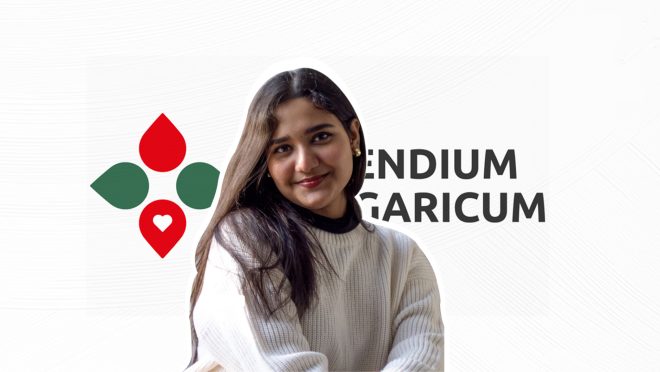
While fully funded scholarships often appear distant and almost mythical, they become the only realistic pathway to global education for many.
Funded by the Hungarian government, the Stipendium Hungaricum scholarship is one such opportunity, attractive to students from developing countries, including Bangladesh, where financing a self-funded international degree remains a major challenge.
To explore the Stipendium Hungaricum scholarship in detail, TBS Graduates spoke to Ashfia Salsabil, a recipient of the scholarship currently pursuing a Bachelor’s degree in Psychology at the University of Pécs in Hungary.
Why the Stipendium Hungaricum Scholarship
The Stipendium Hungaricum scholarship stands out among many other European scholarships as it offers a full tuition waiver, a monthly stipend, accommodation support and health insurance. It covers approximately 30 Hungarian universities offering nearly 900 study programmes in English and other languages across various academic fields, including engineering, medicine, business, humanities, sciences and technology, at the bachelor’s, master’s, one-tier master’s, non-degree and doctoral levels.
Ashfia mentions, “I chose the Stipendium Hungaricum scholarship because it represented the only viable bridge between my academic ambition and my financial reality.” She deliberately chose to apply only to this scholarship programme, as she was deeply inspired by its quality of education, the atmosphere for international students and the availability of research materials.
“The singular focus pushed me to pour my entire heart into the application, knowing that this was my one true shot at a global future,” she added.
What makes an application stand out
According to Ashfia, academic results alone are not enough. While board examination results and IELTS scores played an important role, “The motivation letter is a game changer,” she explained.
Through the letter, she highlighted relevant extracurricular activities that demonstrated leadership and adaptability, qualities essential for an international scholar.
Most importantly, Ashfia showed a genuine commitment to Hungary, positioning her studies as a bridge towards future career goals and the development of Bangladesh in her field. A well-structured Europass CV and strong recommendation letters also strengthened her application.
Her role as Head of Academics at the National Newspaper Olympiad and as an anchor at various events allowed her to bridge leadership and communication skills. Ashfia believes that her involvement in social work and field-specific projects deepened her passion for Psychology and significantly reinforced her application.
A multi-layered selection process
The selection process for the Stipendium Hungaricum follows multiple stages. Applicants must be selected at three separate levels to secure the award. The process begins with a nomination round by the sending partner.
If nominated, applications are forwarded to the chosen universities, which conduct entrance tests or interviews. Applicants should be prepared for online academic tests or oral interviews based on their subject.
Once accepted by the universities, one or both, preferably both, the Tempus Public Foundation finally grants the scholarship.
Timeline and preparation
Based on her experience, Ashfia informed TBS Graduates that the entire process typically spans seven to eight months, beginning with application submission in mid-January and concluding with final results in late June or early July.
Once nomination is completed by the end of February and academic evaluations are finalised by May, selected candidates receive their “Letter of Award” by late June or early July.
This is when the visa process begins, “giving you just enough time to prepare for the semester starting in September and spend more time with family and friends before leaving,” she noted.
Challenges
One of the primary challenges is securing nomination from the sending partner, the Education Ministry of Bangladesh. The documentation process is demanding, requiring a great deal of attention to certificate verification and medical translations that meet strict standards.
Acing the entrance test or interview is the next hurdle. “The waiting period was quite taxing,” Ashfia admitted. “It required a high level of patience and focus, but it also pushed me to be more organised.”
Interestingly, language has not posed a challenge for Ashfia, thanks to the international student-friendly environment.
For Ashfia, the visa process was relatively stress-free because she was well prepared with documentation and interview requirements. Scholarship holders can obtain a Type-D student visa with proper documentation.
Most first-year students live in dormitories, as the housing allowance rarely covers private accommodation. However, securing dormitory placements in later years becomes competitive, often depending on academic performance and institutional criteria.
She cautioned against relying solely on the stipend, as it is not sufficient to cover all living expenses. To manage additional costs, students can work up to 30 hours per week.
Advice for future applicants
Ashfia’s advice to prospective applicants is clear: specificity matters. “Generic motivation letters are one of the biggest reasons for rejection,” she warned. Applicants must clearly explain why they chose Hungary over other destinations.
Equally important is complying with the sending partner’s requirements. “If you’re not nominated locally, Hungarian universities will never even see your application.” She also stressed the importance of proper document submission. Poorly scanned or incorrectly named files can lead to immediate disqualification at the initial screening stage.
Despite the challenges, Ashfia remains encouraging. The process takes time, but with preparation, patience and transparency, the Stipendium Hungaricum scholarship can become a turning point for Bangladeshi students.
This article is written in partnership with Abroadmates, the all-in-one mentorship platform for study abroad.
To know more about the Stipendium Hungaricum Scholarship, book a session at https://surl.li/lvfclj