125-million-year-old ‘Spiny Dragon’ shows what dinosaur skin looked like
Scientists in China have uncovered an exceptionally well-preserved dinosaur fossil dating back 125 million years — and it is offering rare insight into what dinosaur skin actually looked like.
125-million-year-old ‘Spiny Dragon’ shows what dinosaur skin looked like
Scientists in China have uncovered an exceptionally well-preserved dinosaur fossil dating back 125 million years — and it is offering rare insight into what dinosaur skin actually looked like.
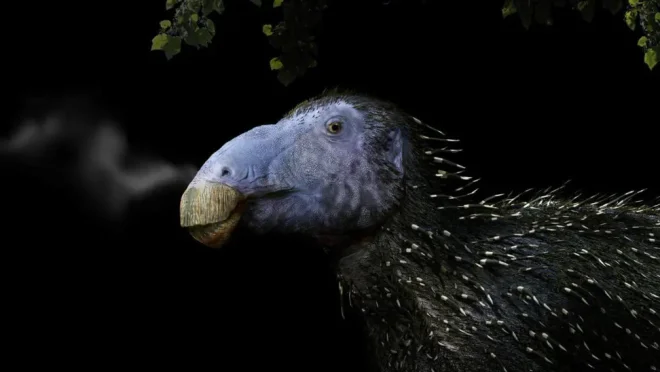
The newly identified species, named Haolong dongi, belongs to the iguanodontian group of plant-eating dinosaurs. Researchers have nicknamed it the “spiny dragon” because of the unusual spikes that covered its body.
According to the BBC, The fossil was discovered in north-eastern China by an international research team led by Anhui Geological Museum and Belgium’s Institute of Natural Sciences.
What makes this find remarkable is the condition of the remains. Large areas of skin were preserved, allowing scientists to examine the dinosaur’s outer covering in extraordinary detail.
Unlike anything previously seen in dinosaurs, Haolong dongi had a mix of long and short spikes across its body, somewhat resembling a porcupine. Its tail featured large, overlapping scales, while other parts of its body were protected by sharp, pointed structures of varying sizes.
Researchers believe these spikes most likely acted as a defence mechanism, making it more difficult for predators to attack or swallow the animal. During the Early Cretaceous period, the ecosystem was filled with carnivorous species that would have posed a serious threat.
However, scientists are also exploring other possibilities. The spikes may have helped regulate body temperature or even functioned as sensory structures, allowing the dinosaur to better interact with its environment.
The preserved skin has particularly excited experts. Huang Jiandong from Anhui Geological Museum said the fossil shows that dinosaur skin was far more complex than previously assumed.
Pascal Godefroit, a palaeontologist at the Institute of Natural Sciences in Belgium, described the discovery as extraordinary. He explained that finding dinosaur skin preserved at such a microscopic level provides scientists with a rare glimpse into the biology of these ancient creatures, something researchers once believed was nearly impossible.
The discovery adds to growing evidence that dinosaurs were more diverse in appearance than traditional scaly reptile images suggest.