Artemis II readies for moon return after 54 years
Artemis II prepares for launch in early February, marking the first crewed mission towards the moon since Apollo 17.
Artemis II readies for moon return after 54 years
Artemis II prepares for launch in early February, marking the first crewed mission towards the moon since Apollo 17.
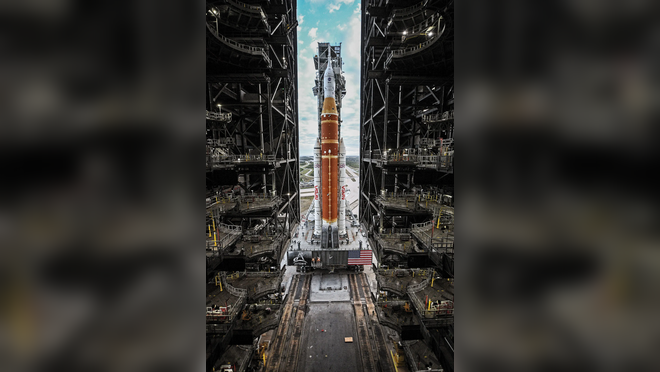
NASA’s Artemis II mission is on the brink of launching the first crewed mission toward the moon since Apollo 17 in 1972. The liftoff is tentatively scheduled for early February this year after a series of final tests and rehearsals.
This mission will not be about moon landing, but the 10-day Artemis II mission is designed to test critical systems with crew members aboard in deep space.
Latest preparations, overview and crew
Preparations for Artemis II are in the final stretch as NASA conducts critical pre-launch missions. NASA’s Artemis II mission operators are getting the Space Launch System (SLS) rocket ready for its final crucial test prior to launch.
A simulated T-0 is now set for Saturday (1 February), at 9 p.m. EST, and operators are anticipated to be called to stations around 49 hours in advance.
As a last qualifying check before Artemis 2 takes off for the moon, the SLS wet dress rehearsal will mimic a mission countdown for ground workers to fuel and power the rocket.
NASA officials have confirmed that the mission is targeting a launch window opening around February 6 with additional opportunities to come through March and April if necessary.
Following launch, it will complete two lengthy, high, looping circles around the planet before aiming in the direction of the moon, starting its motor, and releasing itself from the influence of gravity.
To complete a 10-day mission, it will fly around the far side of the moon and return home without a lunar orbit, following the safe profile Kraft, which was rejected long ago.
The Crew and launch
The Artemis II crew includes Reid Wiseman, Victor Glover, Christina Koch, and Jeremy Hansen.
The crew, before starting the journey toward the moon, will spend roughly two days examining Orion’s systems and conducting a targeting demonstration test quite near Earth.
NASA wrote, “The crew will assess the performance of the life support systems necessary to generate breathable air and remove the carbon dioxide and water vapor produced when the astronauts breathe, talk, or exercise.”
The crew of Artemis II will fly farther from Earth than any human has ever done.
At its furthest point, the damaged Apollo 13 spacecraft travelled 158 miles beyond the moon’s far side on a comparable circumlunar trip. That mission held the record for 56 years.
However, Artemis II aims to break it with the spacecraft travelling an incredible 4,700 miles past the lunar surface. The crew will be able to capture striking images of the Earth and the Moon’s spheres in the same frame from that distance.